Category: paintings
-
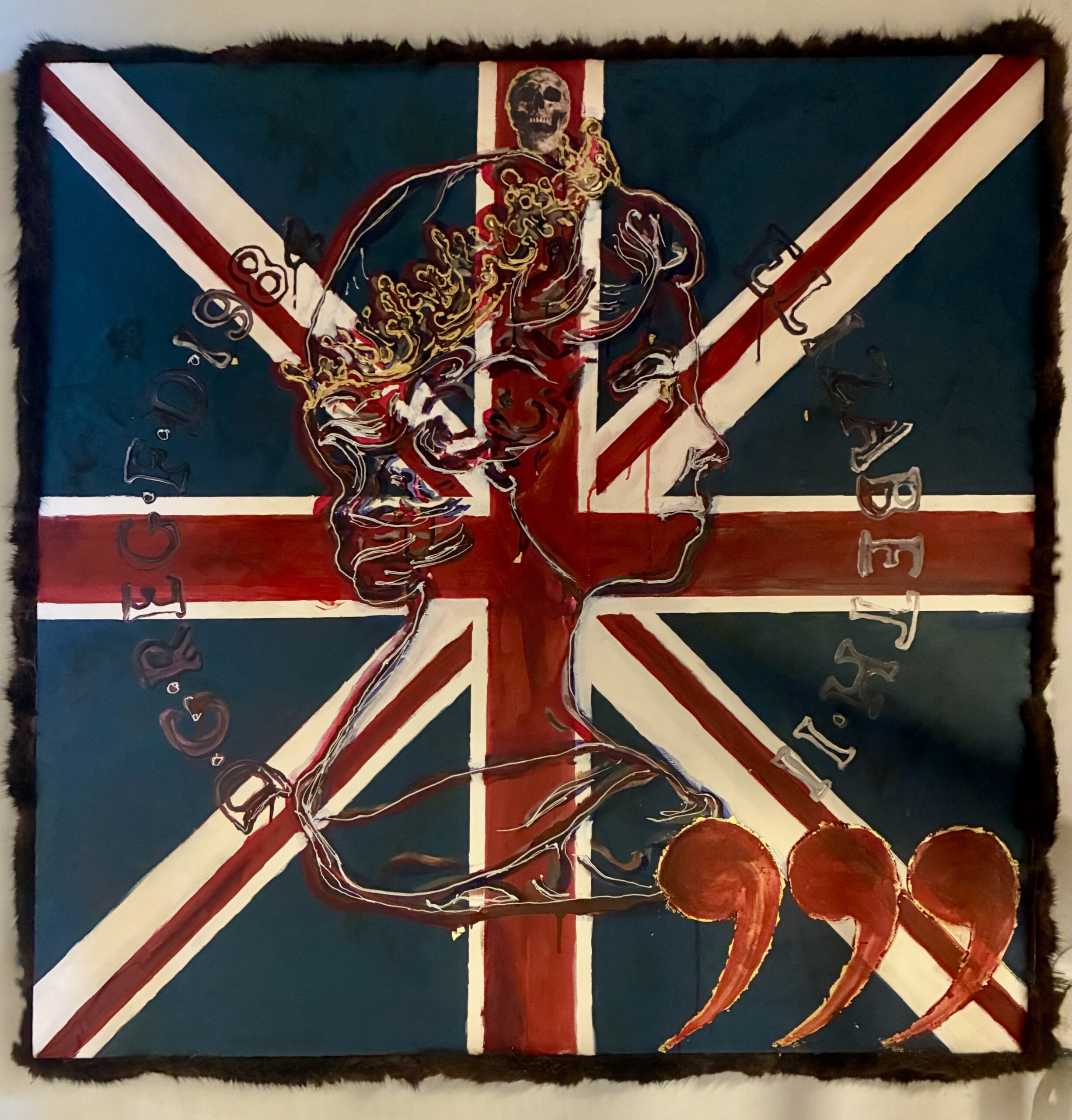
At first glance, this image presents the familiar visual language of imperial reassurance: monarchy, heraldic order, national symbolism, ceremonial dignity. Yet the composition slowly destabilizes itself. The portrait of Queen Elizabeth—derived from the iconography of circulated currency—invokes authority in its most domesticated form: power made ordinary through repetition, handled daily, accepted without question. Above the…
-
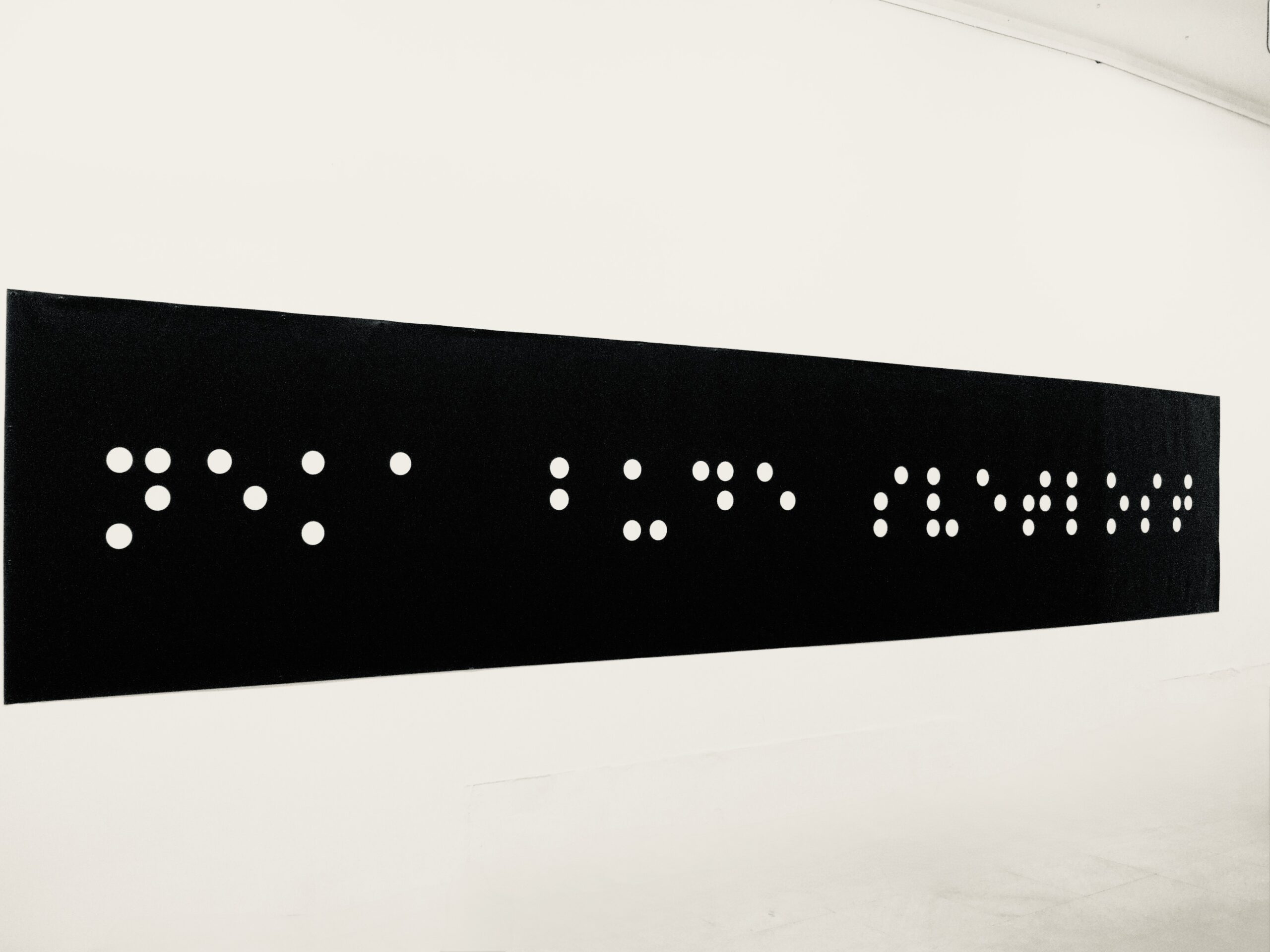
LOGIC OF THE VISIBLE AND THE INVISIBLE between LIFE AND DEATHScreen installation by Boris Petrović “Honey Be Or Not To Bee” Boris Petrović is a painter who explores hybrid and critical boundaries, and certainly the relationships between static and dynamic ‘images’ with audio presentation and spatial installation. He starts from the ‘problems’ within painting and…
-
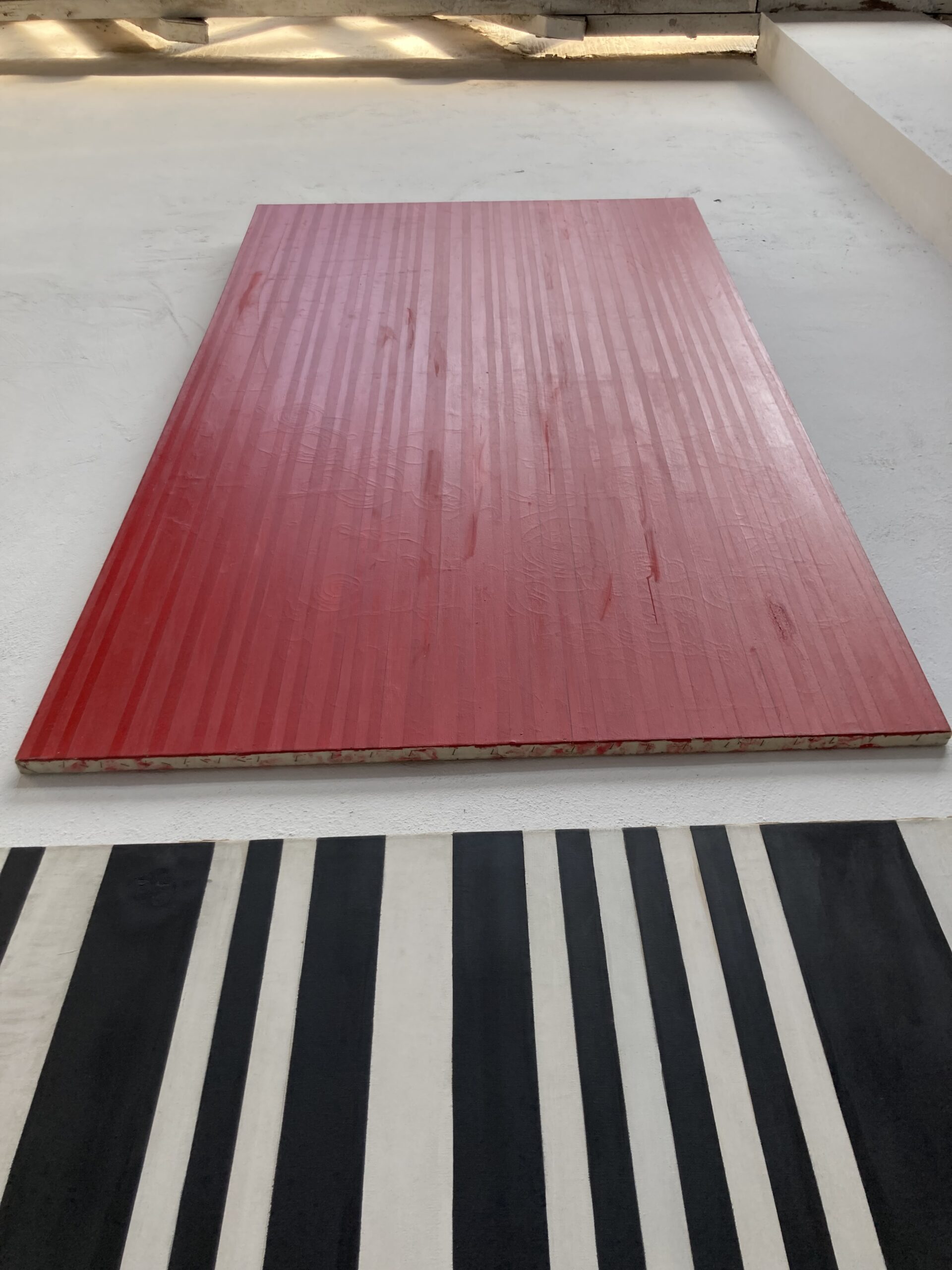
PAINTINGS IN THE AGE OF CULTURE…on Boris Petrović’s paintings-as-barcodes… Things have indeed changed completely. Art has become the constitutive reflection of culture. Culture and its artifacts (emblems, cans, automobiles, screen images, systems of symbolic intrigues, representatives of economic values, and erased traces of everyday life) appear before us in the manner in which, in tradition,…
-
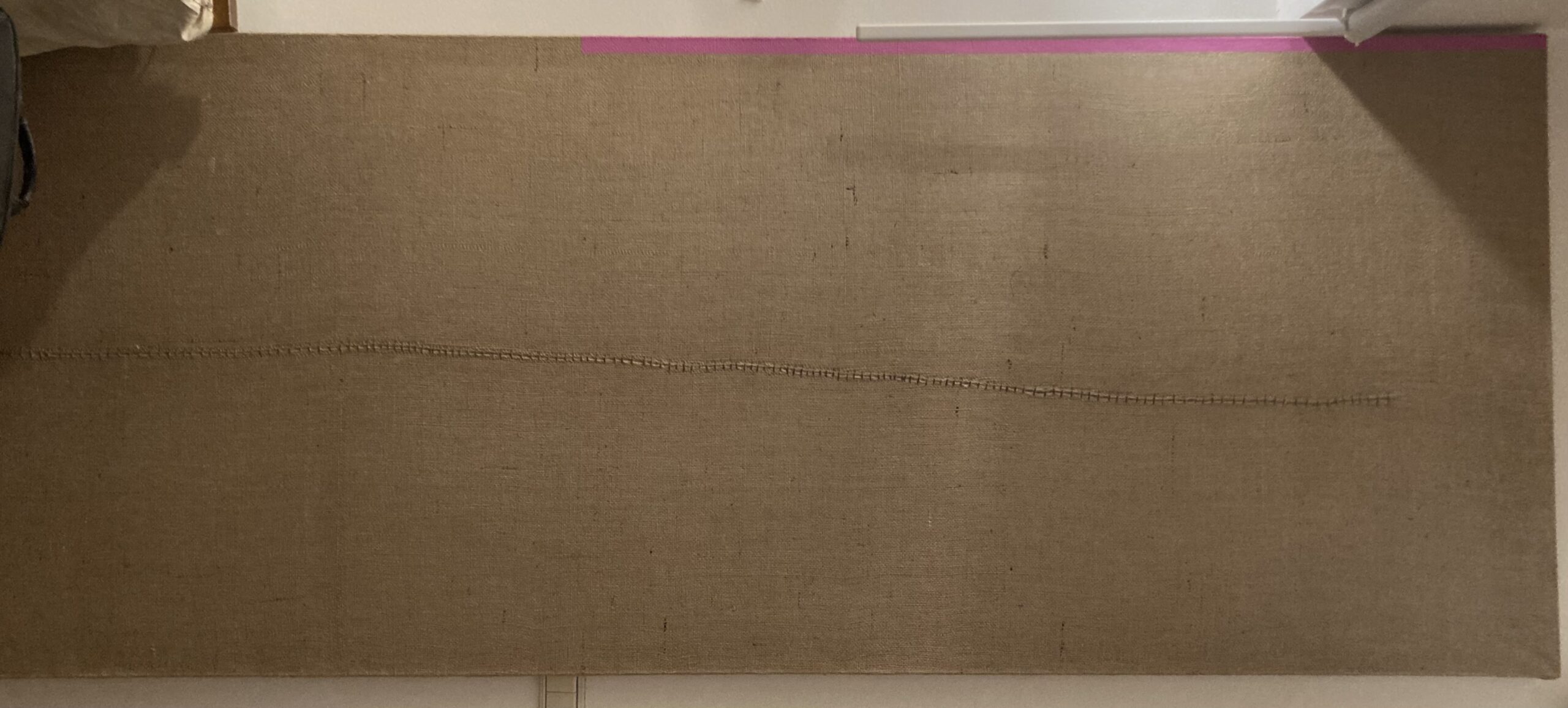
Nufer Family (Caesarean Section) This work reduces the vocabulary of Švalje (The Seamstresses) to its most materially direct condition. The painted image has nearly disappeared. What remains is exposed jute canvas, animal glue stiffening, a single surgical seam, and the acoustic tension of a surface that responds like stretched skin or a muted drum. The horizontal incision,…
-
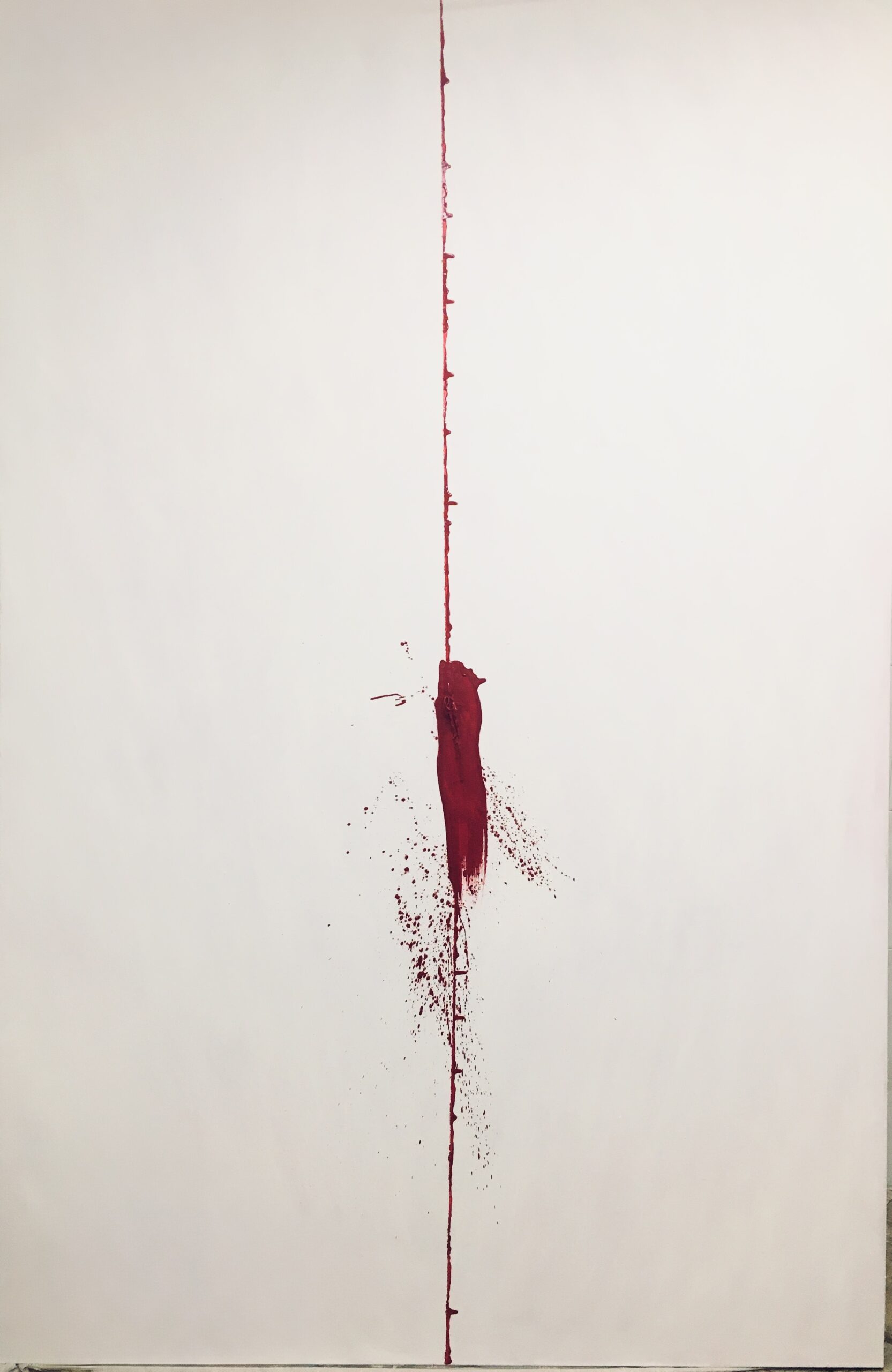
Cut A single vertical intervention divides the surface with surgical clarity, extending almost the full height of the composition. Unlike the stitched works elsewhere in Švalje (The Seamstresses), this image presents the act before repair, restraint, or attempted closure. The cut remains exposed. A concentrated eruption of red interrupts the otherwise austere field, marking the moment…
-
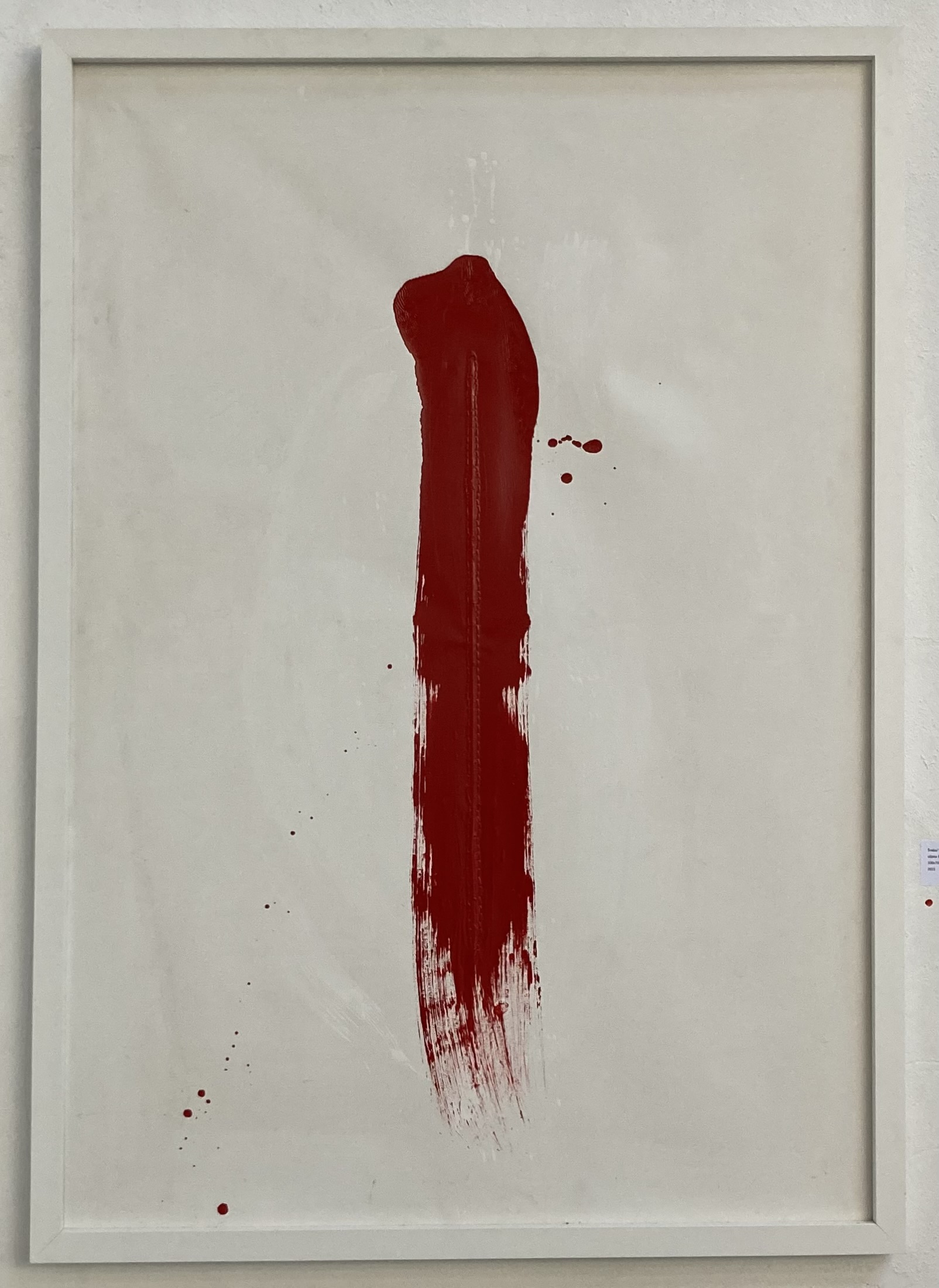
Sewing (a) Woman As the initiating work in Švalje (The Seamstresses), this piece establishes the central operation of the series: incision, stitching, and the transformation of the painted surface into a surrogate body. Unlike the later works, the seam here is constructed internally using a saddle stitch traditionally associated with leatherwork and the manual joining of…
-
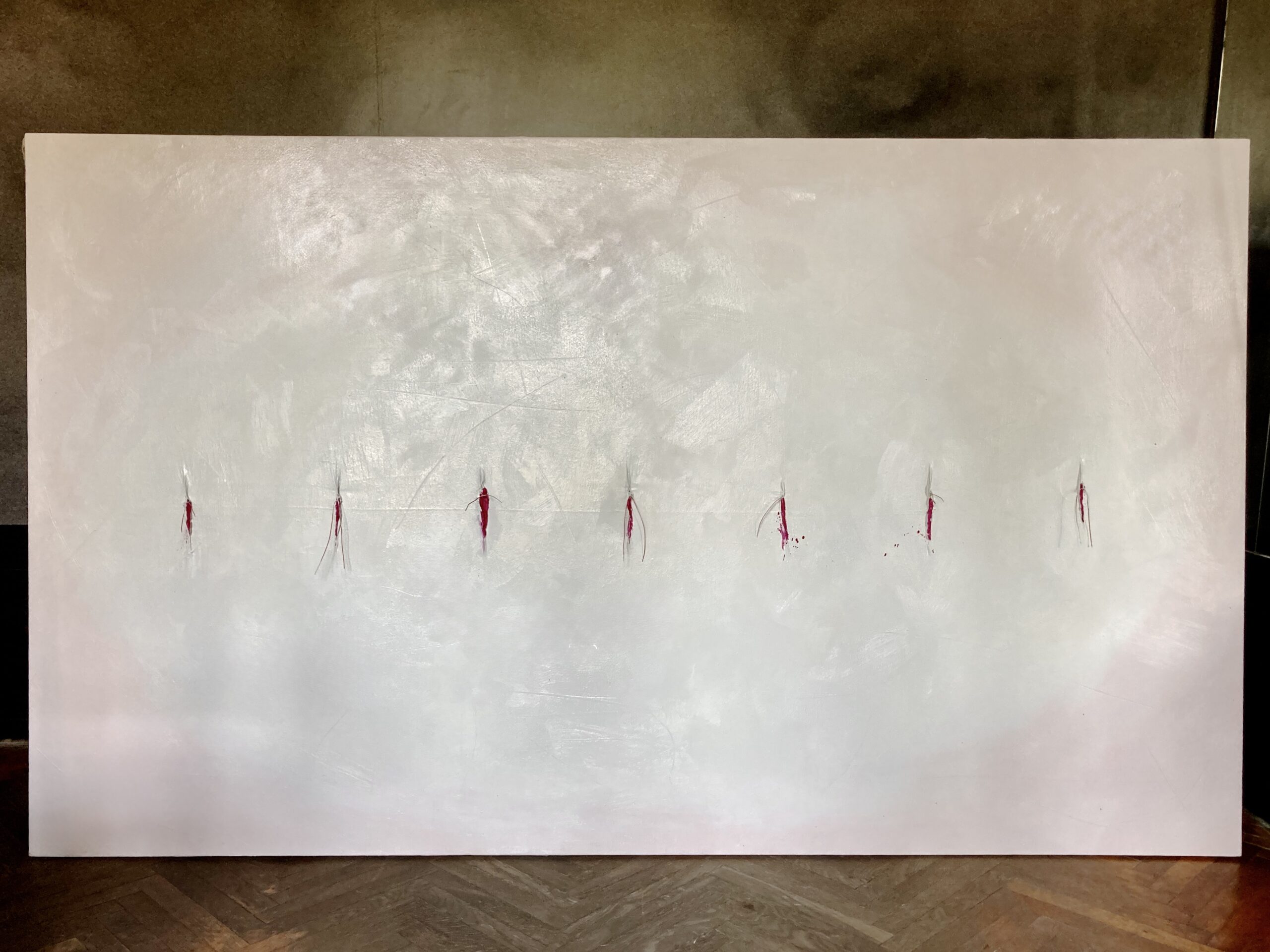
Seamstress at Day A pale surface marked by faint pink tonalities is interrupted by seven small incisions stitched across the horizontal center of the composition. Their interiors retain traces of saturated red, introducing the visual suggestion of fresh injury within an otherwise restrained and delicate atmosphere. In contrast to the obscured severity of Seamstress at Night,…
-
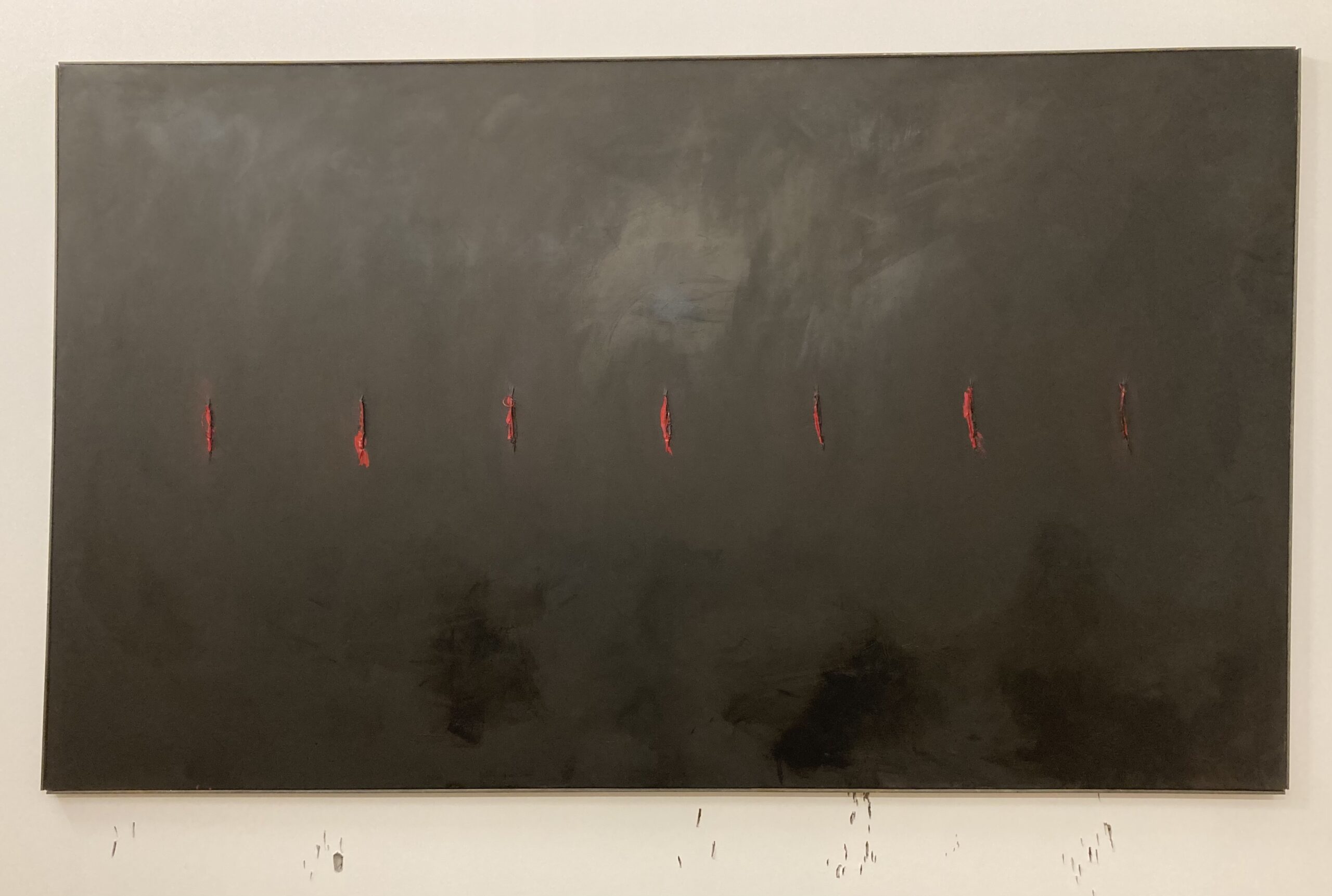
Seamstress at Night A large matte-black surface is interrupted by seven narrow incisions distributed across the horizontal field. Their interiors are saturated with a dense red pigment, producing the appearance of contained bleeding suspended within an otherwise muted and resistant plane. Within Švalje (The Seamstresses), the repeated cuts transform singular injury into sequence, rhythm, and accumulation.…
-
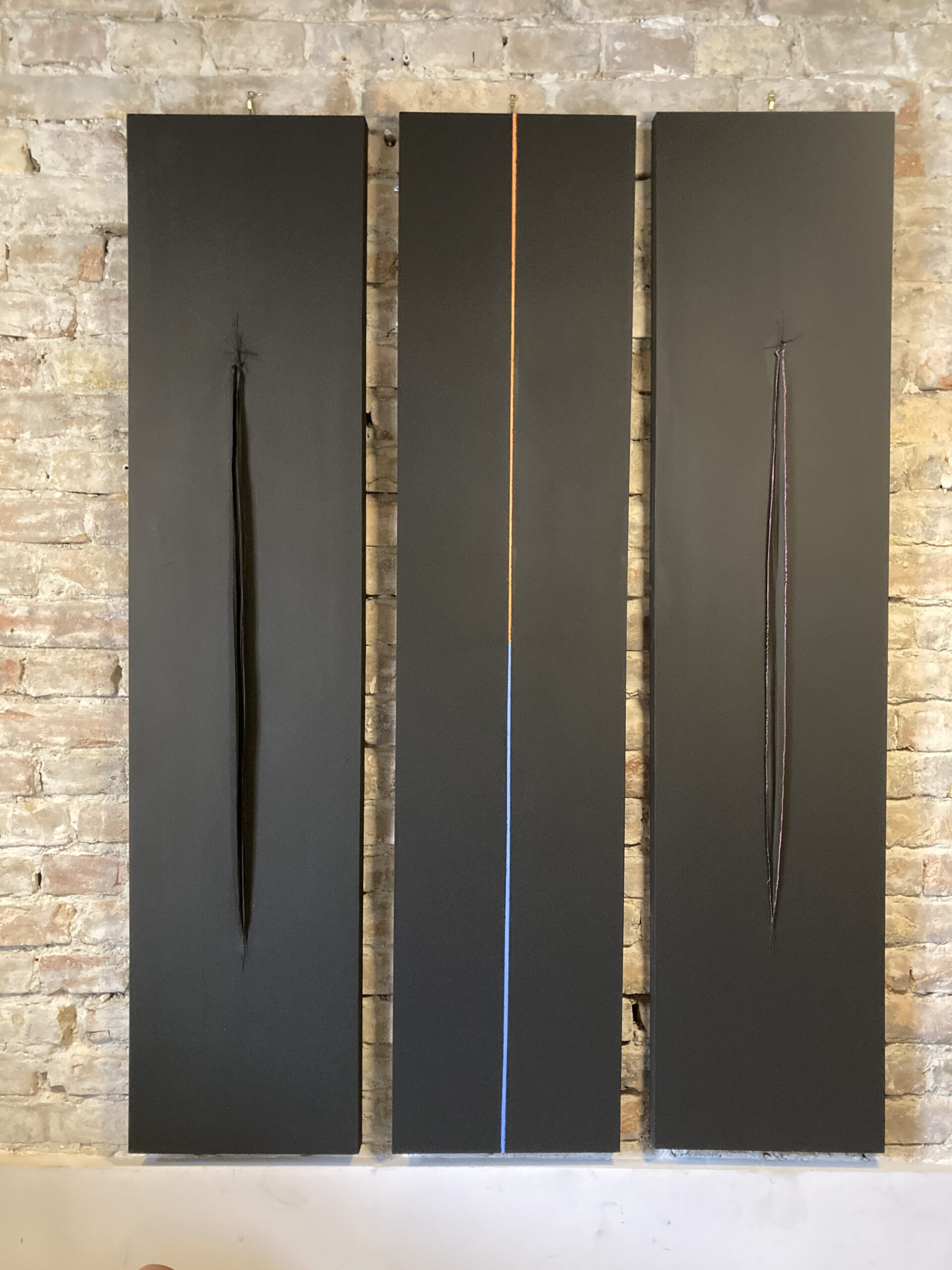
Three Sisters This triptych presents three vertically aligned surfaces organized around differing states of incision and preservation. The outer panels contain stitched cuts whose dark interiors remain visibly marked by intervention, while the central panel retains an uninterrupted opening, narrow and luminous, untouched by surgical closure. Within the context of Švalje (The Seamstresses), the work introduces…
-
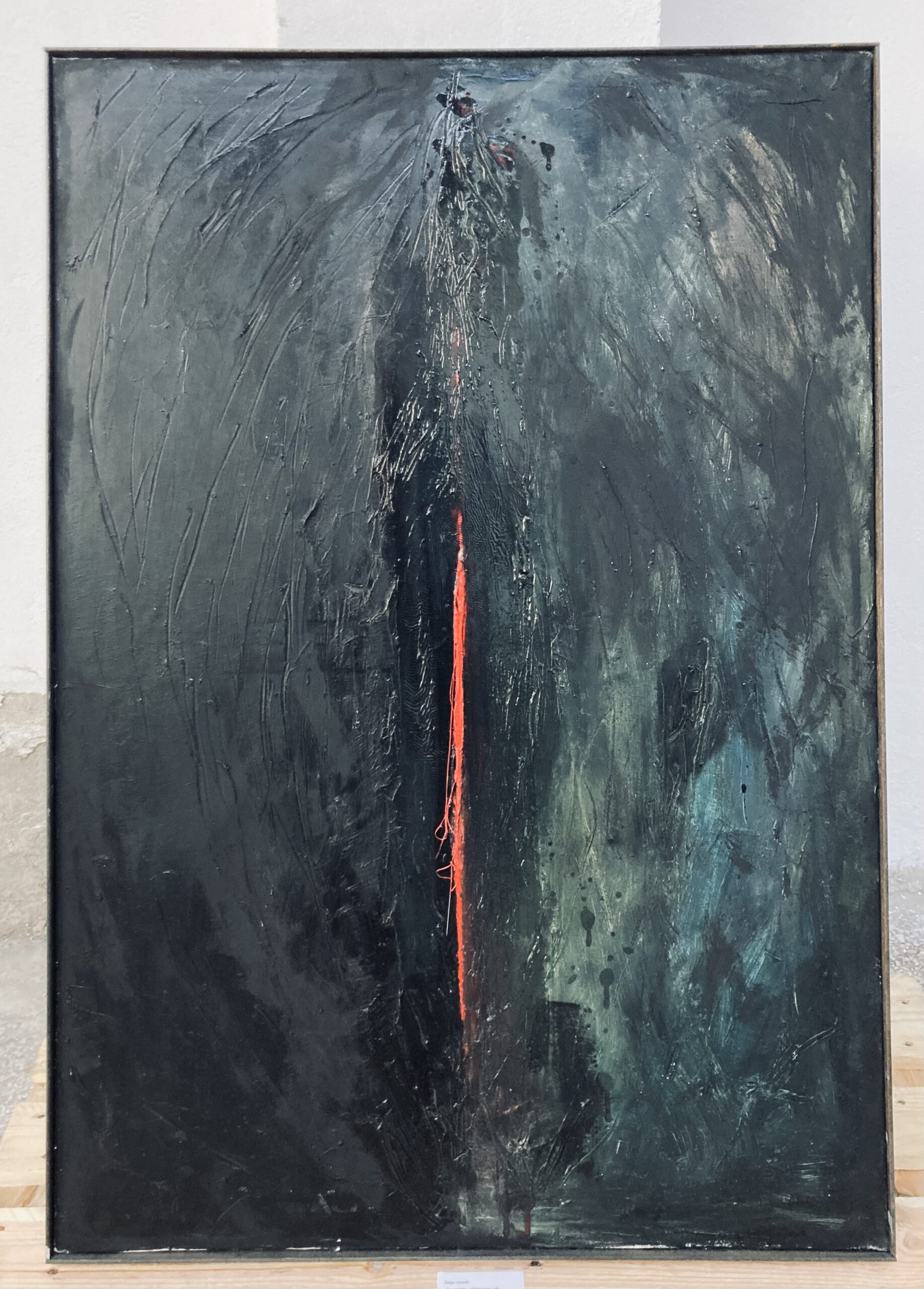
Aminifu A darkened surface is interrupted by a narrow vertical incision whose interior emits a restrained red luminosity. The surrounding field appears dense, scarred, and materially unstable, as if the image itself were attempting to contain the force located at its center. Within the context of Švalje (The Seamstresses), the work refers to forms of bodily…