PAINTINGS IN THE AGE OF CULTURE
…on Boris Petrović’s paintings-as-barcodes…
Things have indeed changed completely. Art has become the constitutive reflection of culture. Culture and its artifacts (emblems, cans, automobiles, screen images, systems of symbolic intrigues, representatives of economic values, and erased traces of everyday life) appear before us in the manner in which, in tradition, nature (the body of a beast, a child, a woman or a man, a forest landscape, a human face, a seashore) was positioned, experienced, conceived, presented, and represented in the art of painting.
Today, painting is no longer judged on the basis of aesthetic and aesthetical criteria of “autonomy,” nor on the basis of existential and existentialist criteria of the “authenticity” of the artwork—the painting. The image is judged, understood, and interpreted according to social criteria: the criteria of identifying social traces and the accumulating traces of the surrounding culture itself as a given world.
The image is the mimesis of culture as that which exists outside us, surrounds each individual body, and transforms it into a social subject of communication (exchange, consumption, enjoyment). The image is the representation (reflection, presentation, depiction, interpretation) of culture and its “machines of representation” in the production, exchange, and consumption of goods/information/values.
The painted image is an element of the current reconfigurations of the symbolic system into effects of the imaginary (the visible, the corporeal, the surrounding).
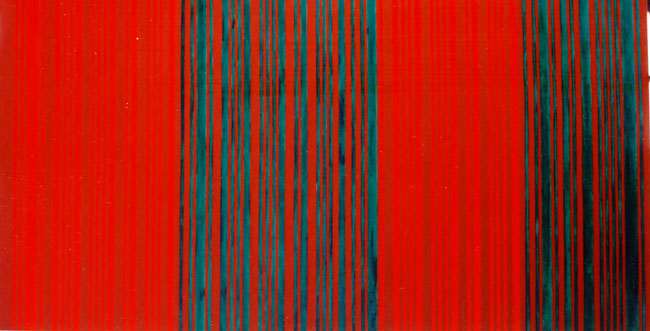
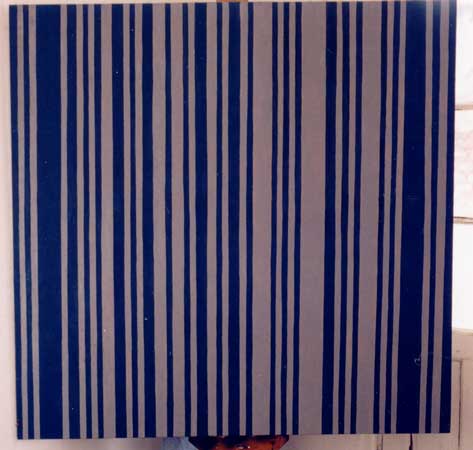
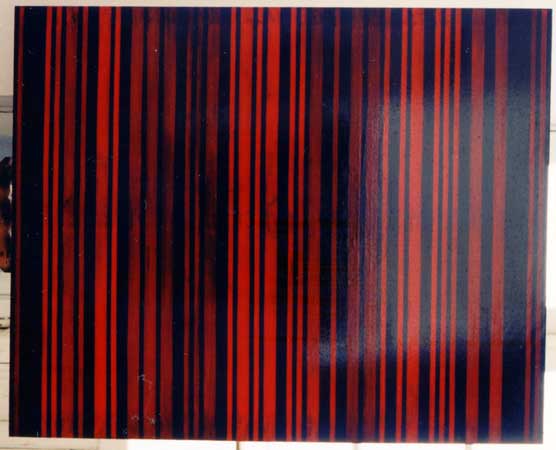
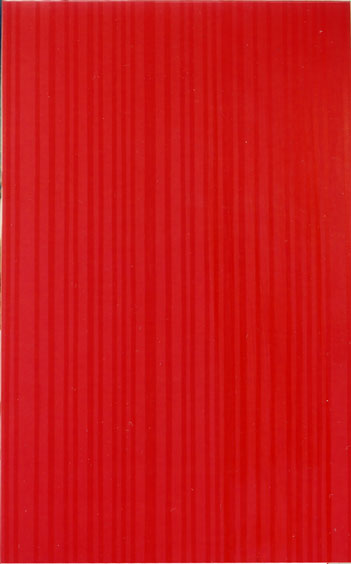
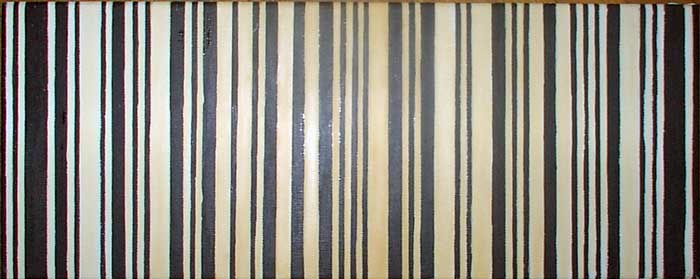
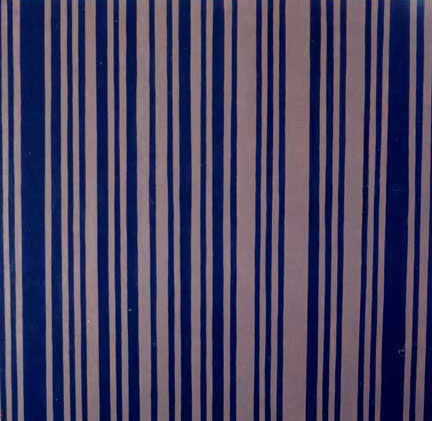
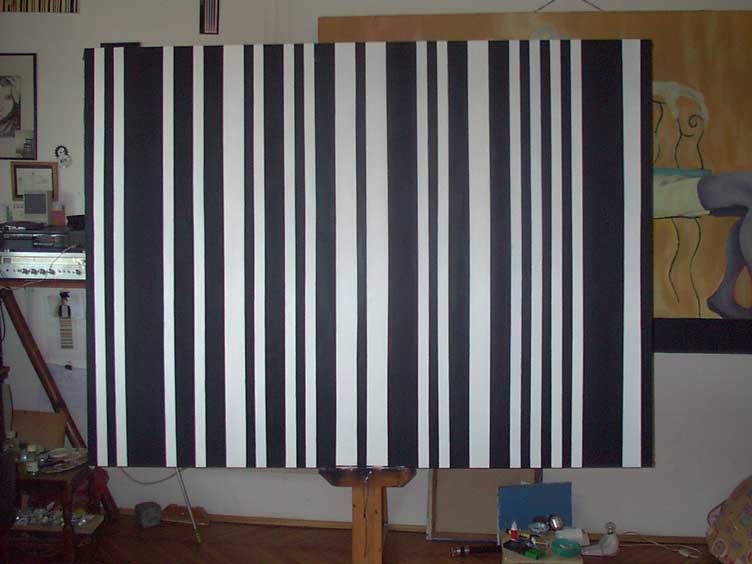
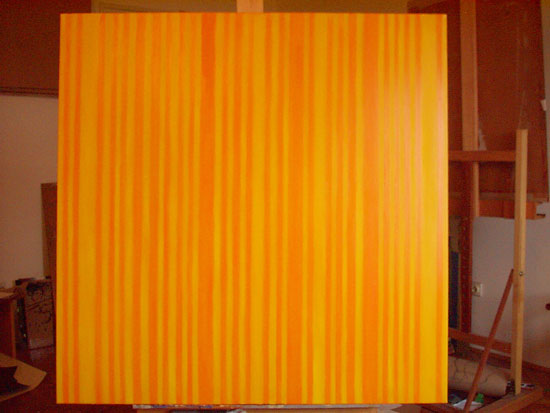
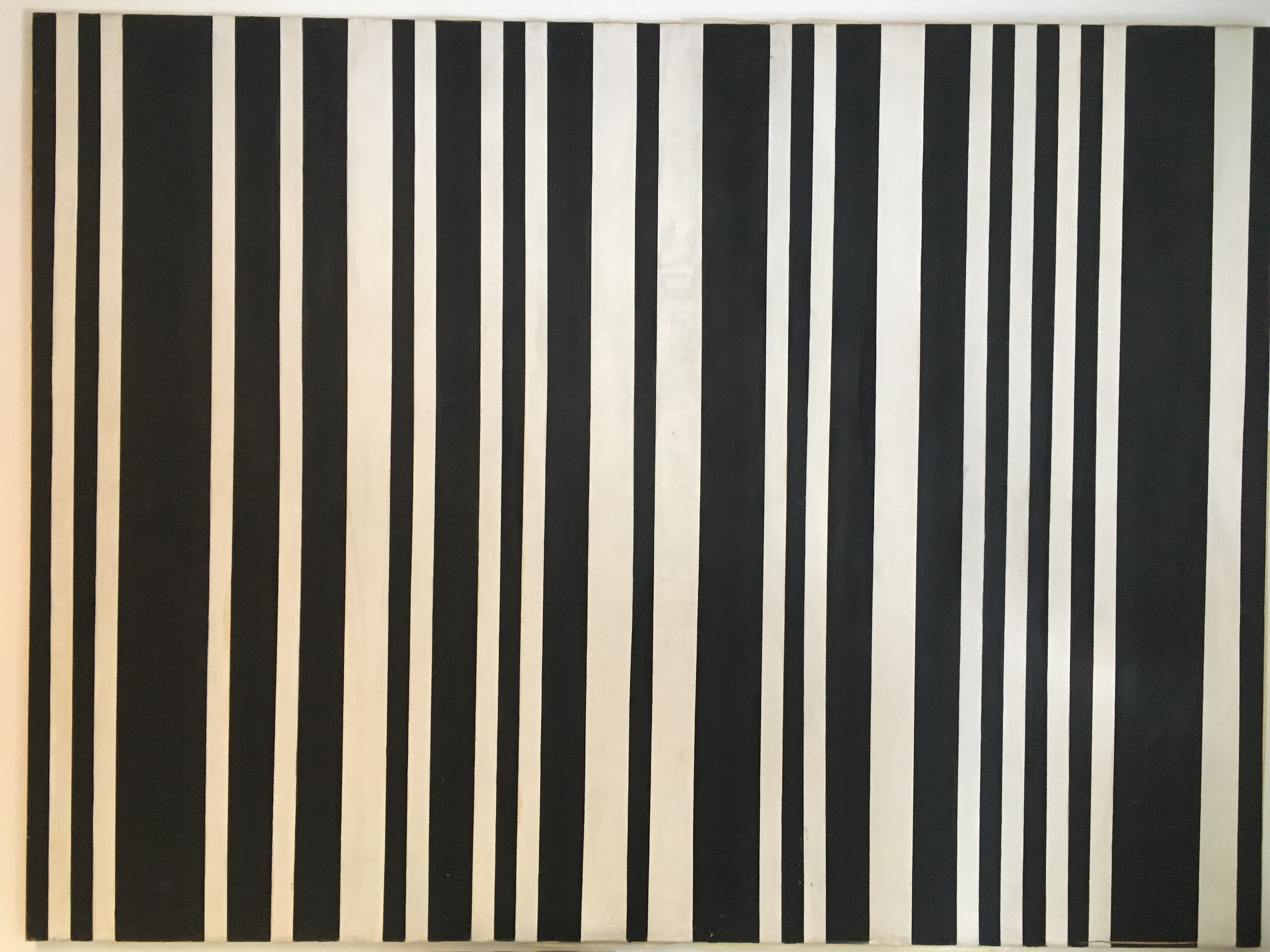
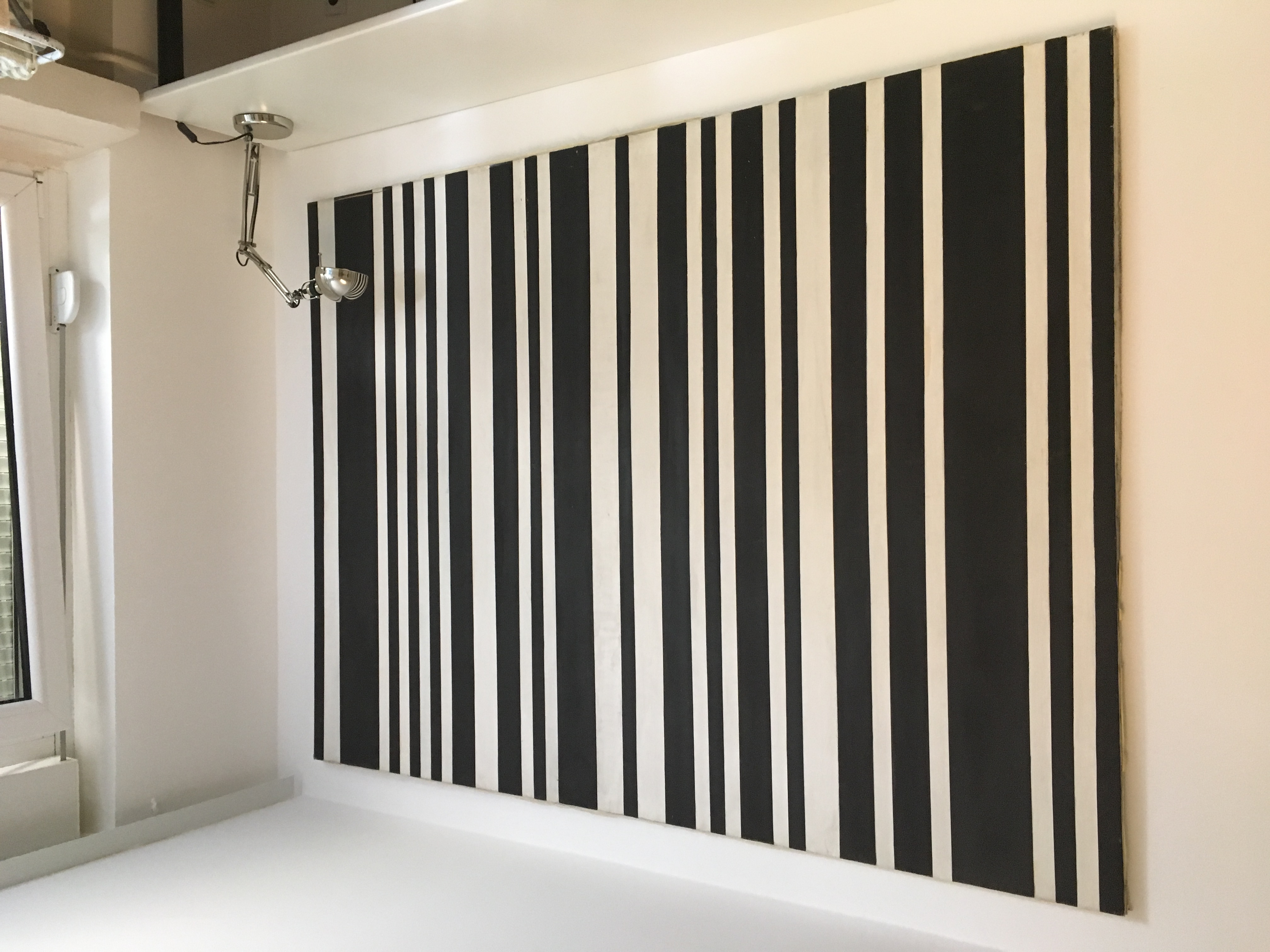
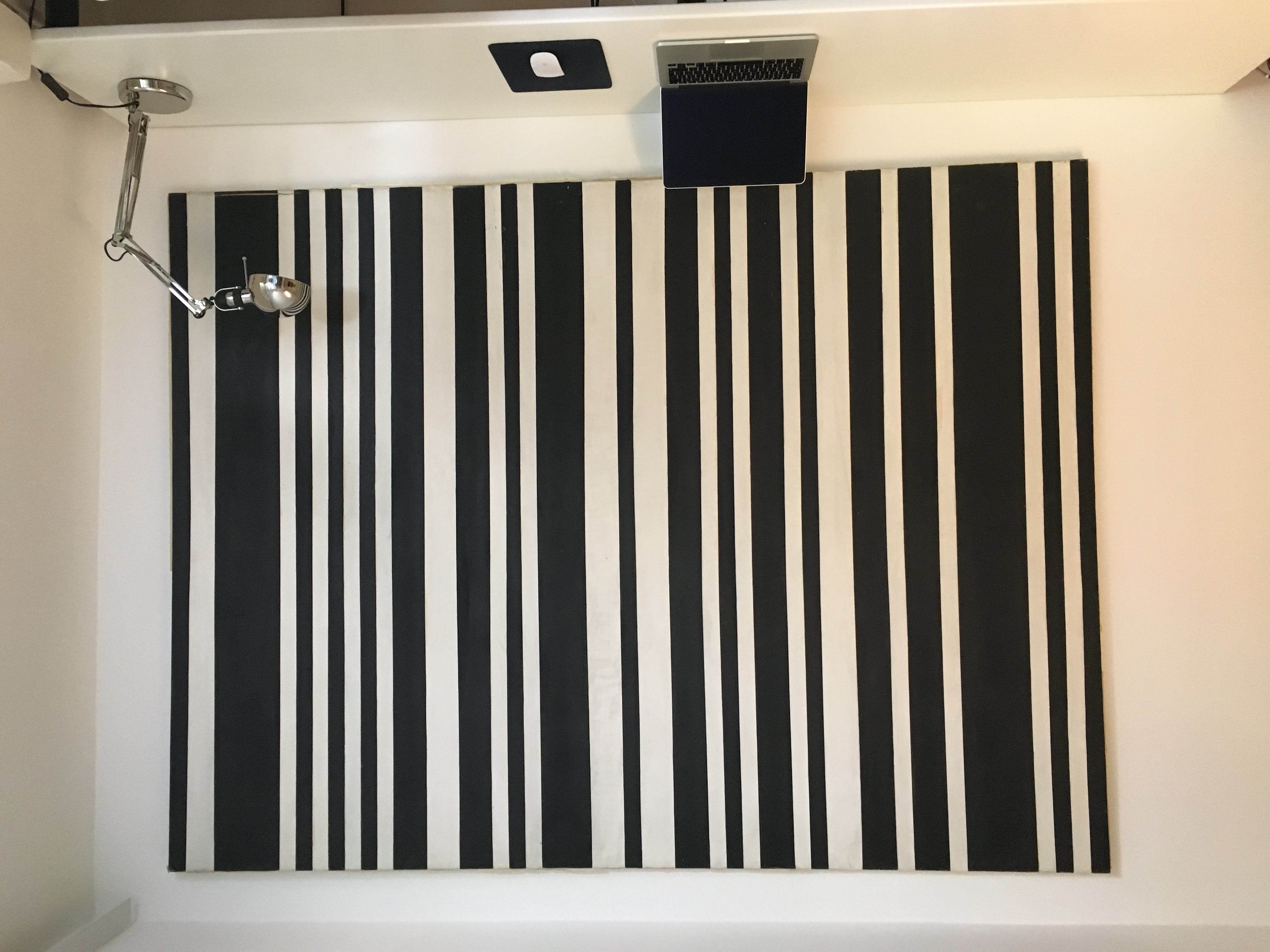
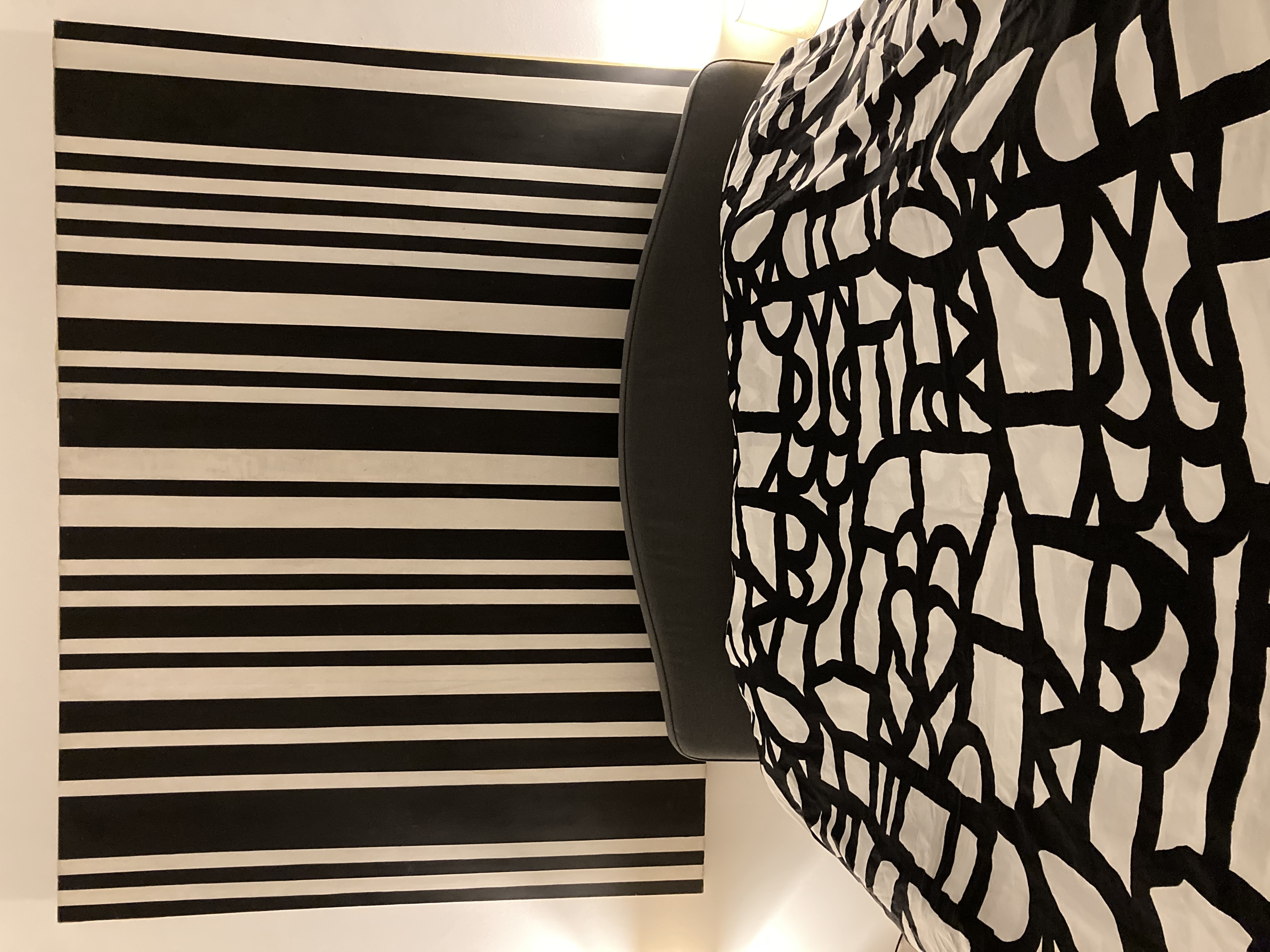
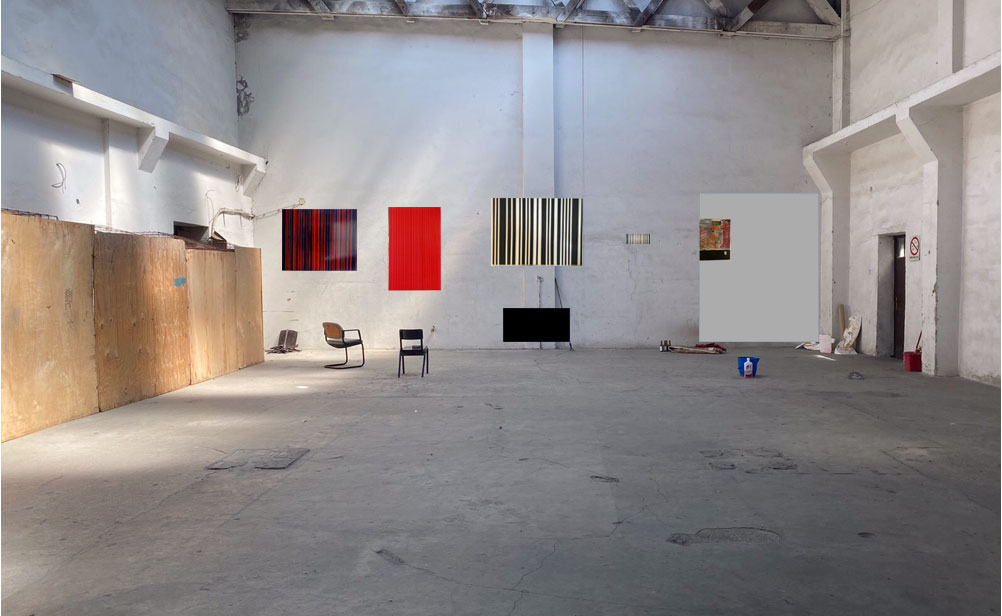
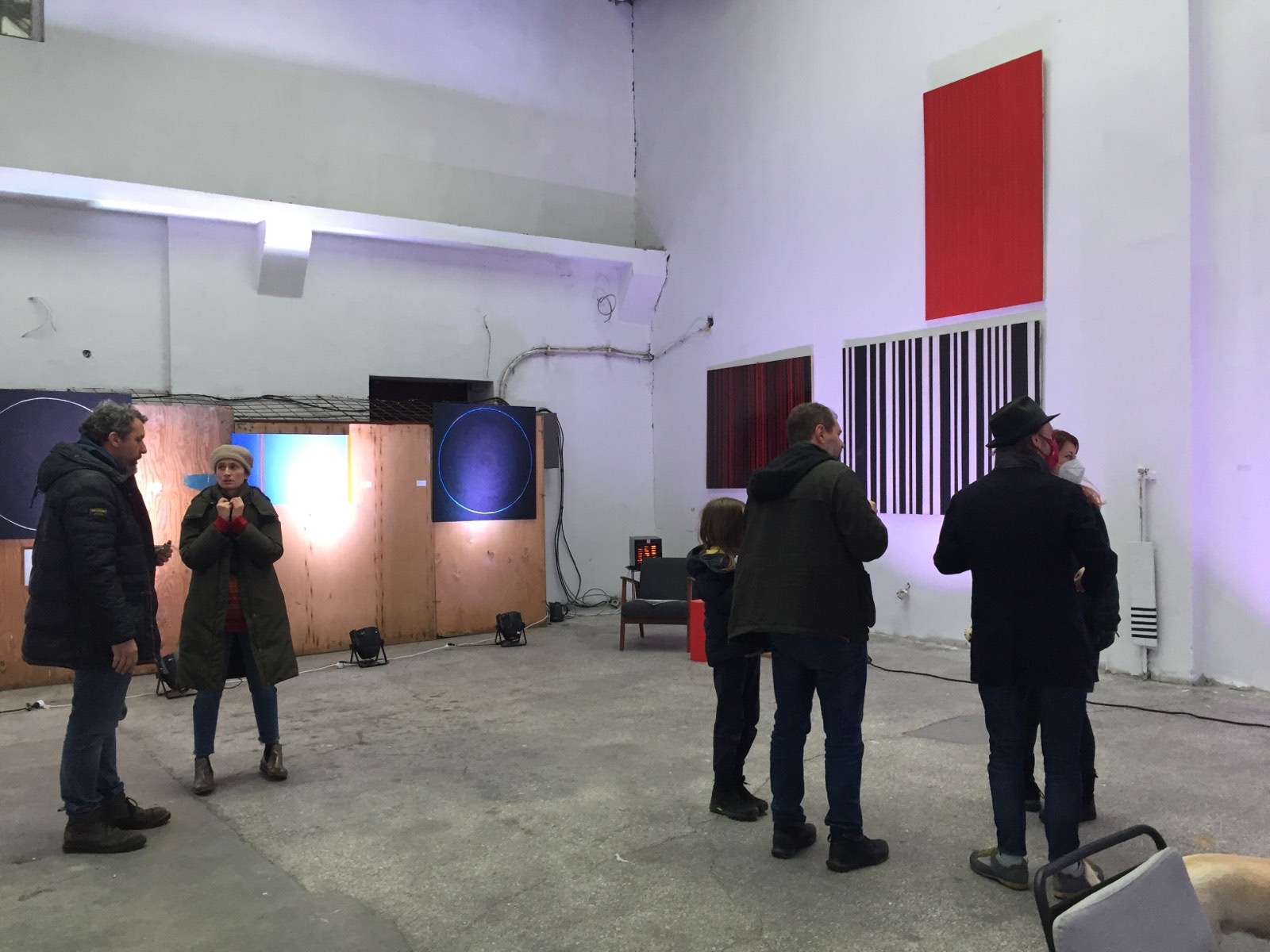
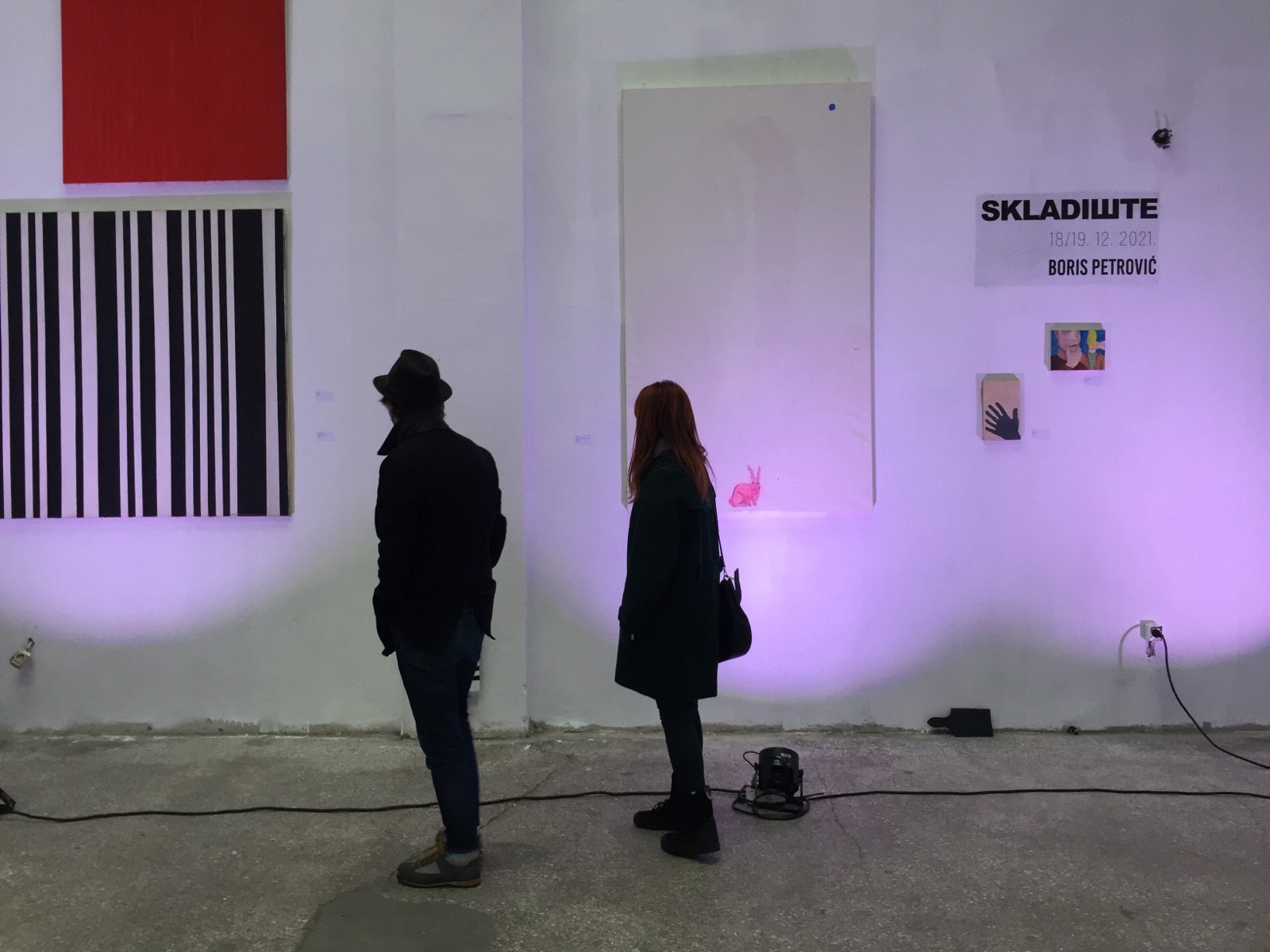
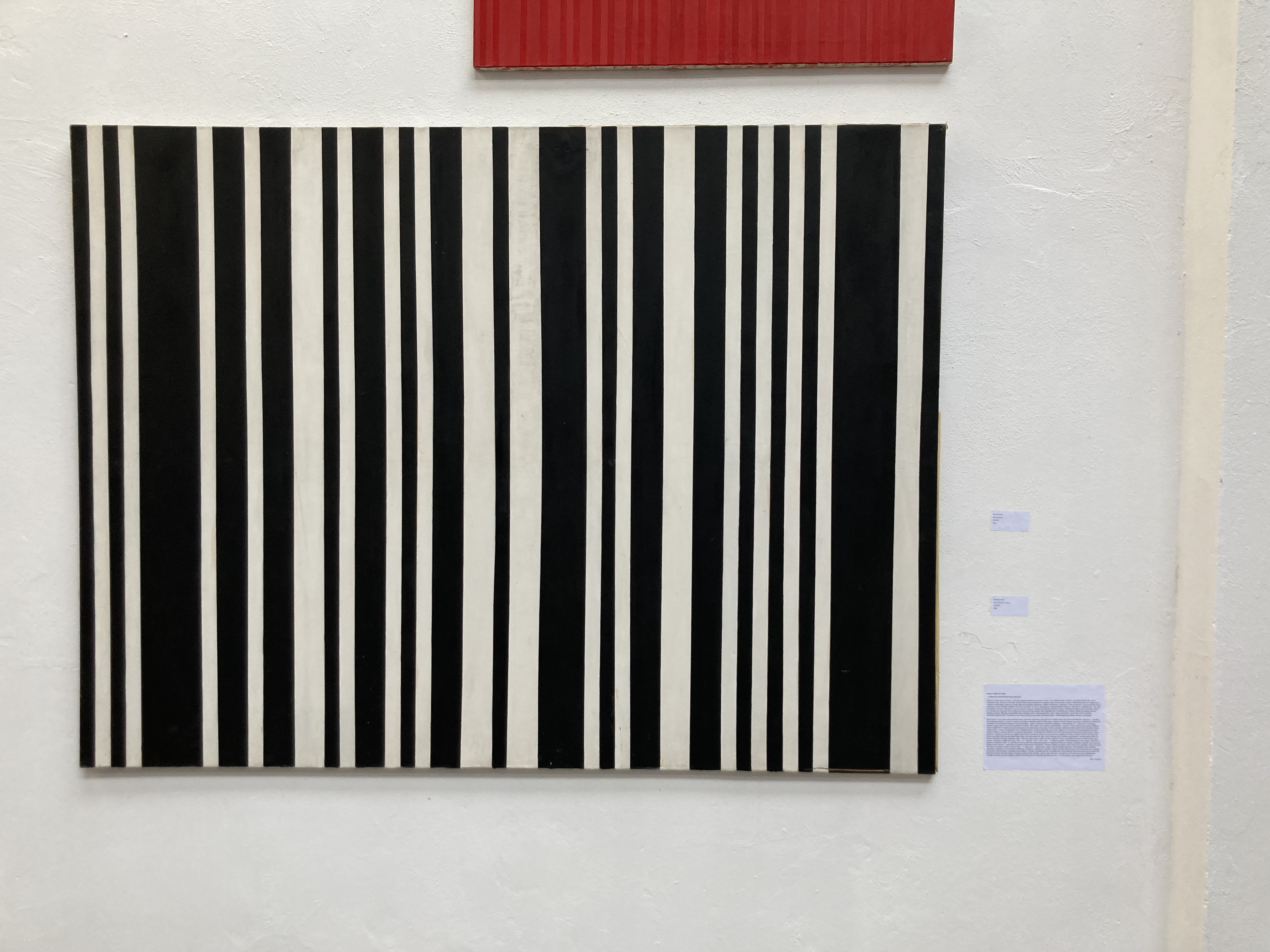
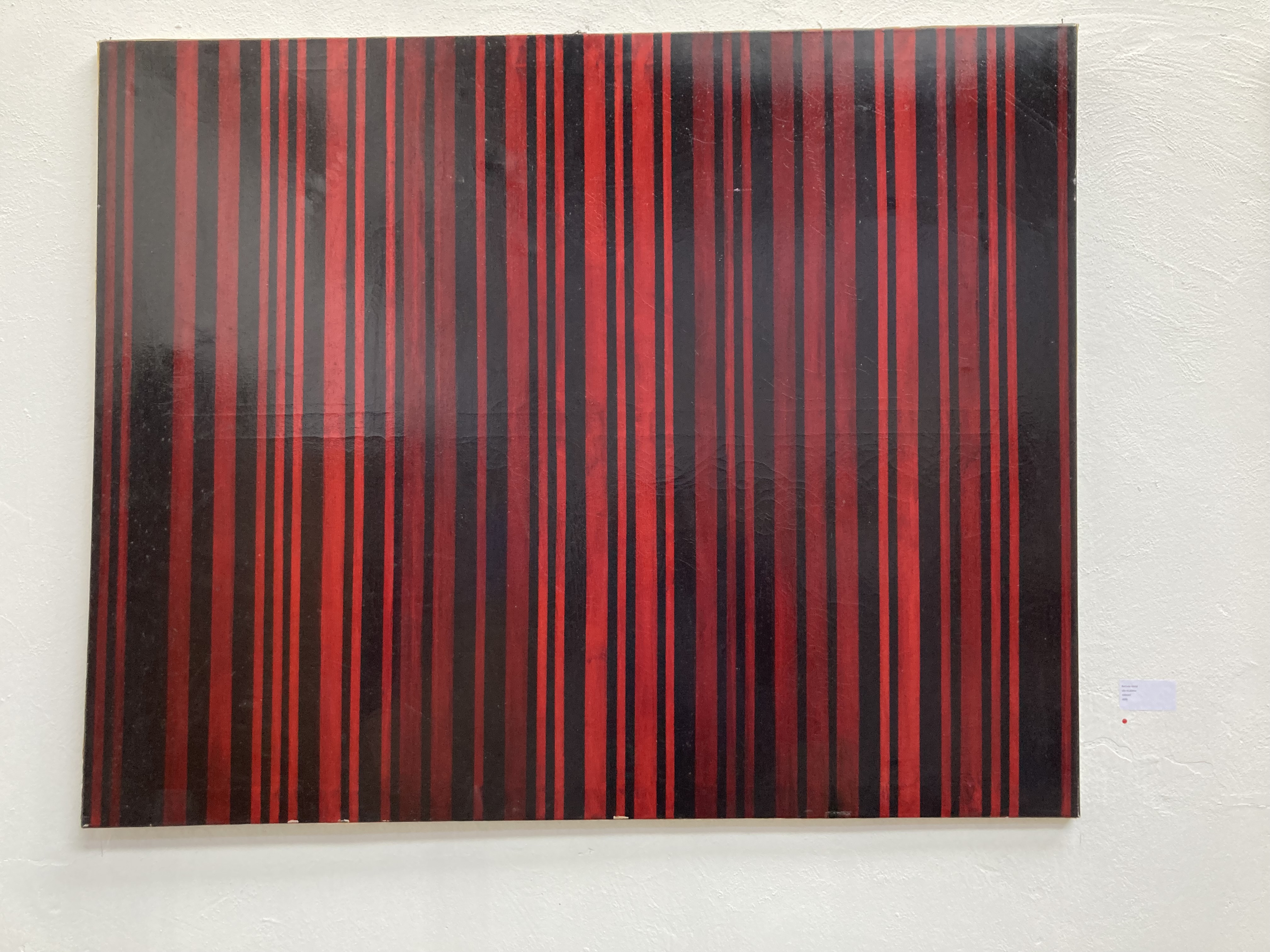
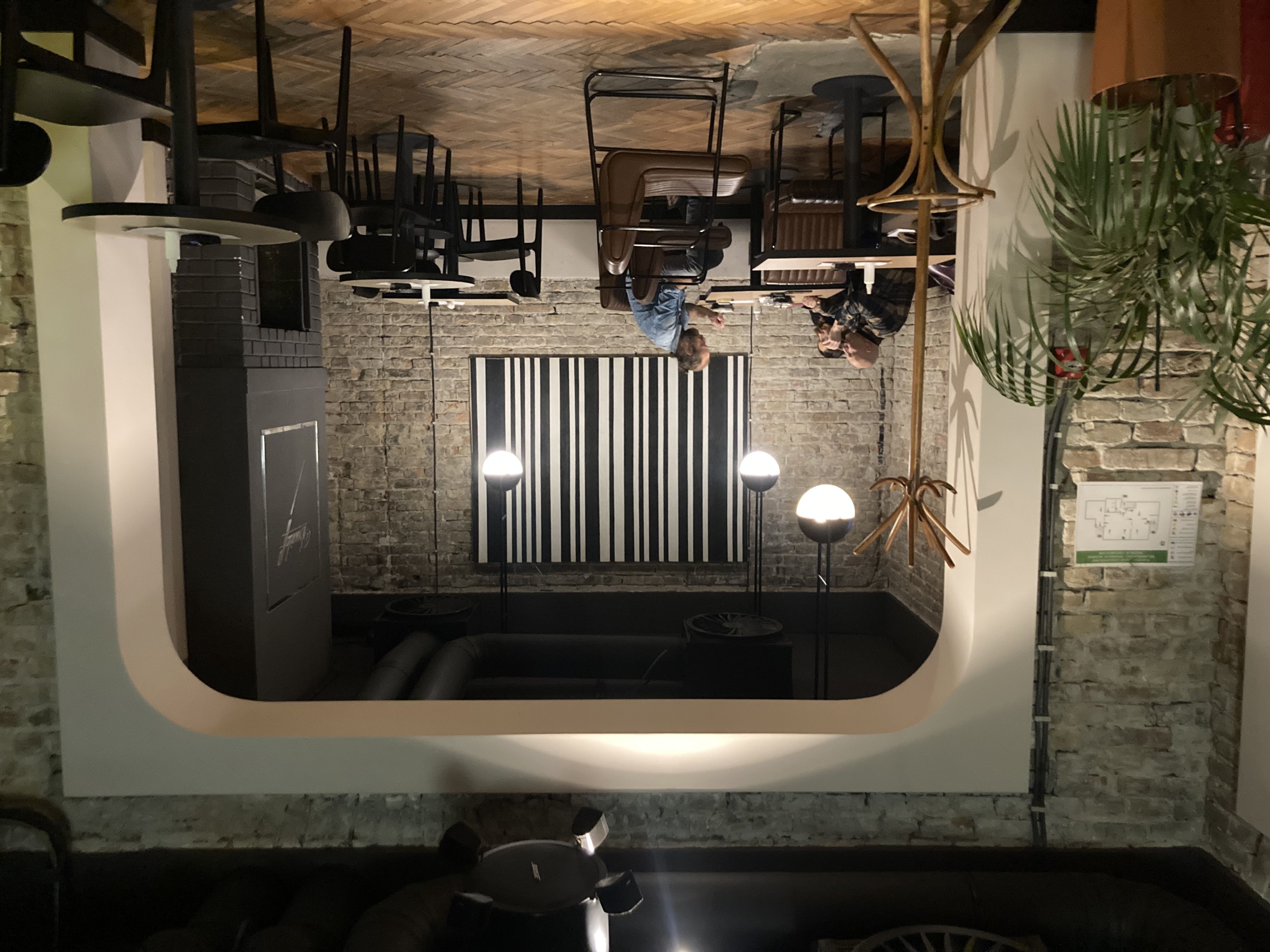
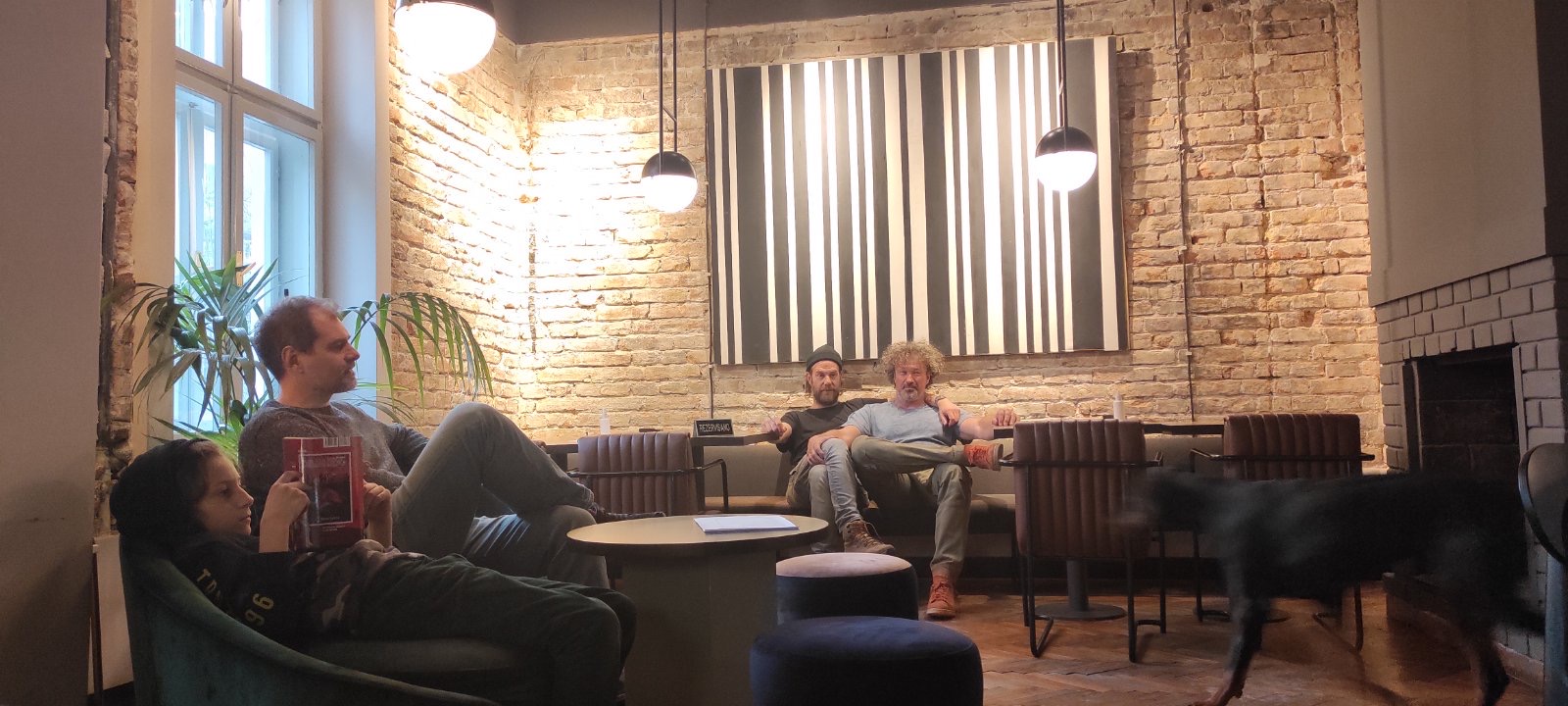
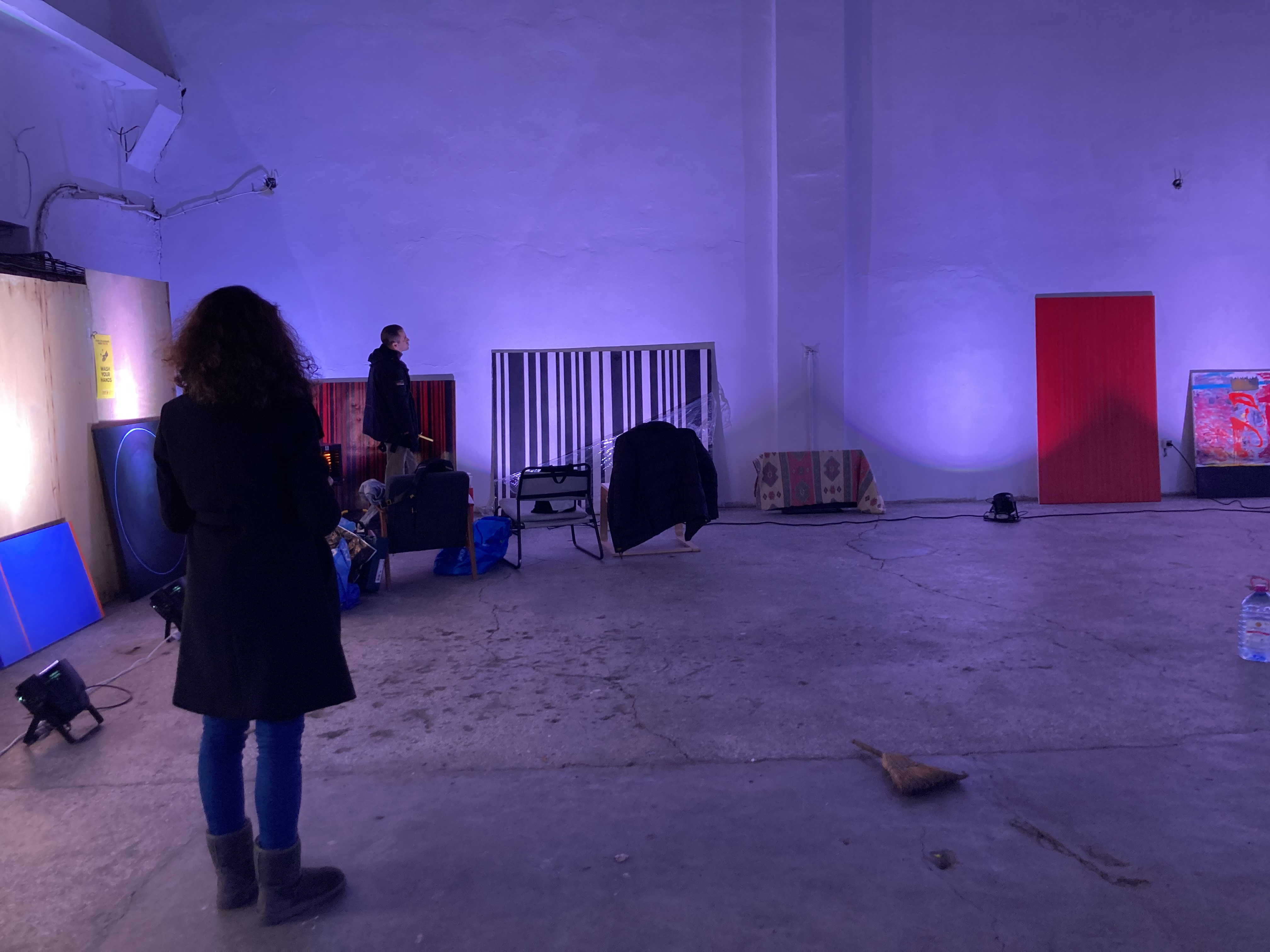
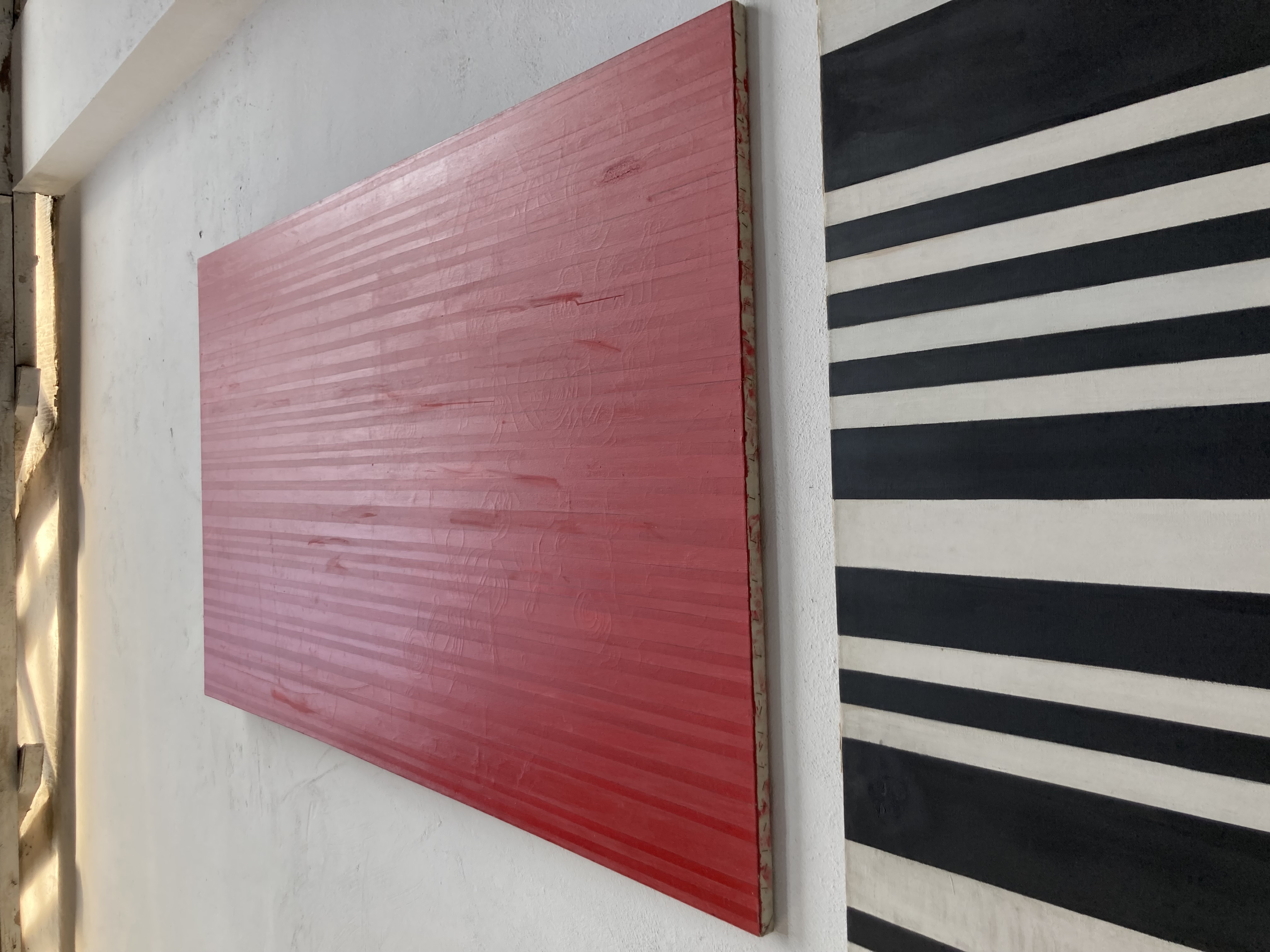
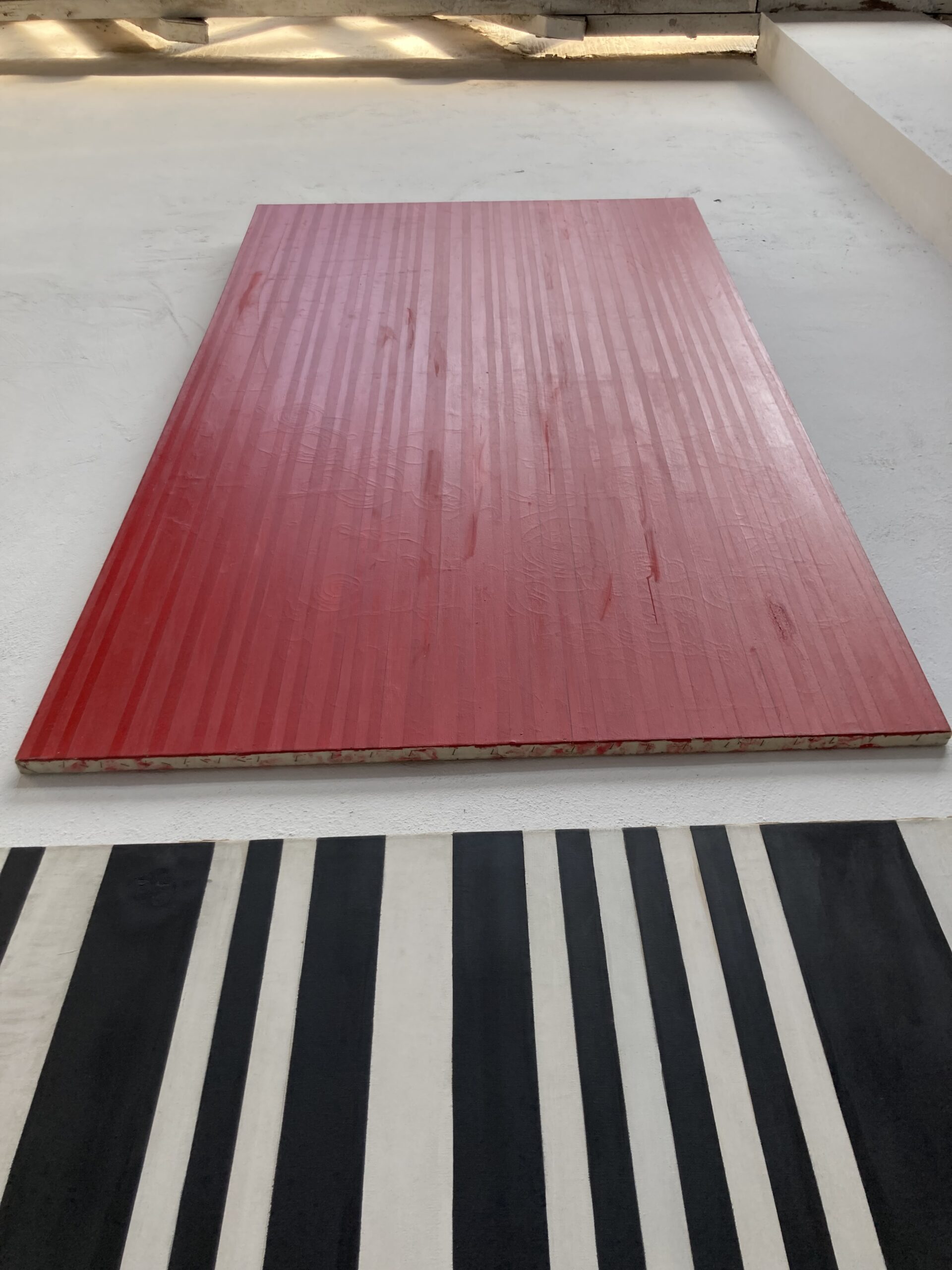
Boris Petrović has created a series of seemingly abstract paintings. Each painting, taken individually, is a pictorially elaborated “piece” that can function as an “autonomous” and “authentic” work of abstract painting. These are flat compositions with vertical lines of varying density. One may evoke uncertain associations with American post-painterly abstraction, with the late Barnett Newman or the early Frank Stella… A strict and emotionally controlled abstraction, non-expressive.
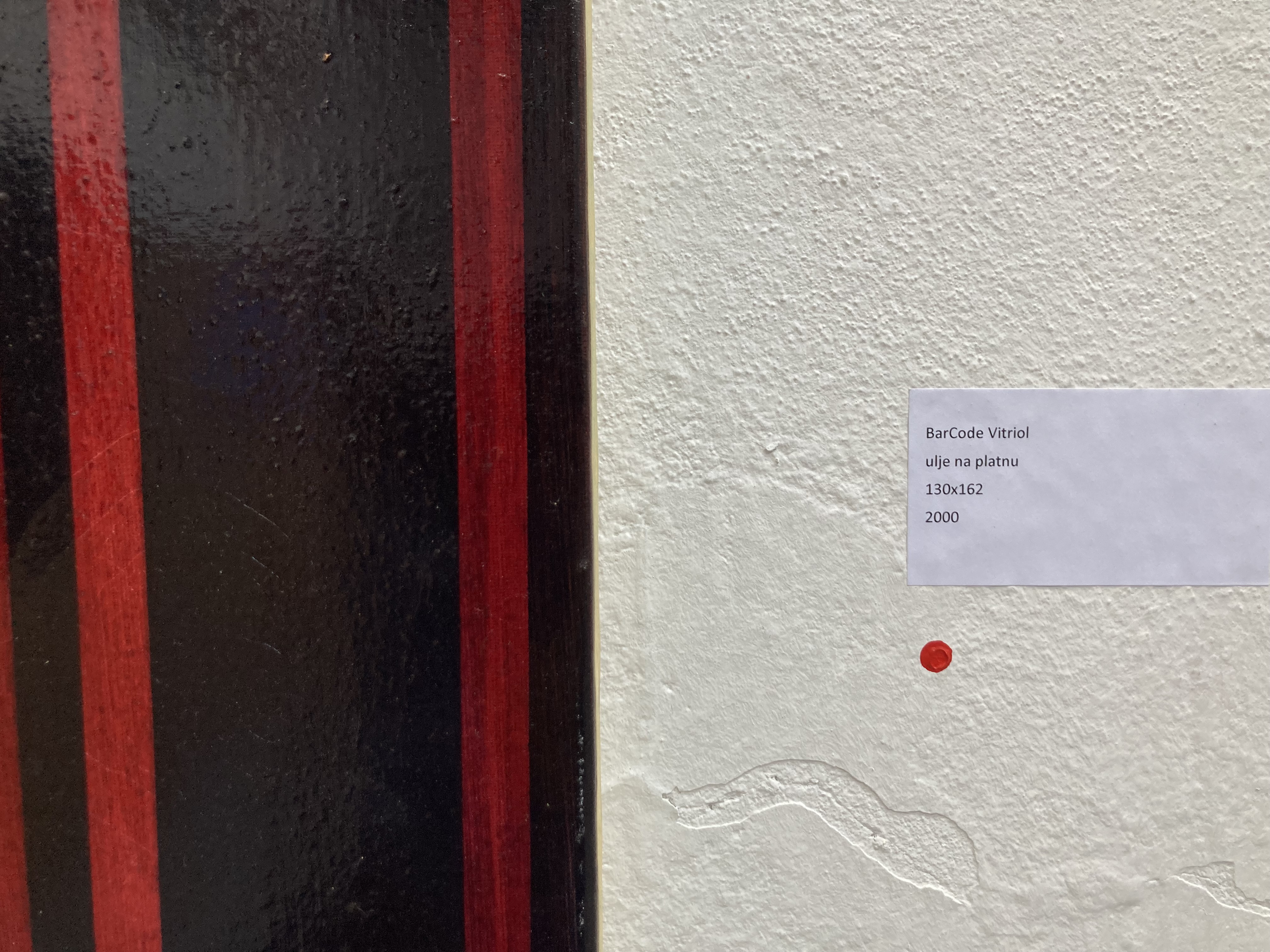
But! … the titles of the paintings and the artist’s interpretations alter the impression of these seemingly abstract pieces. The paintings are, in fact, representations of barcodes. The barcode pattern is a scheme of vertical lines of varying widths and intervals used to designate products of mass production, exchange, and consumption. The barcode is designed to be read by an “optical scanner” and entered into computerized processing of data/values in any store anywhere in the world.
The “barcode” is, in a meta-sense, a symbol of the globalization of communication and the exchange of social values.
Petrović describes his procedure in these words:
“I downloaded a BAR-CODE evaluation set from the Internet, which converts not only numbers but also letters into barcodes. My intention is to transform certain words of magical power and/or words of special significance to me into barcodes on canvases of specifically chosen dimensions. The word acquires its own rhythm, which I complete with color. Color simultaneously evokes the word, which in the form of a barcode is unreadable to the viewer, and assists the optical scanner in transmitting the information-association to the brain center. And man, as a scanning machine, reads and moves on, most often without understanding or attempting to understand. I do not wish to change anything in this.”
Various words were used: “smog,” “kilim,” “sun,” “clock,” “vulva,” “vitriol,” “rszv,” …
A paradox is at work. Before the viewer are paintings saturated with meanings in both the literal and rhetorical sense. Yet the paintings themselves, at the level of natural sensory perception/reception, do not permit the reading of meanings and symbolic superstructures. The paintings function as arbitrary optical “phenomena” — the appearance of a surface with a formally aestheticized composition.
Only if the human eye were to become a machine, or if an “electronic optical scanner” were employed, would the paintings reveal their secret meanings. Although… there is “no secret” here… there are only relations within a field of multivalent possibilities and phenomenological (sensory-machine) limitations in the translation—or untranslatability—of the symbolic into the imaginary and the imaginary into the symbolic.
The painter’s verbal interpretation makes available to the viewer the “strategy” of signification, re-signification, and the transformation of the sign of social value into the signifier of painting, and the signifier-of-commodity into the sign-of-painting.
The paintings before us in this exhibition are not simply present before the eye. Their ontology is not unambiguously determinable; on the contrary, it is heterogeneous and provocative precisely in the sense that it confronts opposing “strategies” of the abstract painting as formal object and the representational painting as a semantically decentered screen.
These are paintings in the age of culture as the new nature.
by Miško Šuvaković