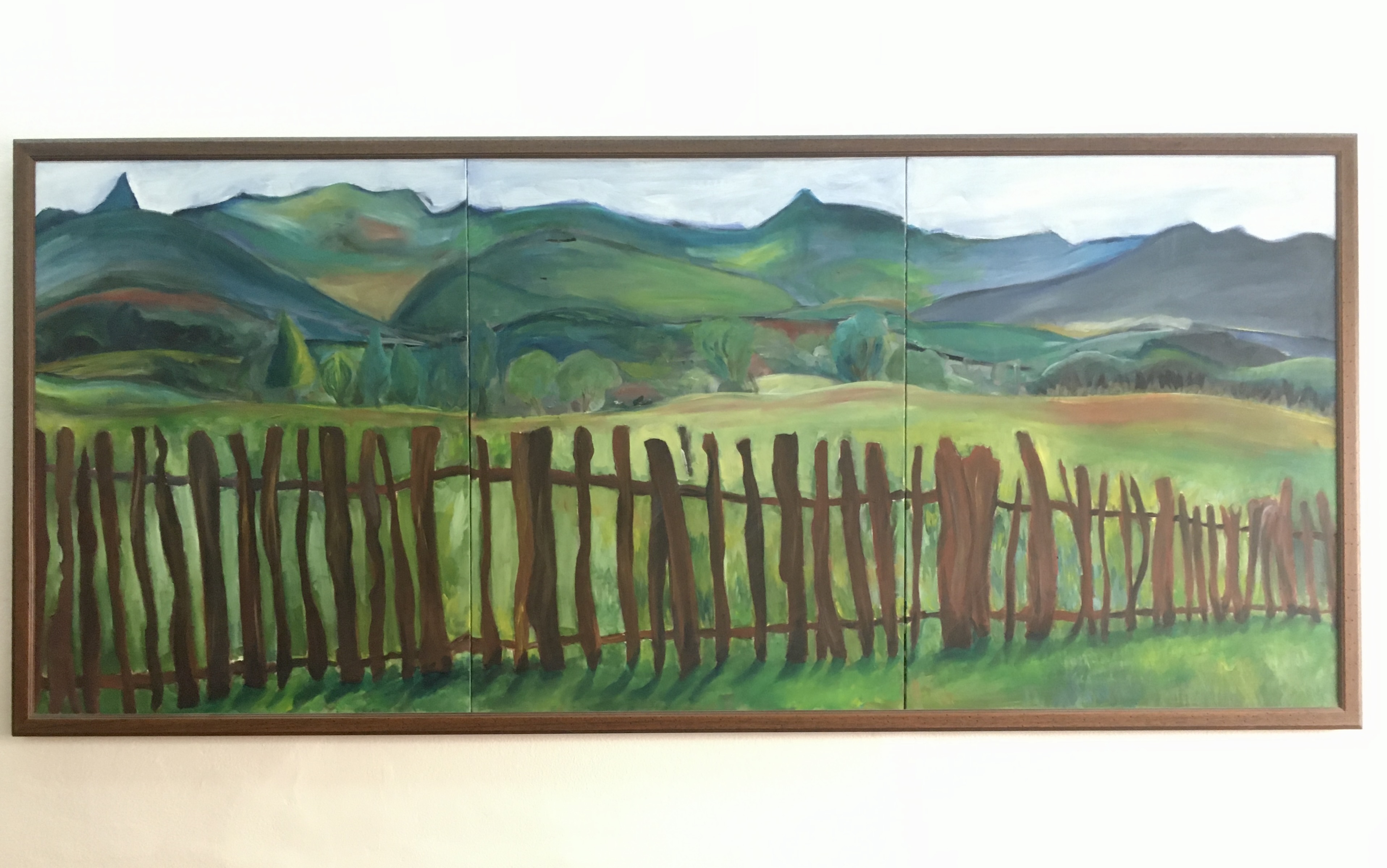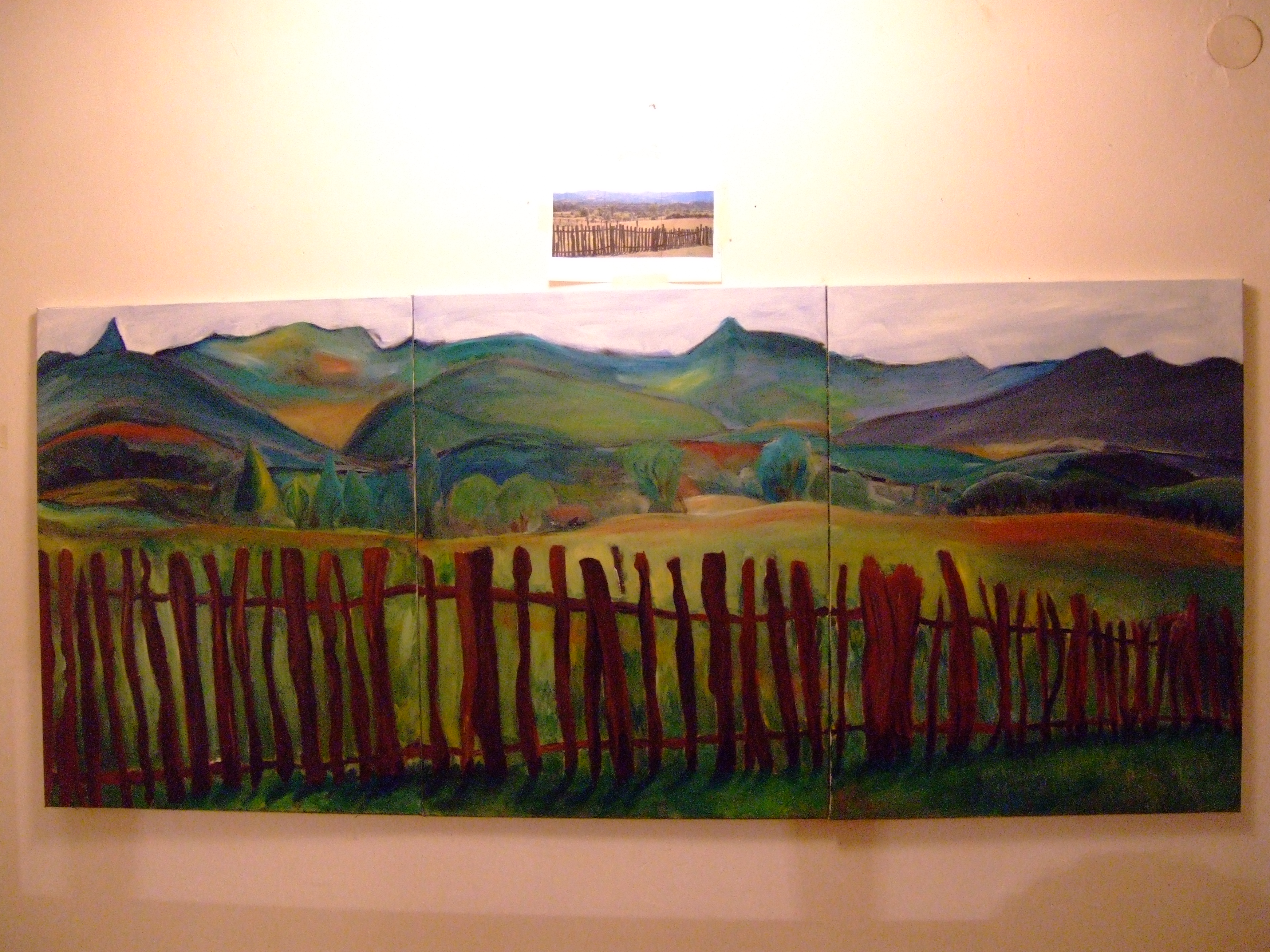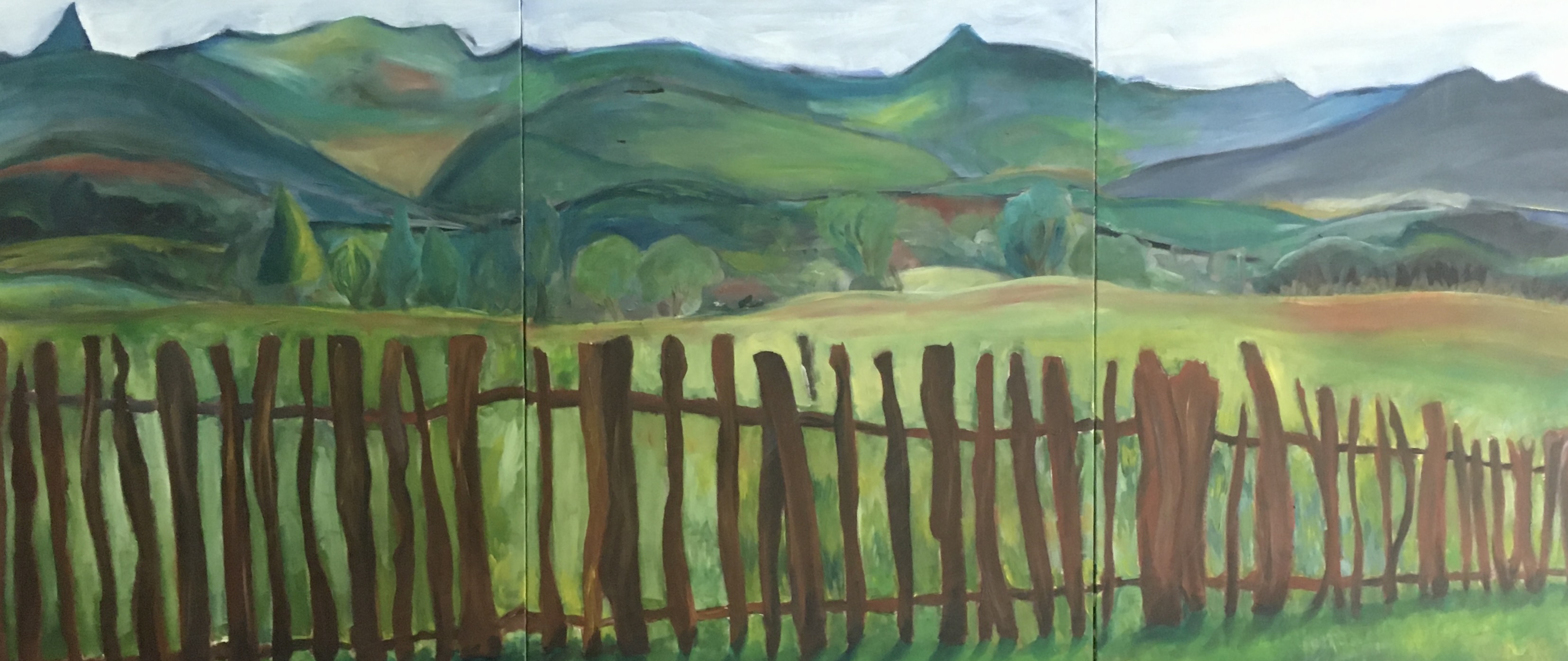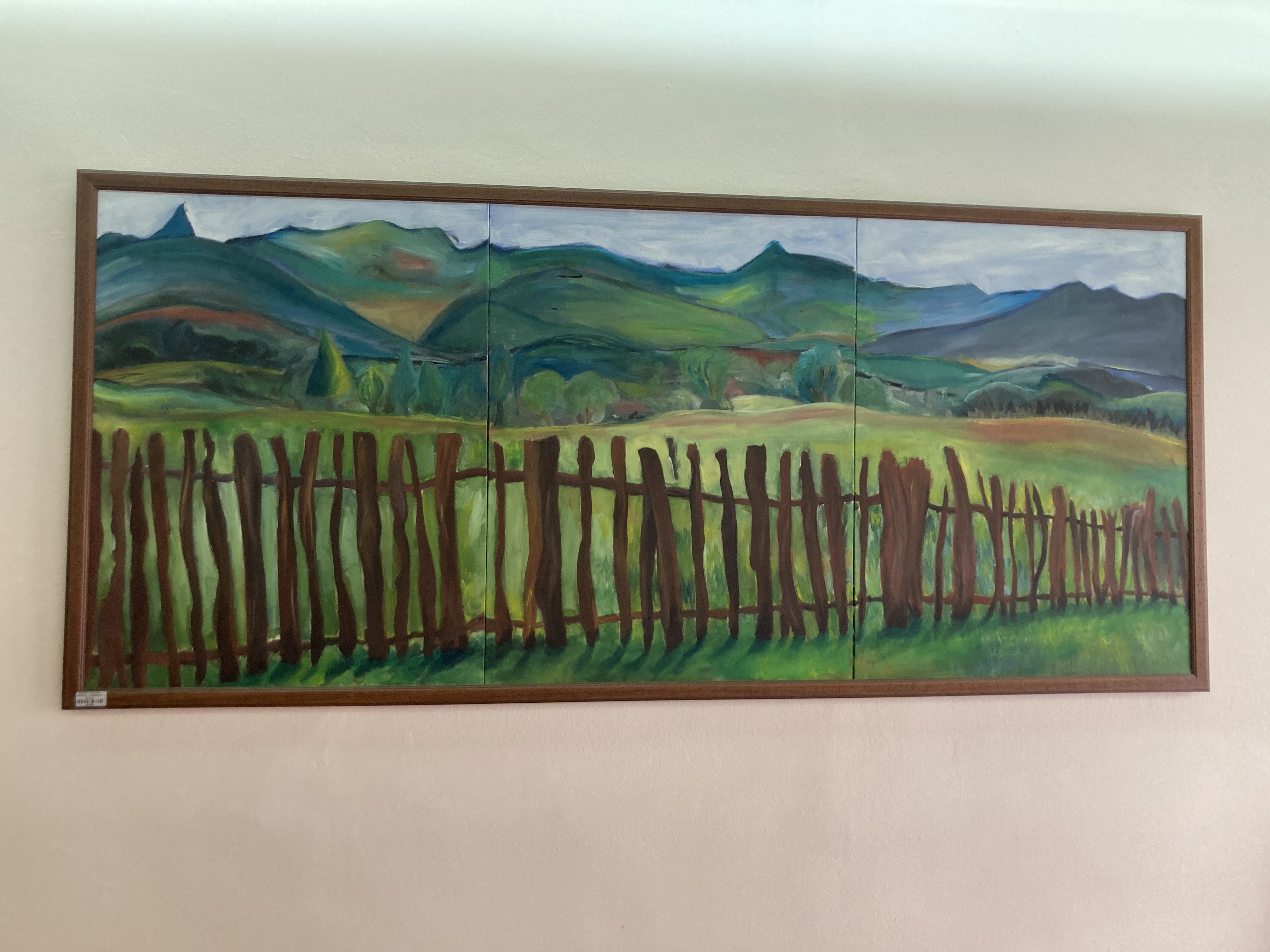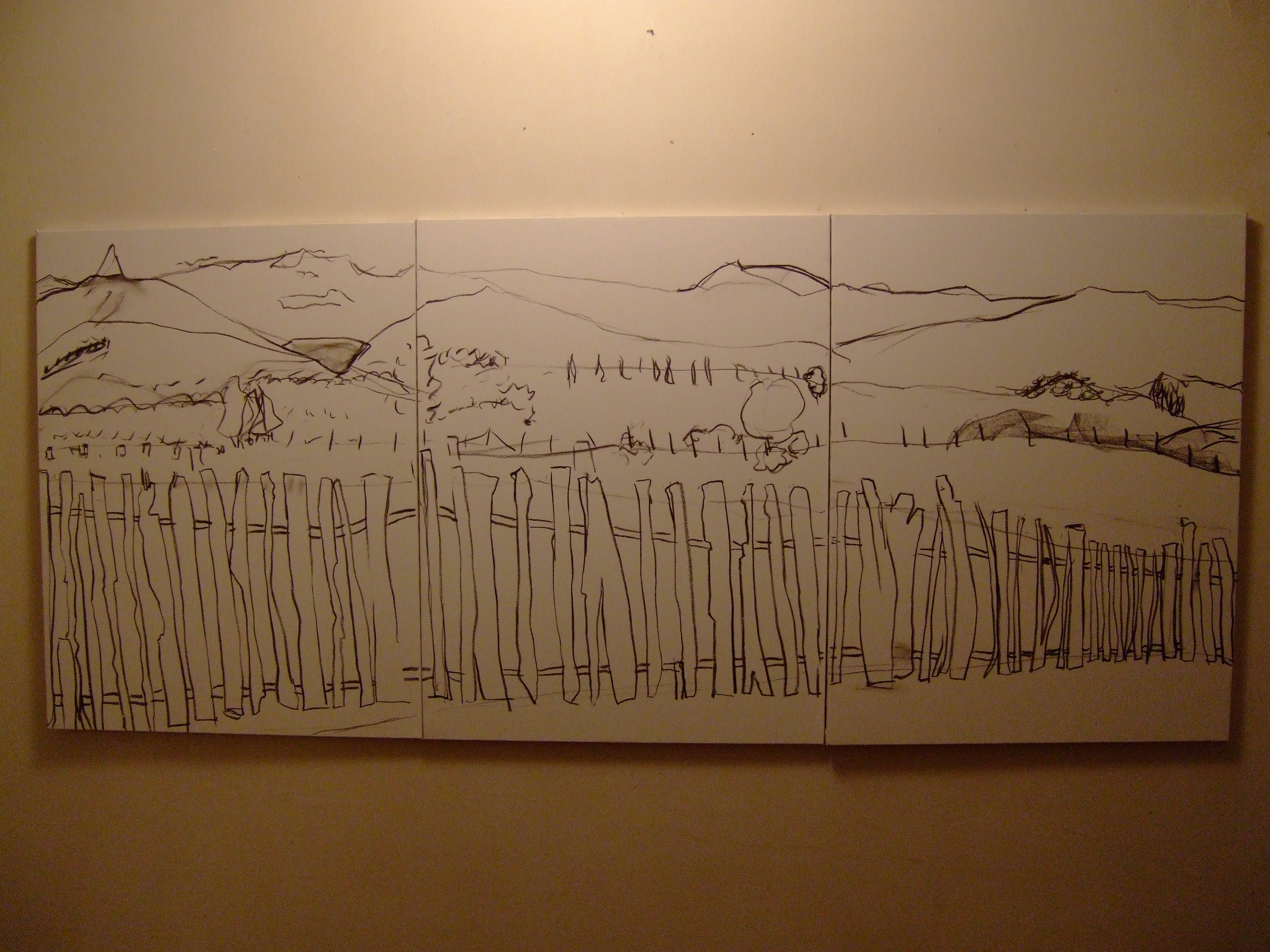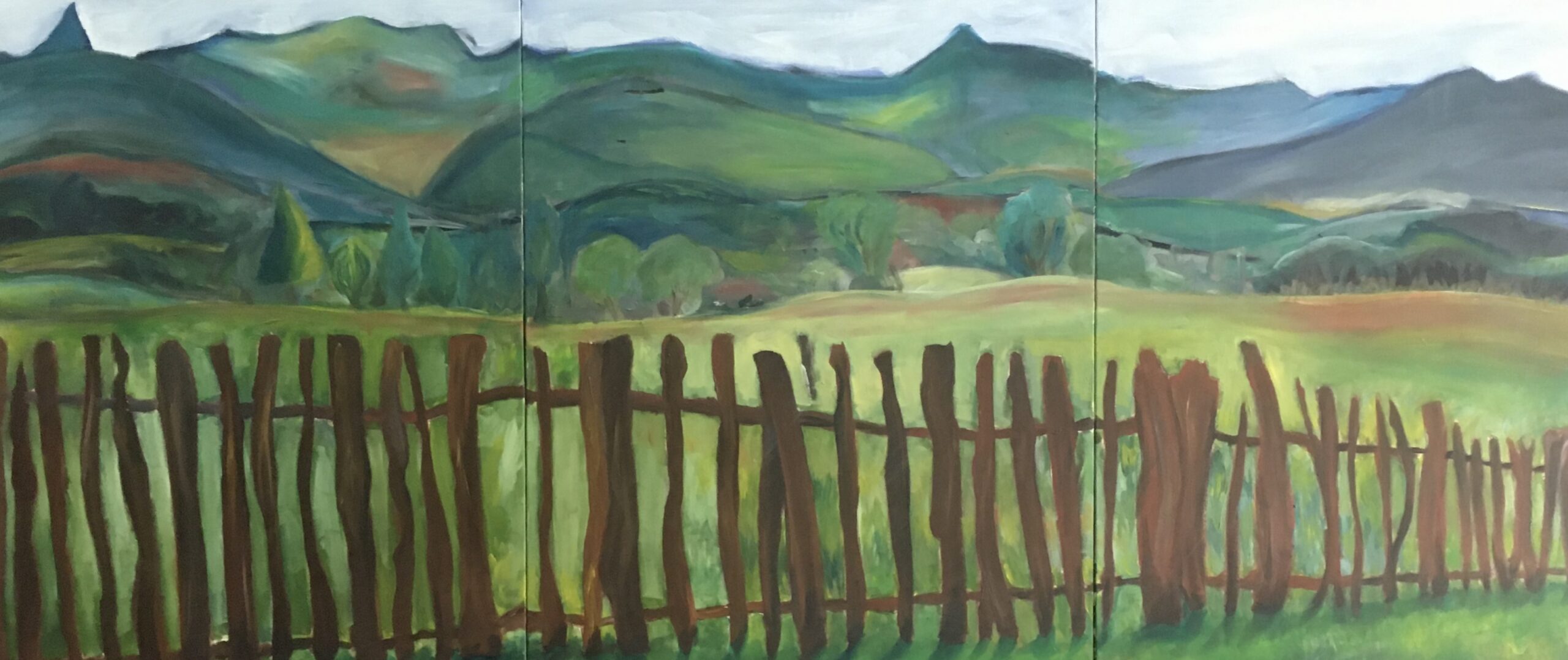
Presented in three parts—as local custom and religious habit often prefer—the landscape acquires the solemnity of an altar image.
Yet the dominant visual fact is the fence.
Its placement relocates the viewer from the position of traveler to that of fenced observer, producing an uncomfortable reversal in which the human subject occupies the same optical condition as domesticated animals.
The horizon remains open only as scenery.
Freedom is therefore fully visible, but structurally inaccessible.