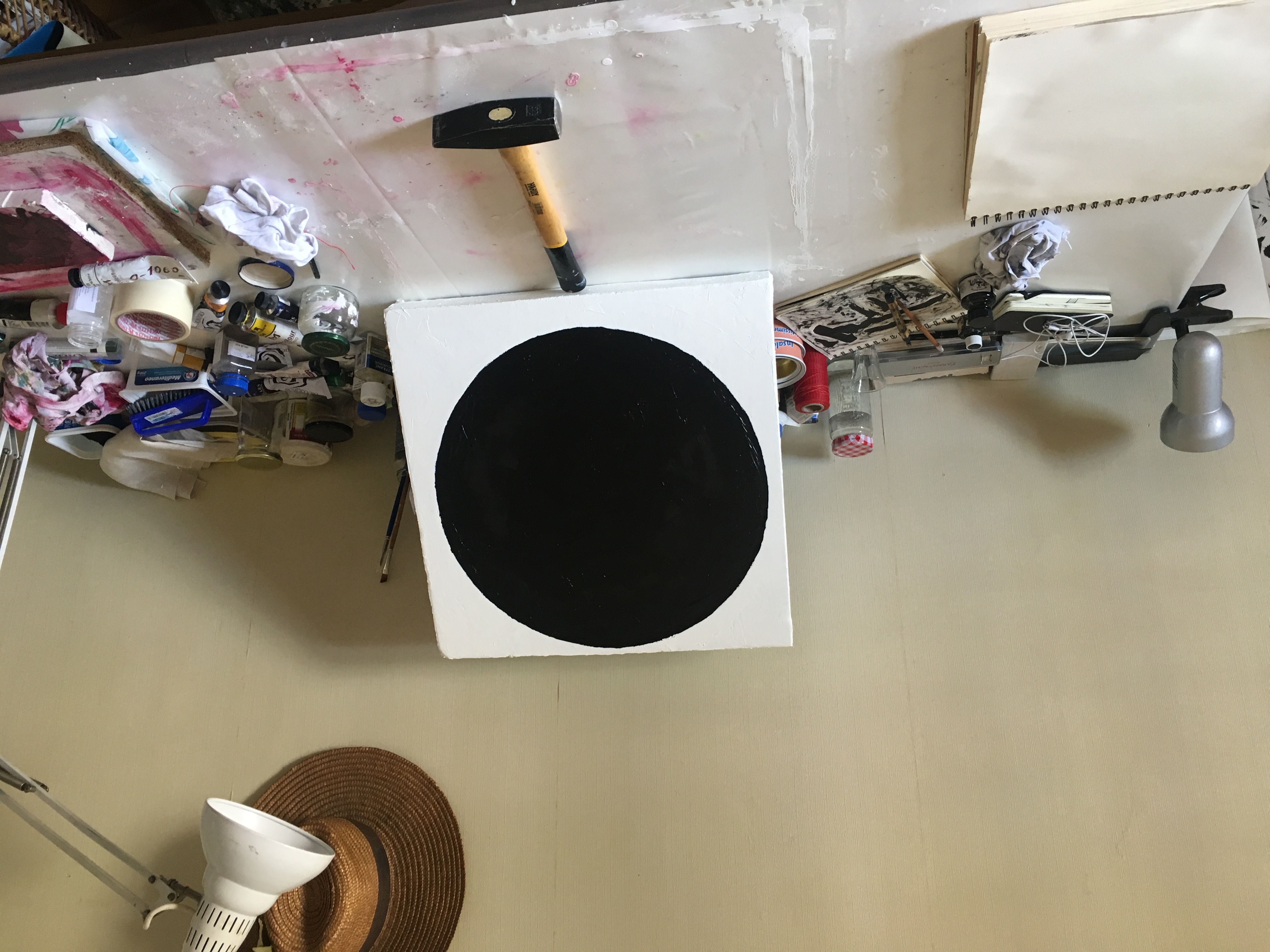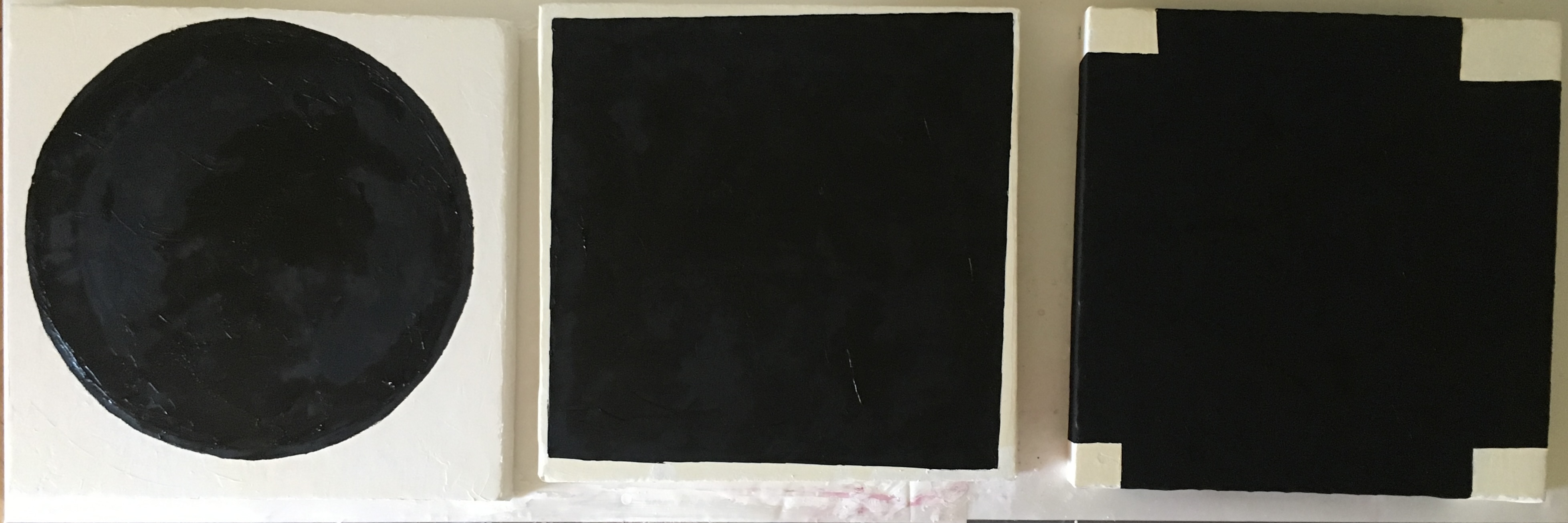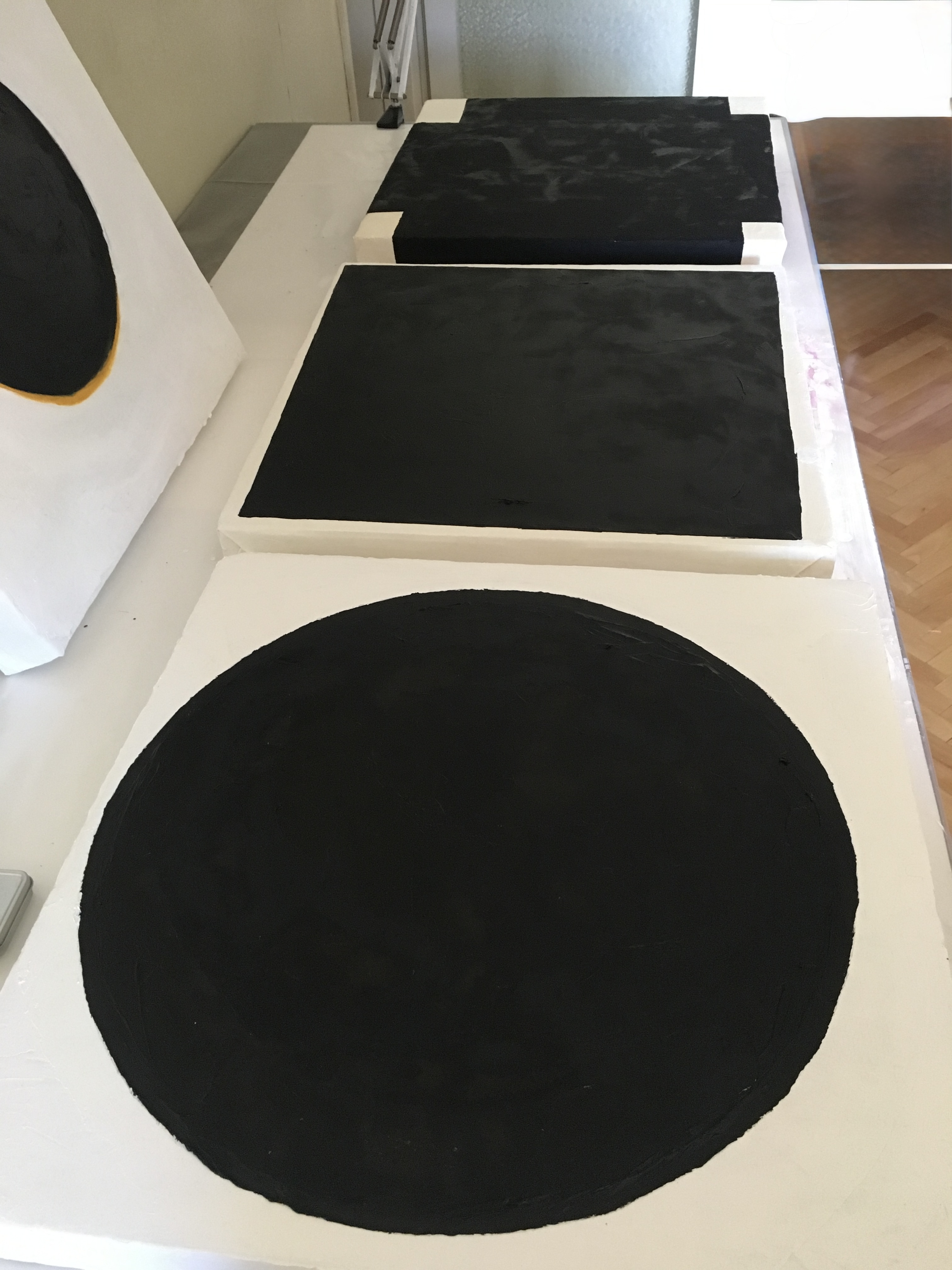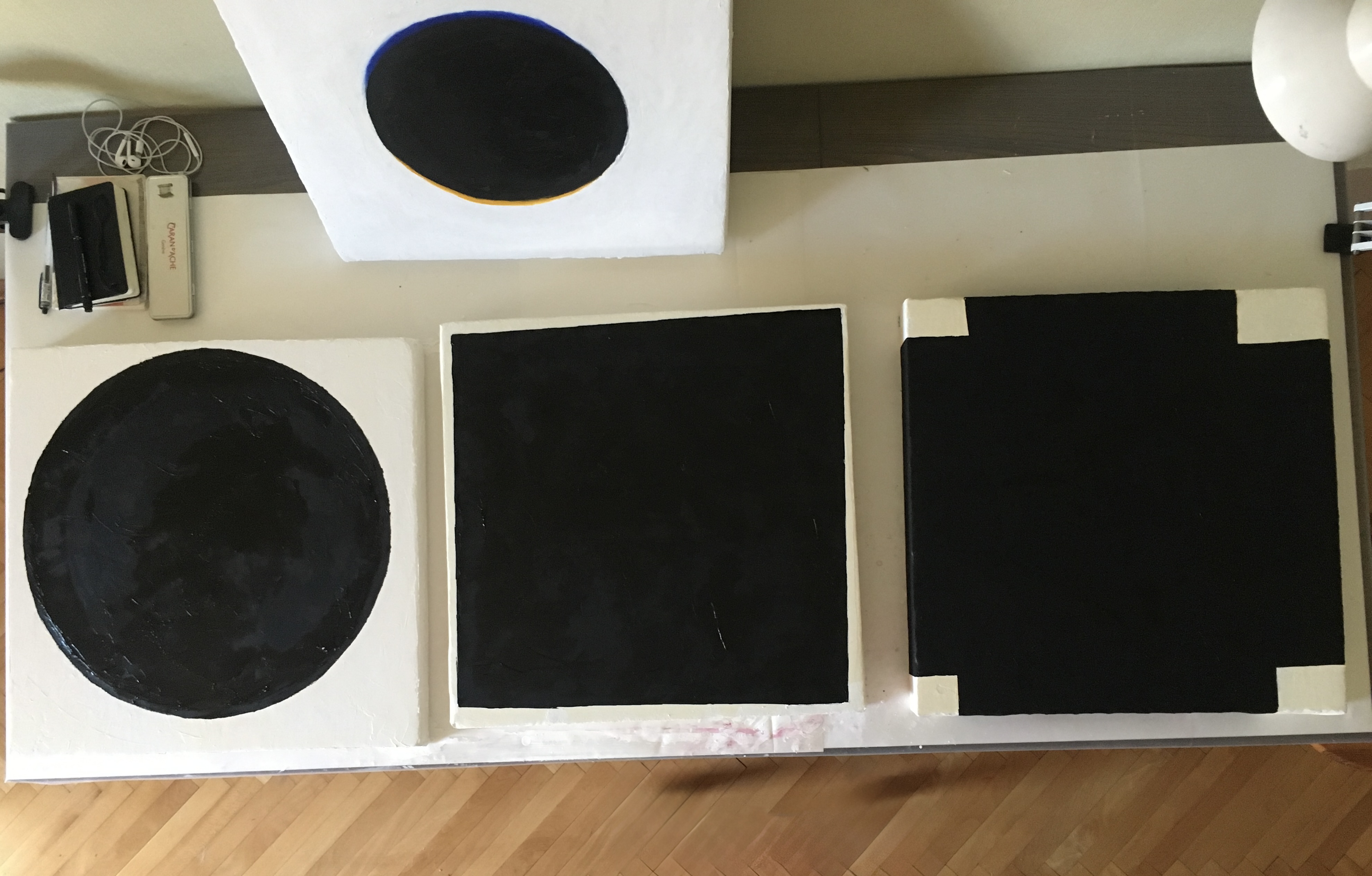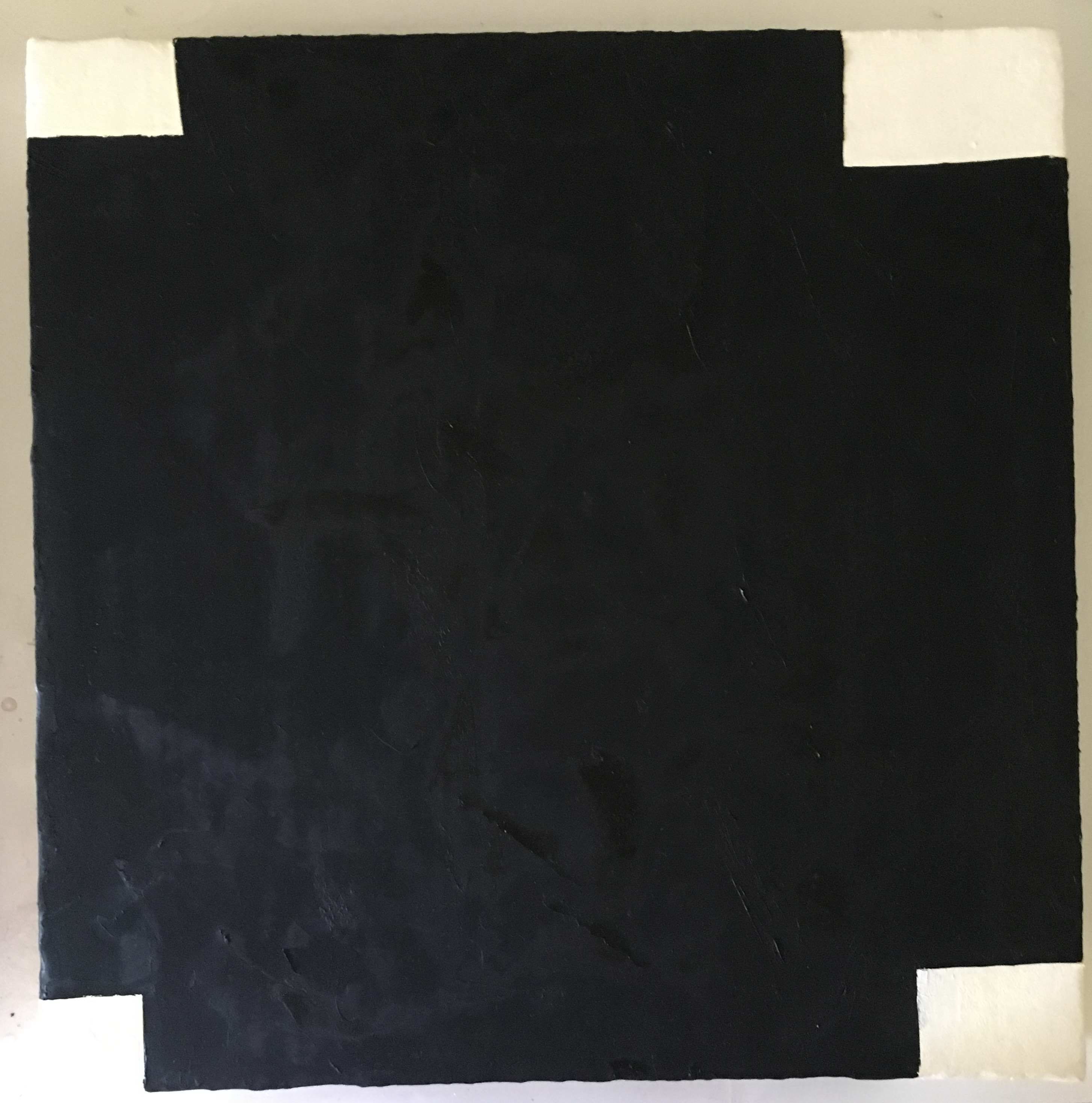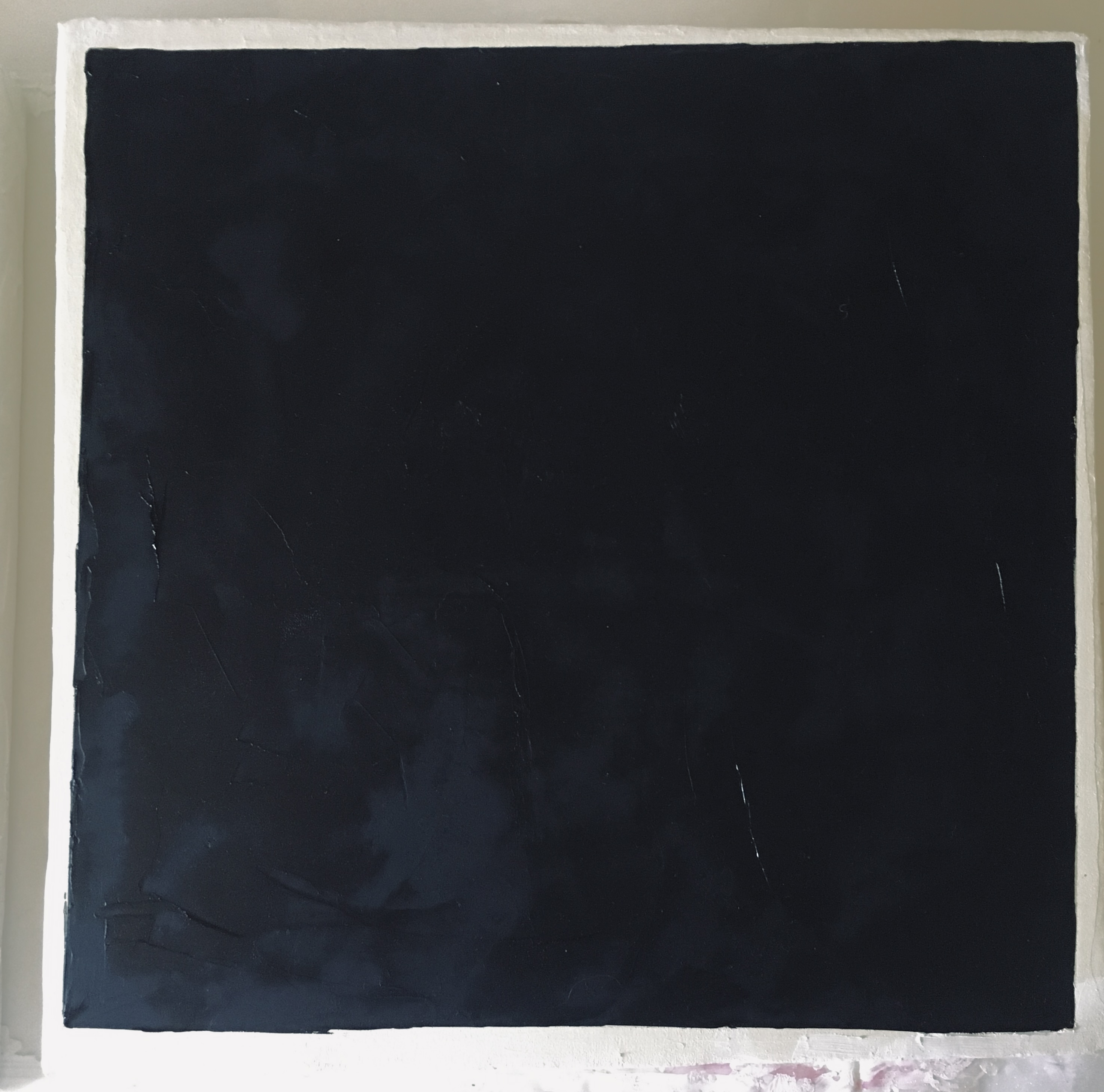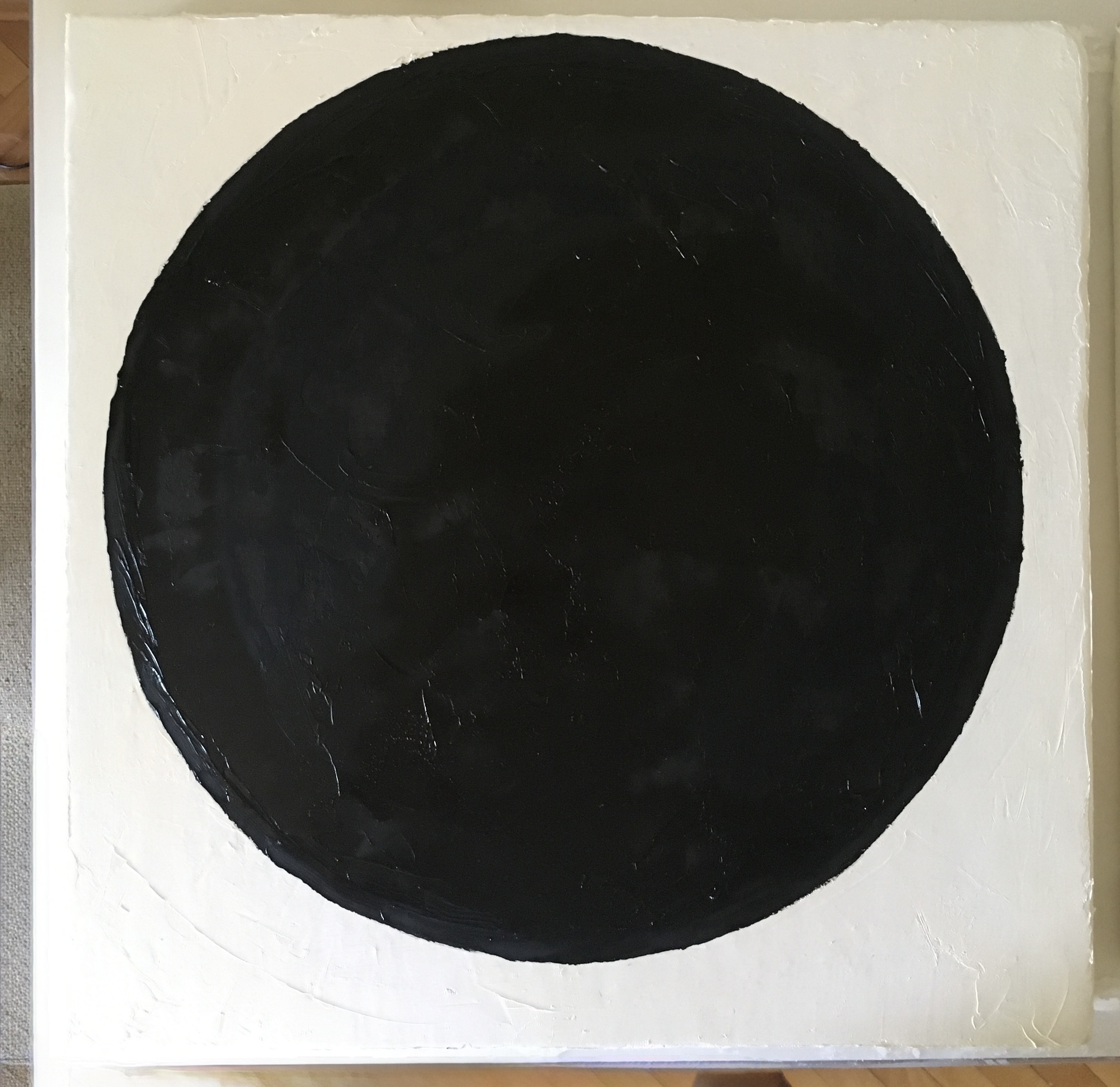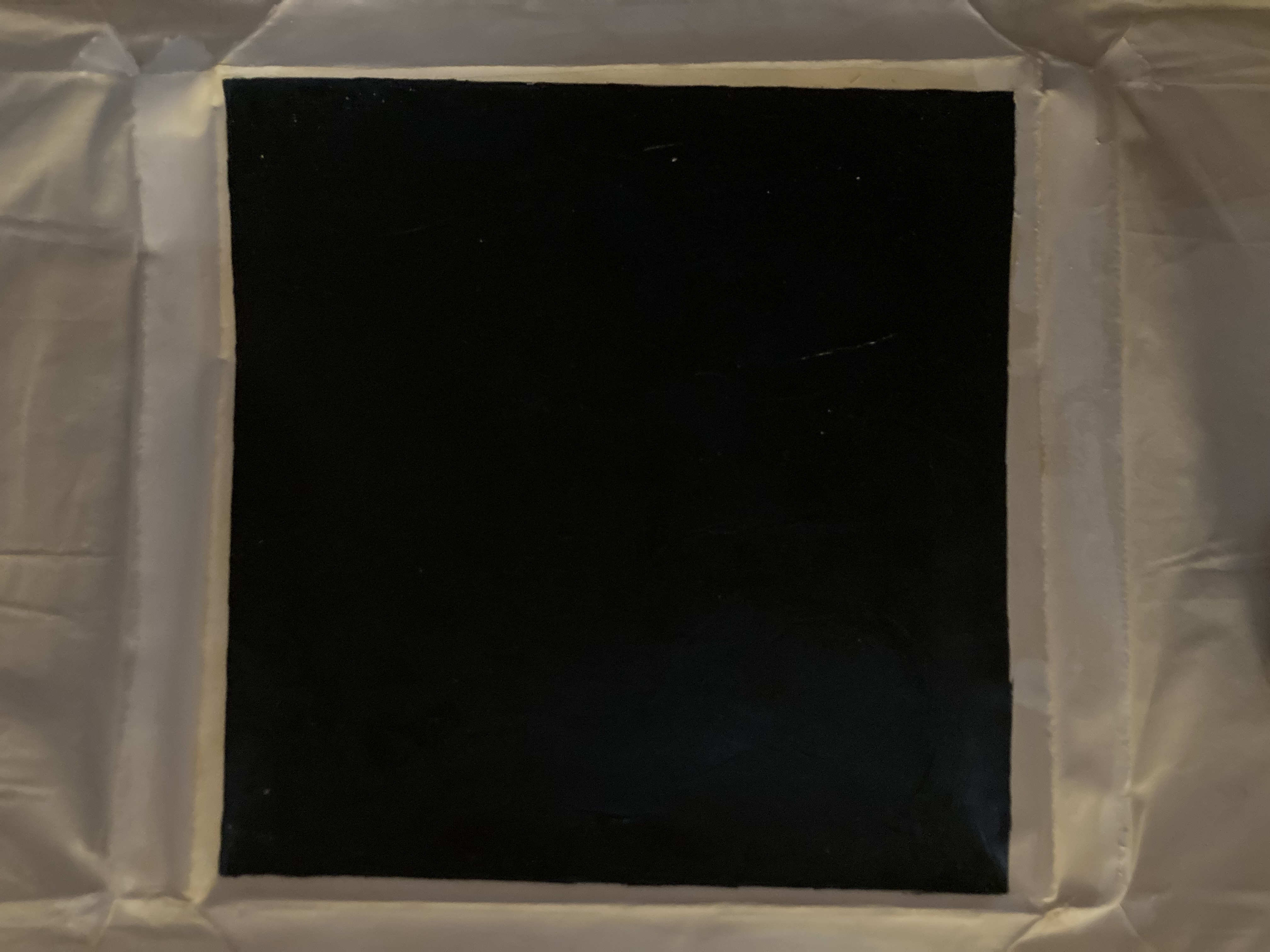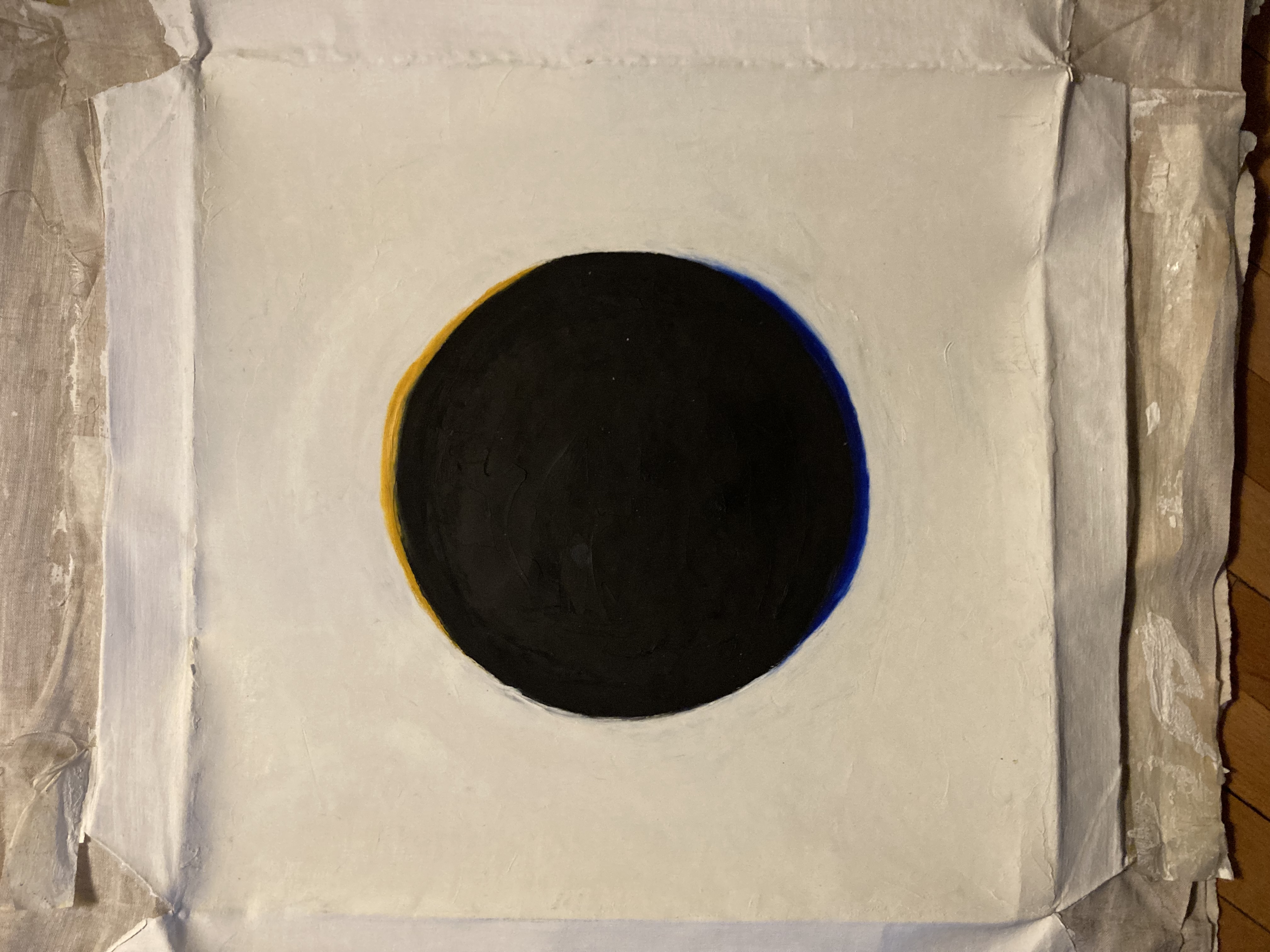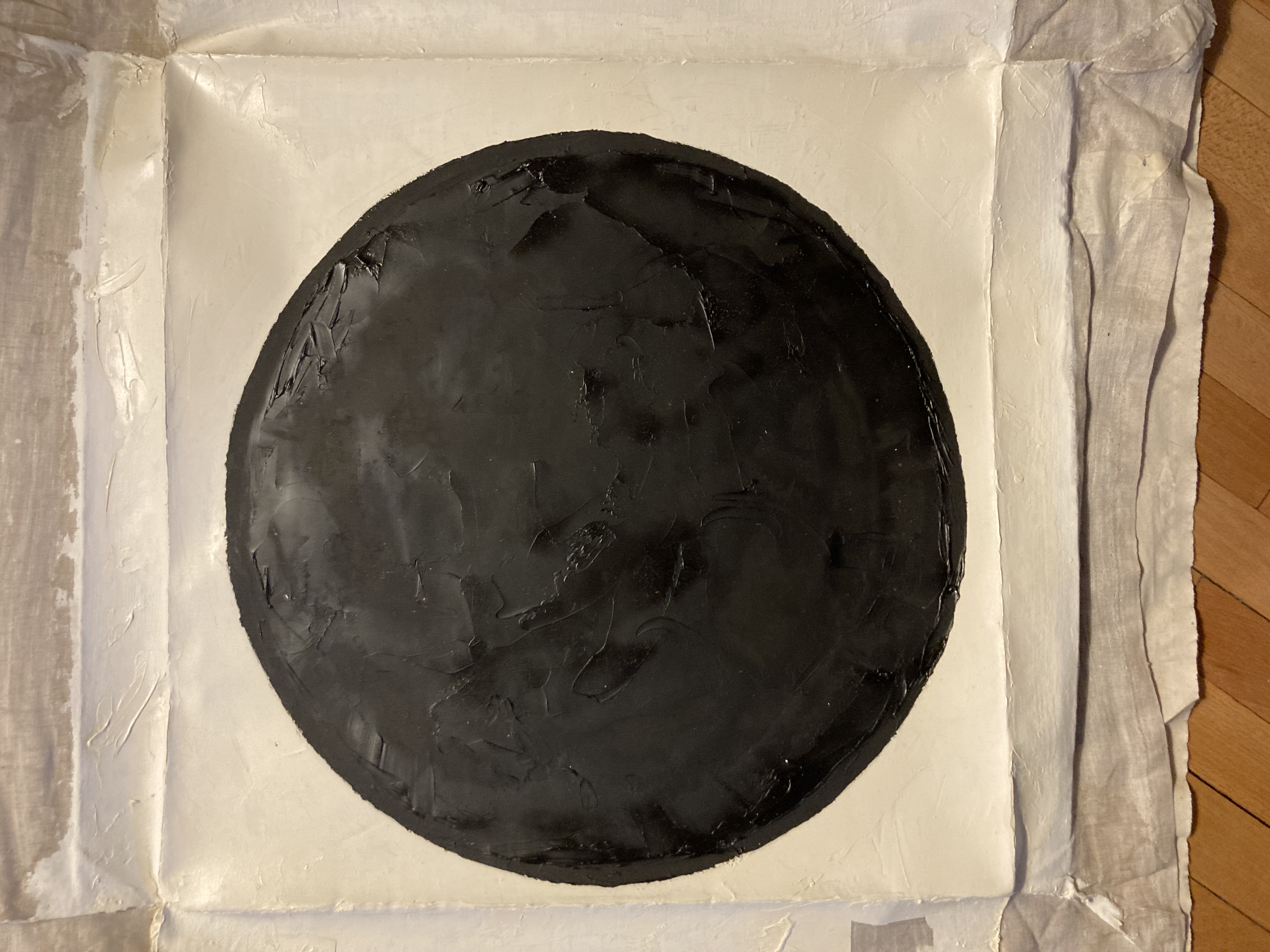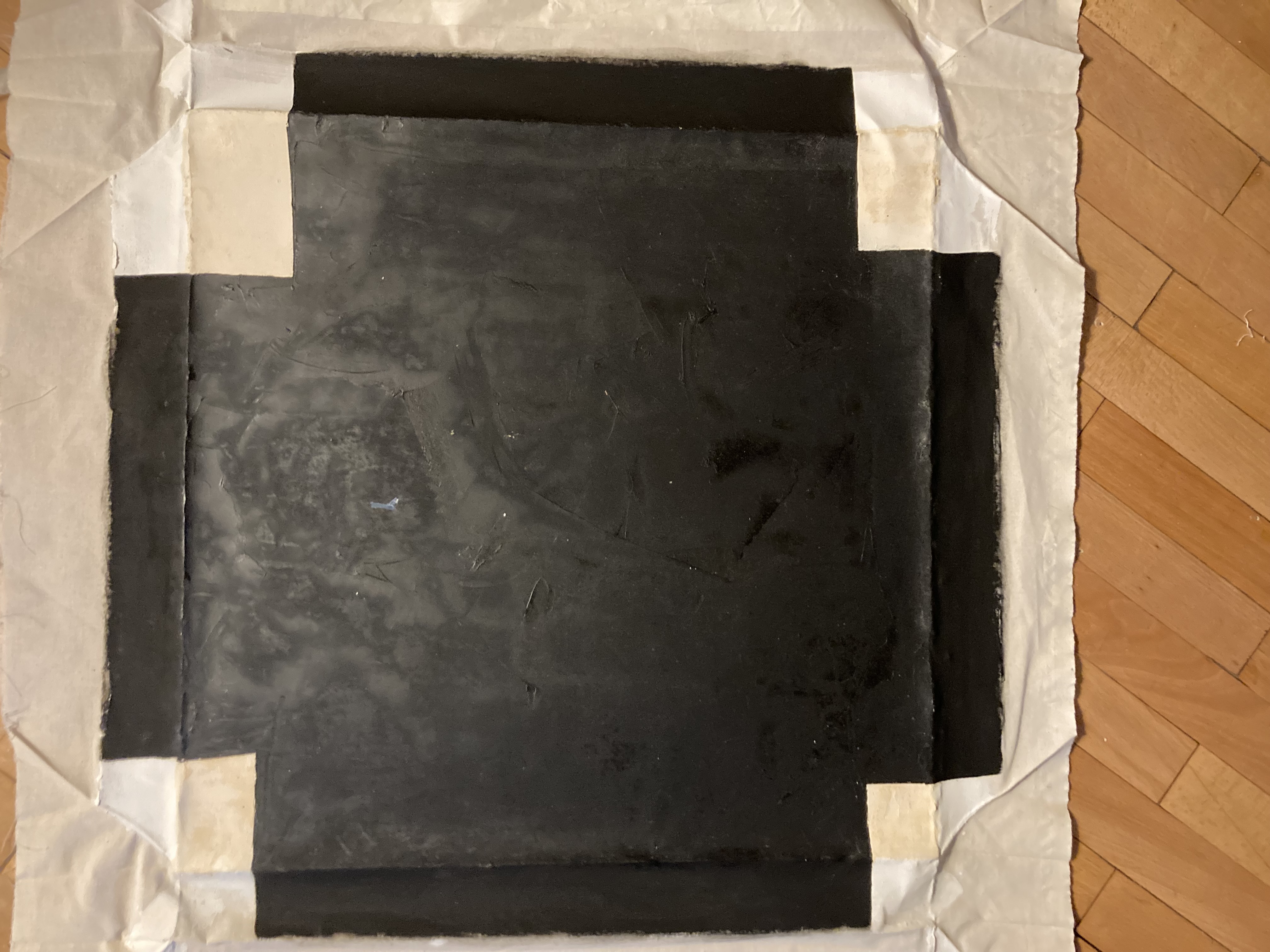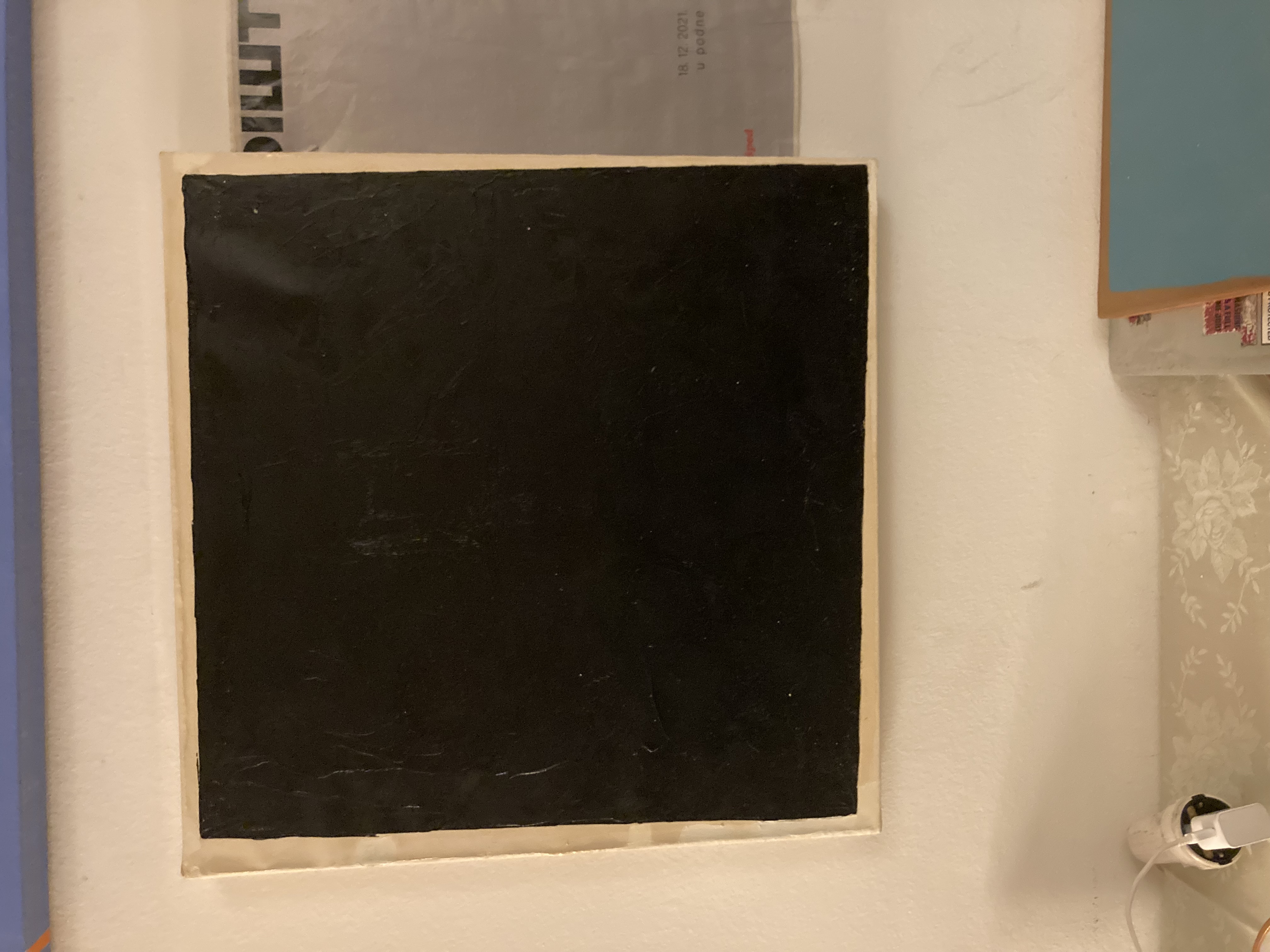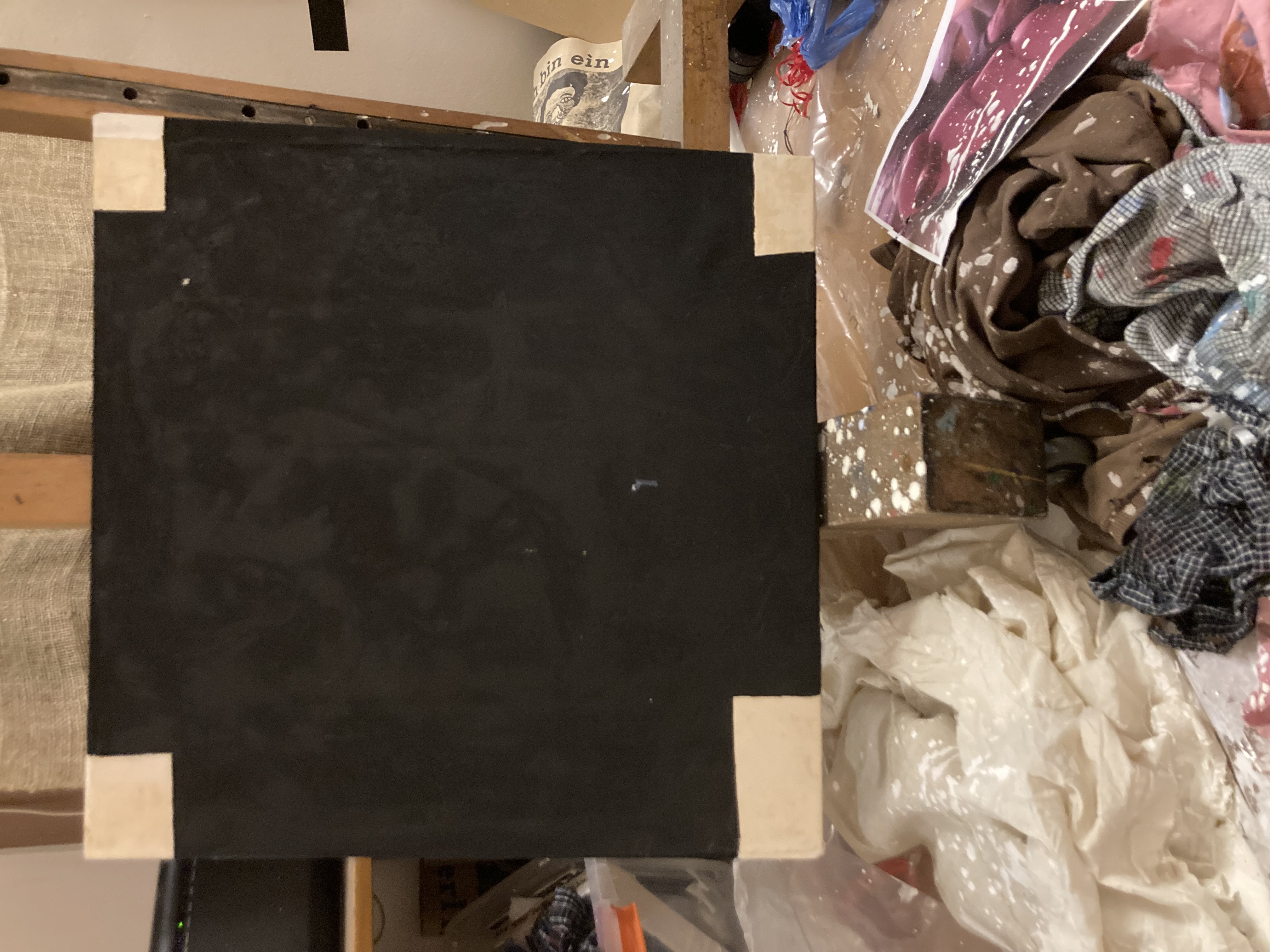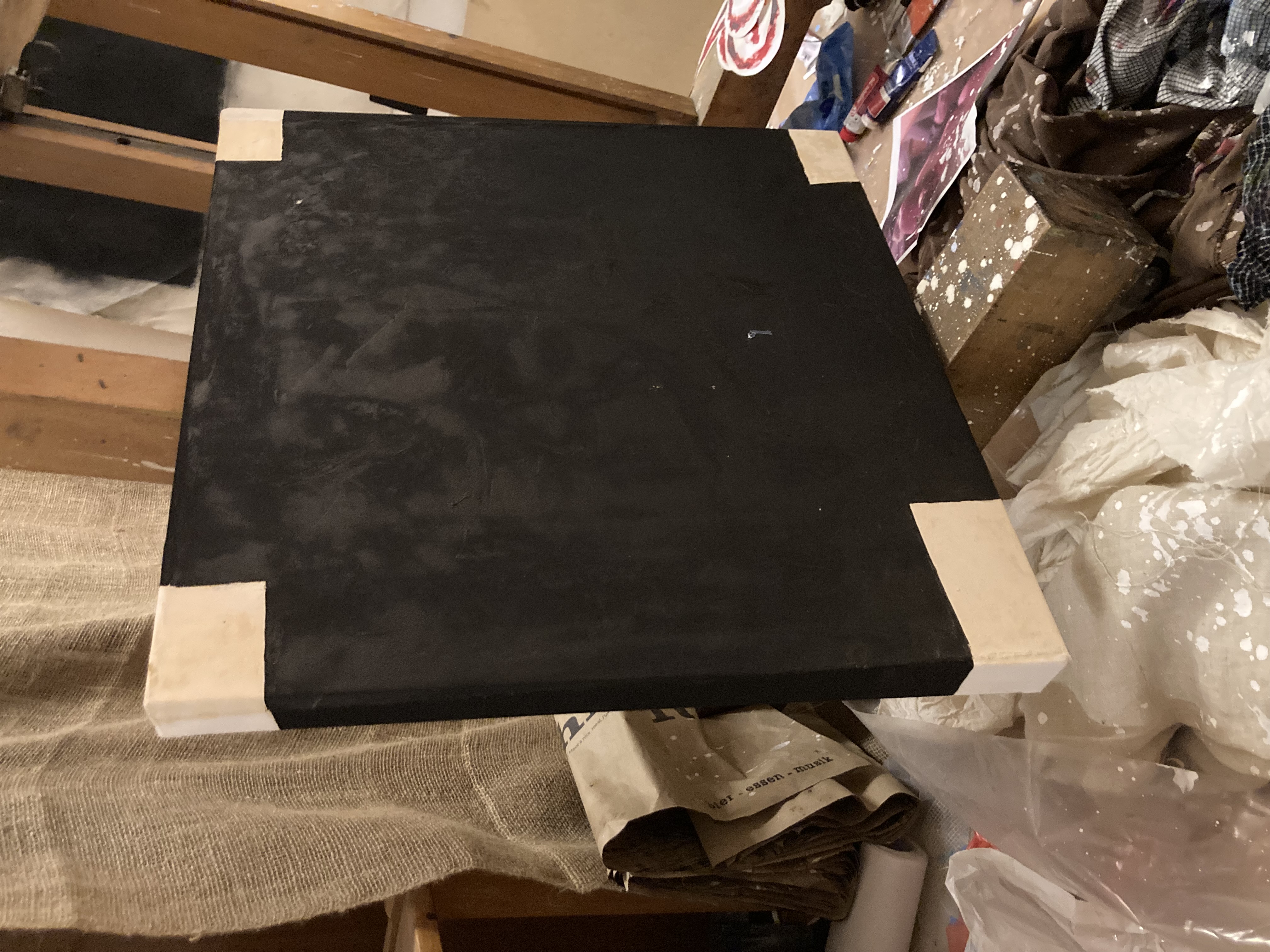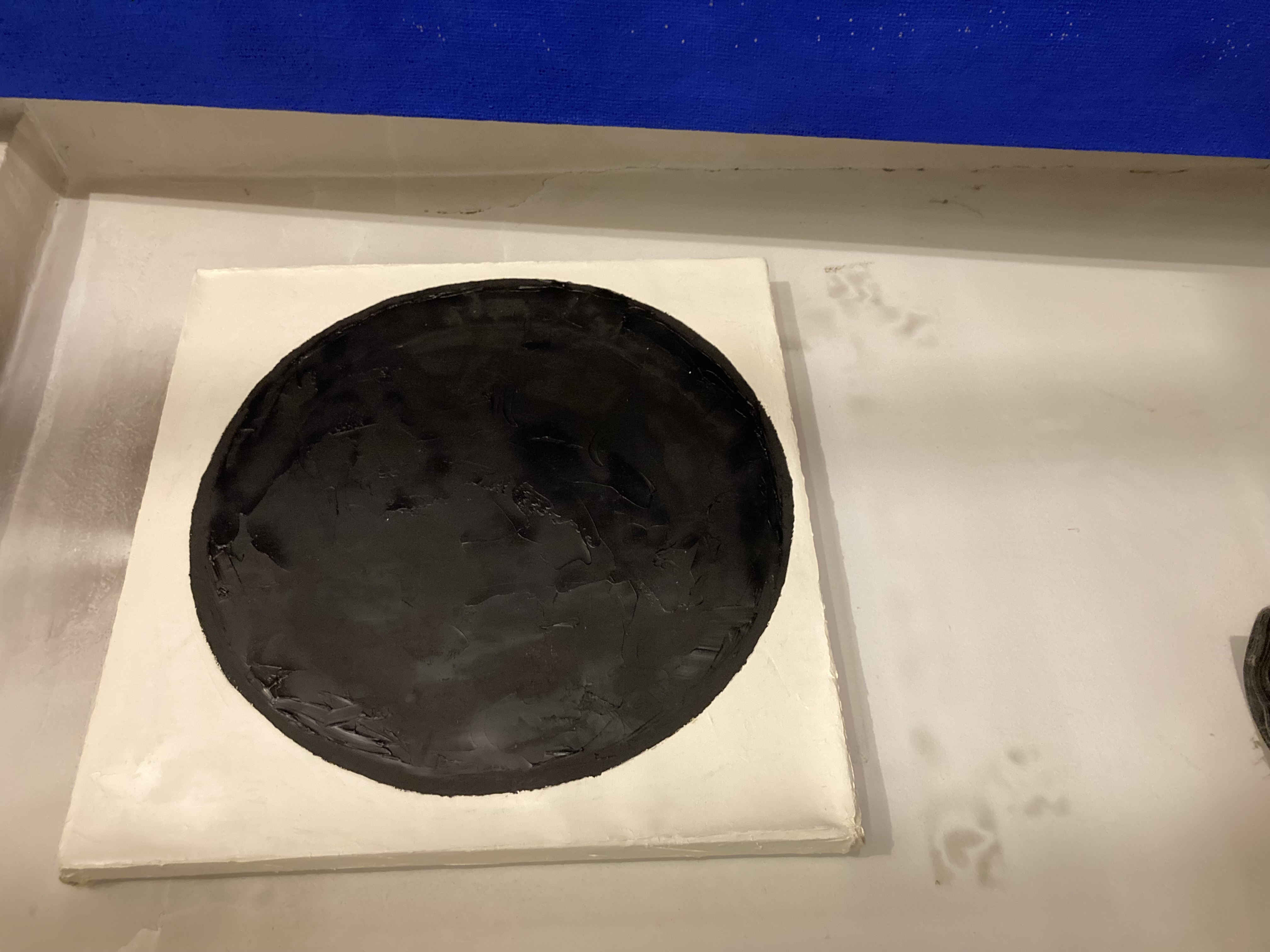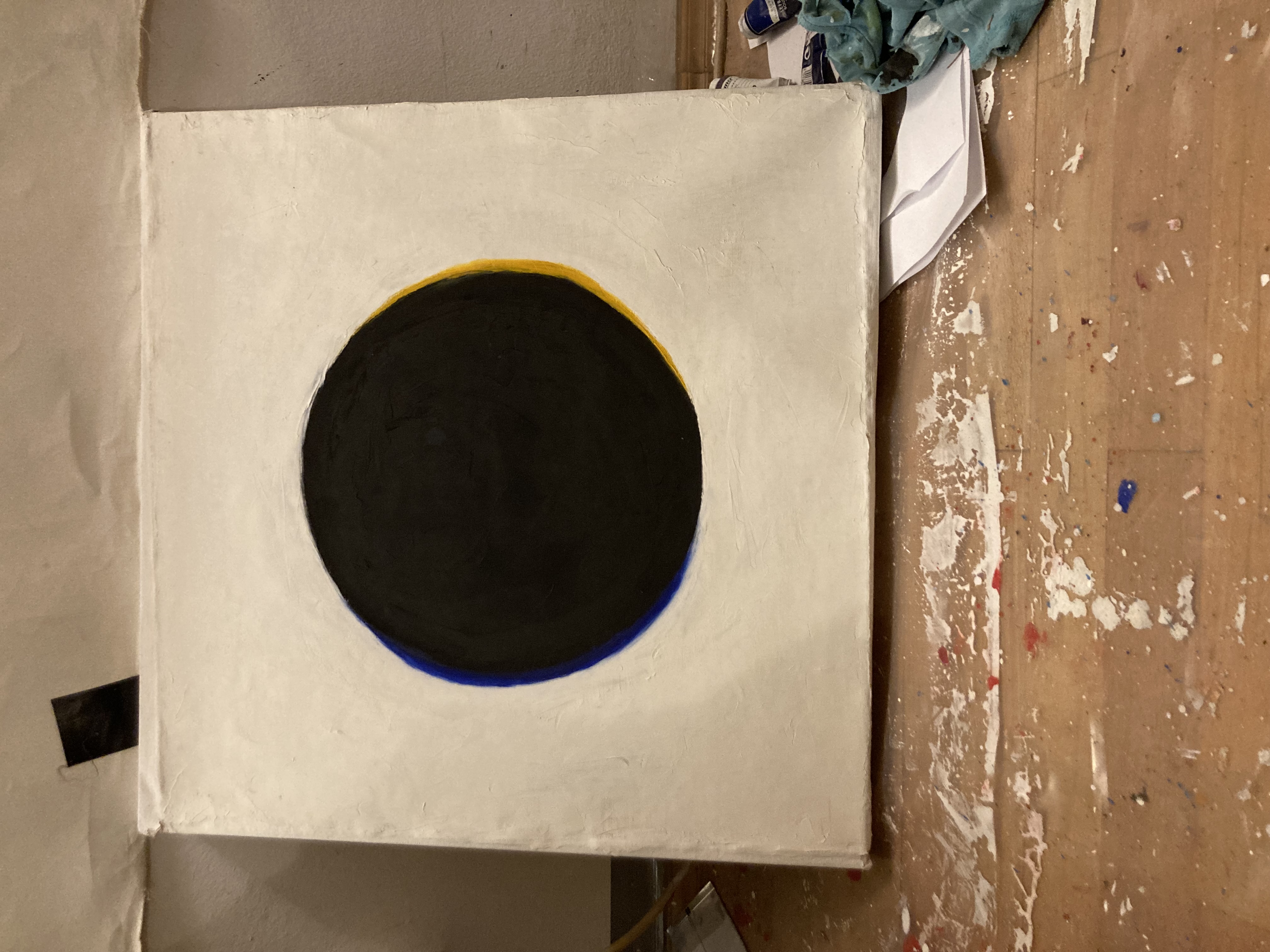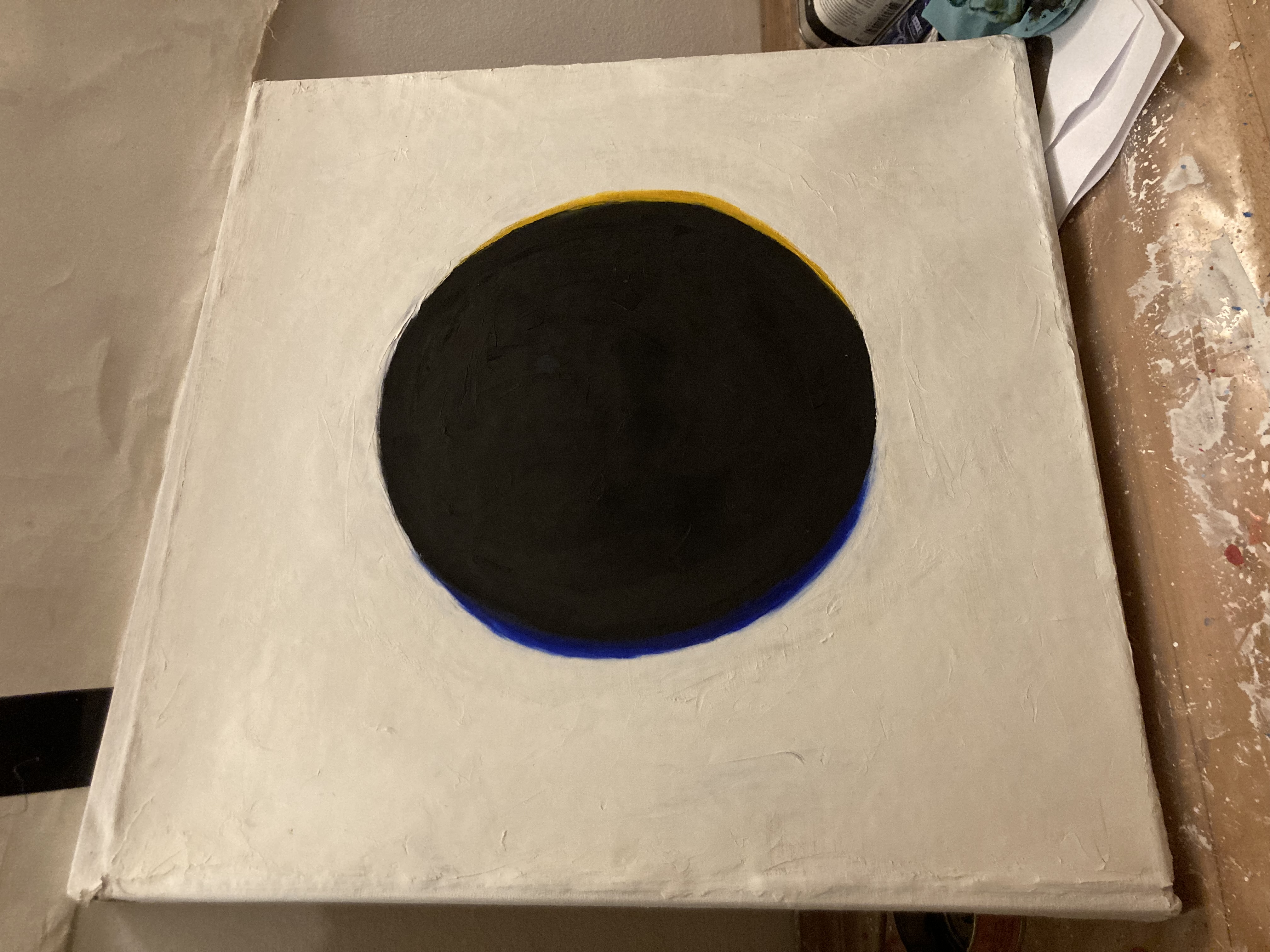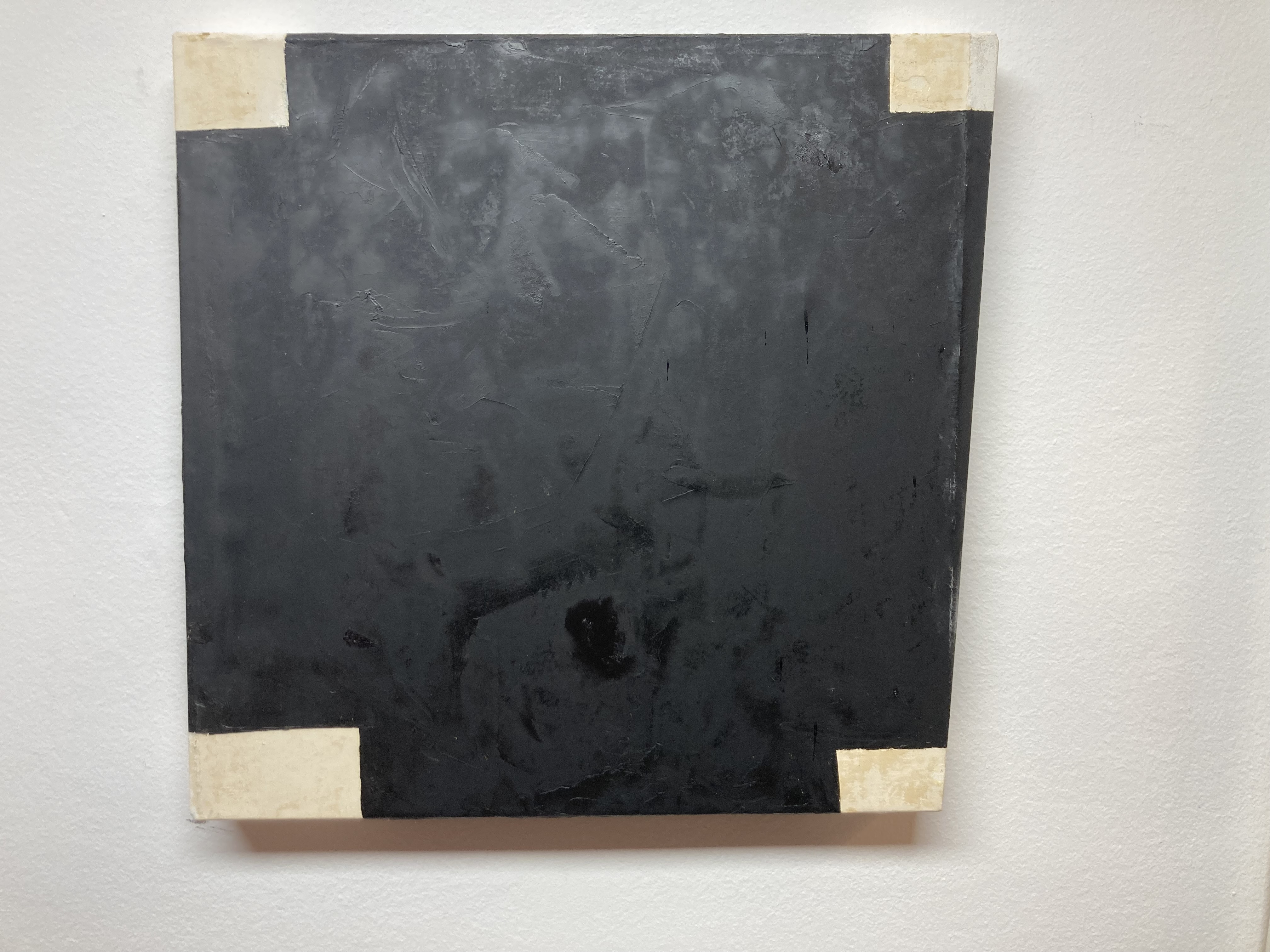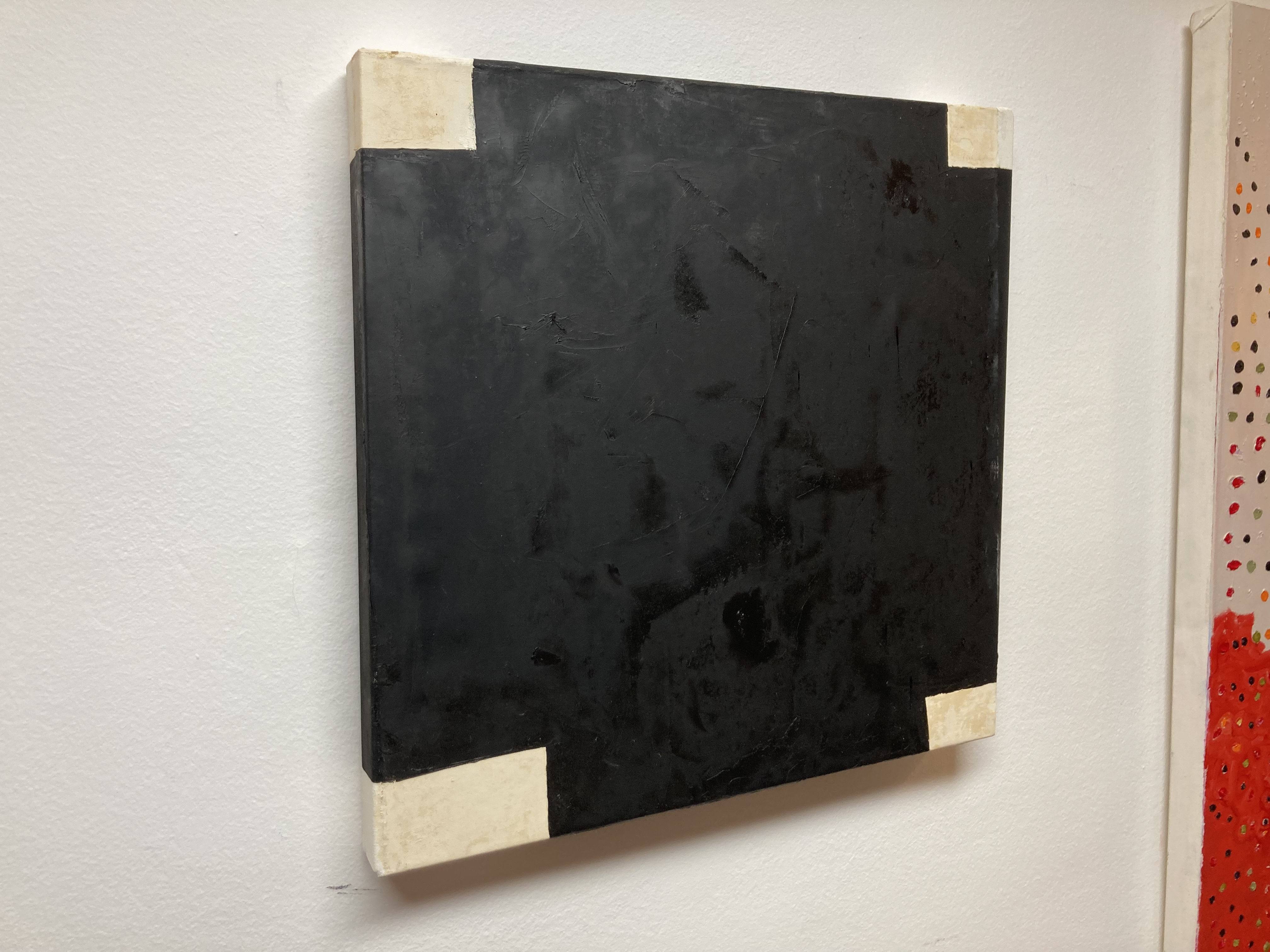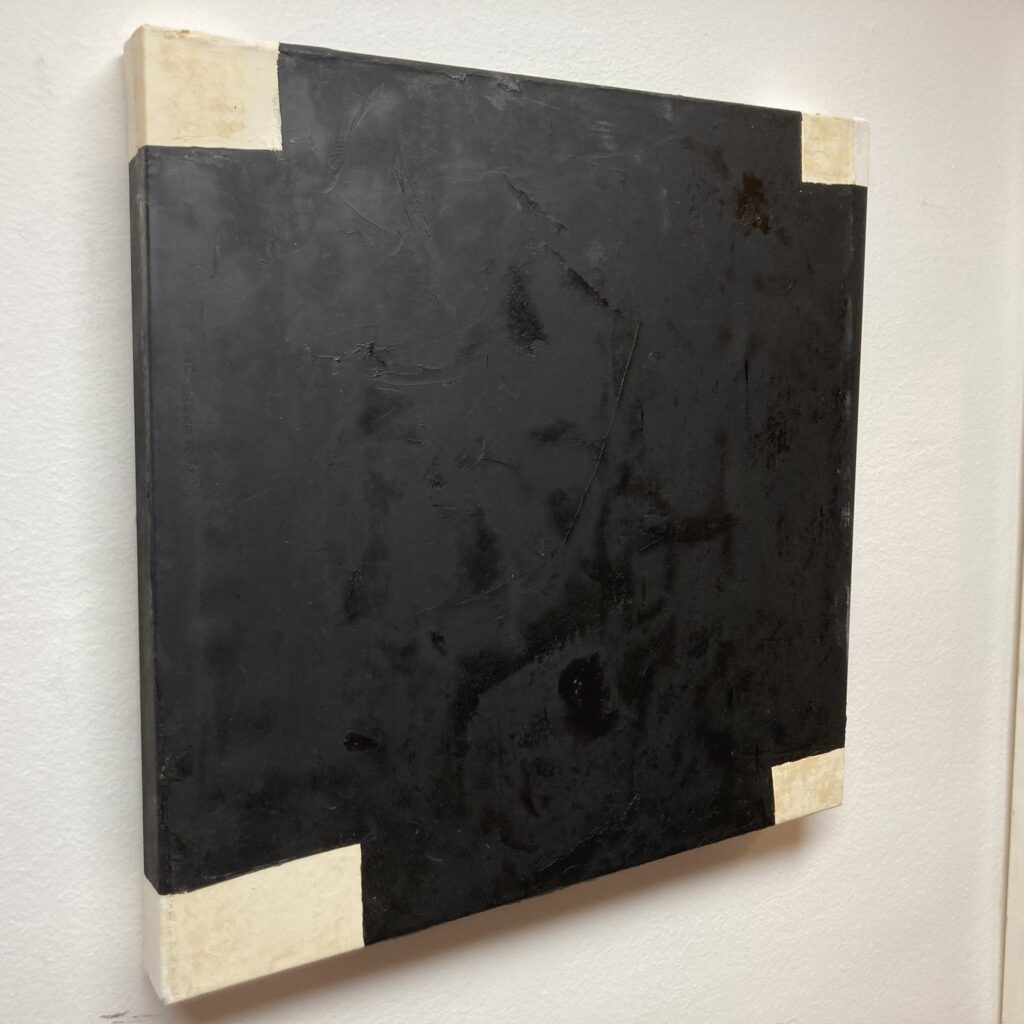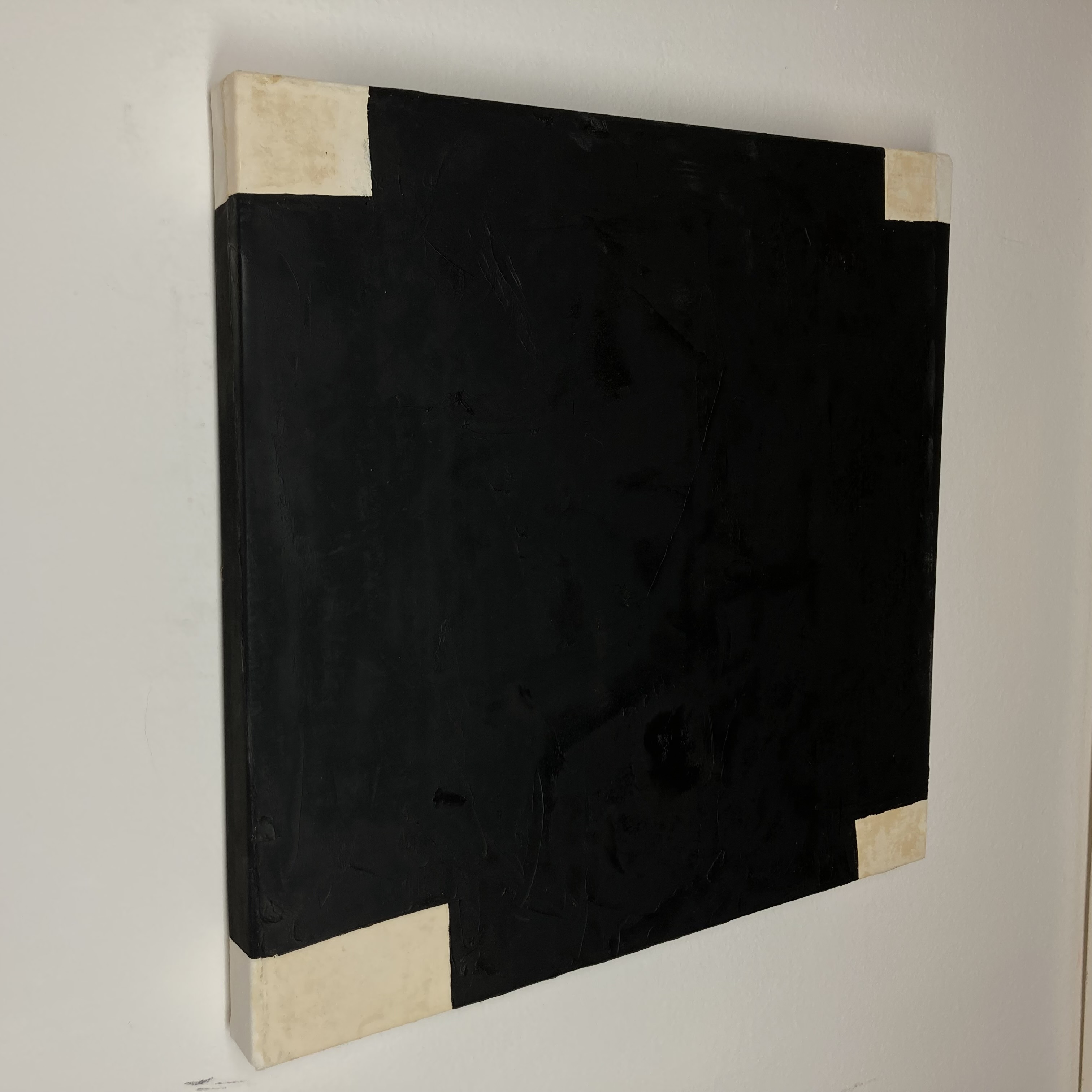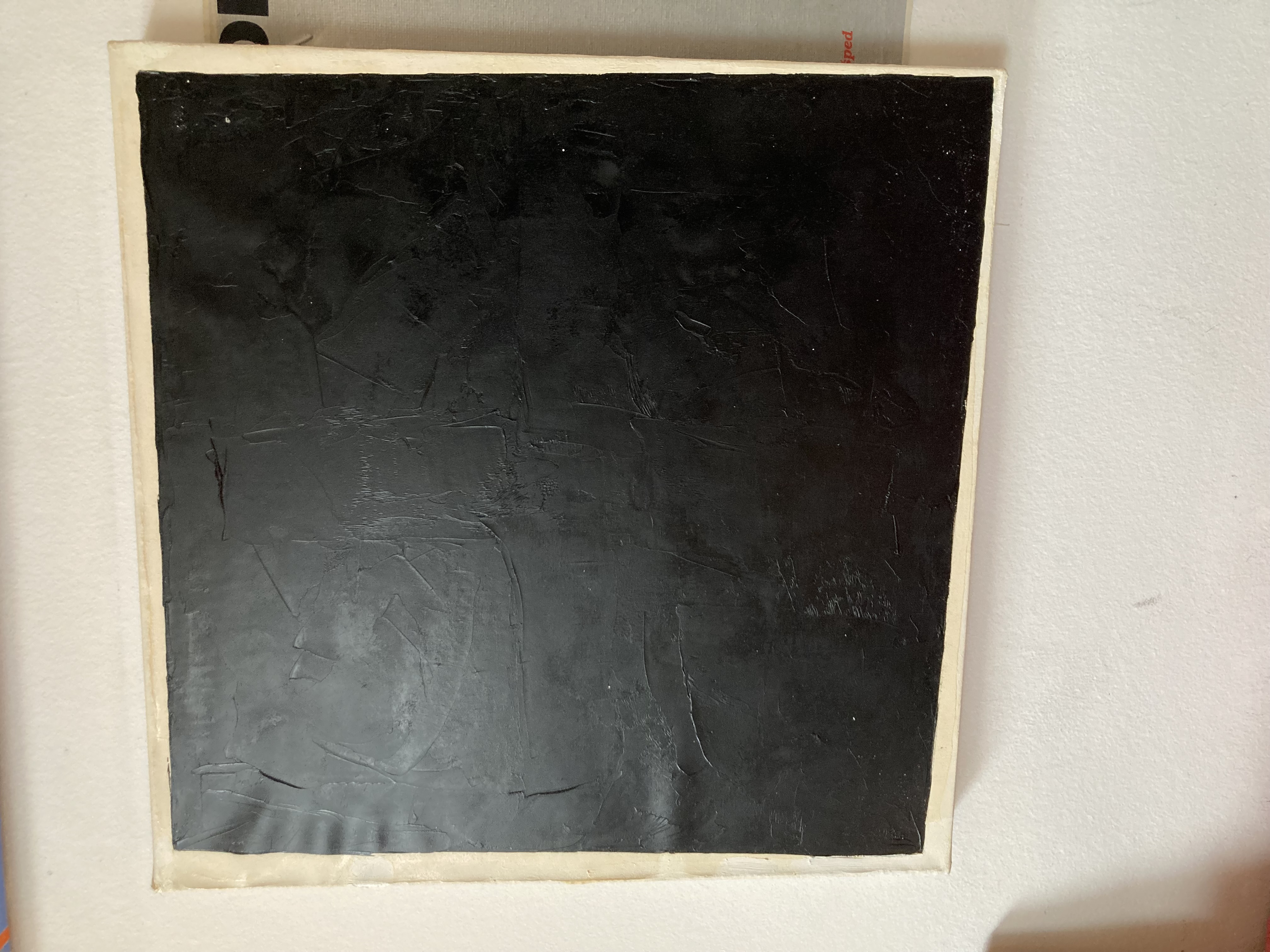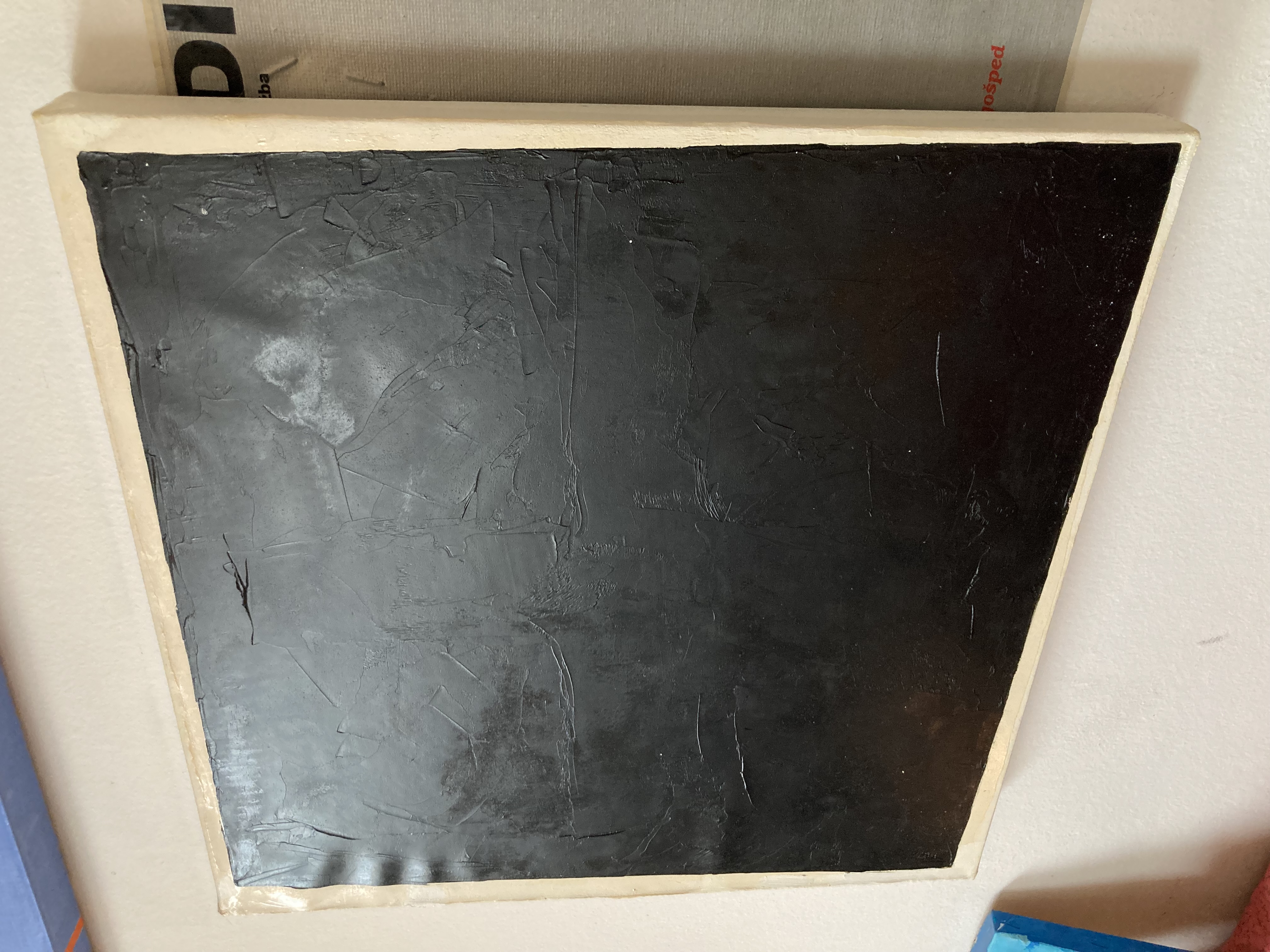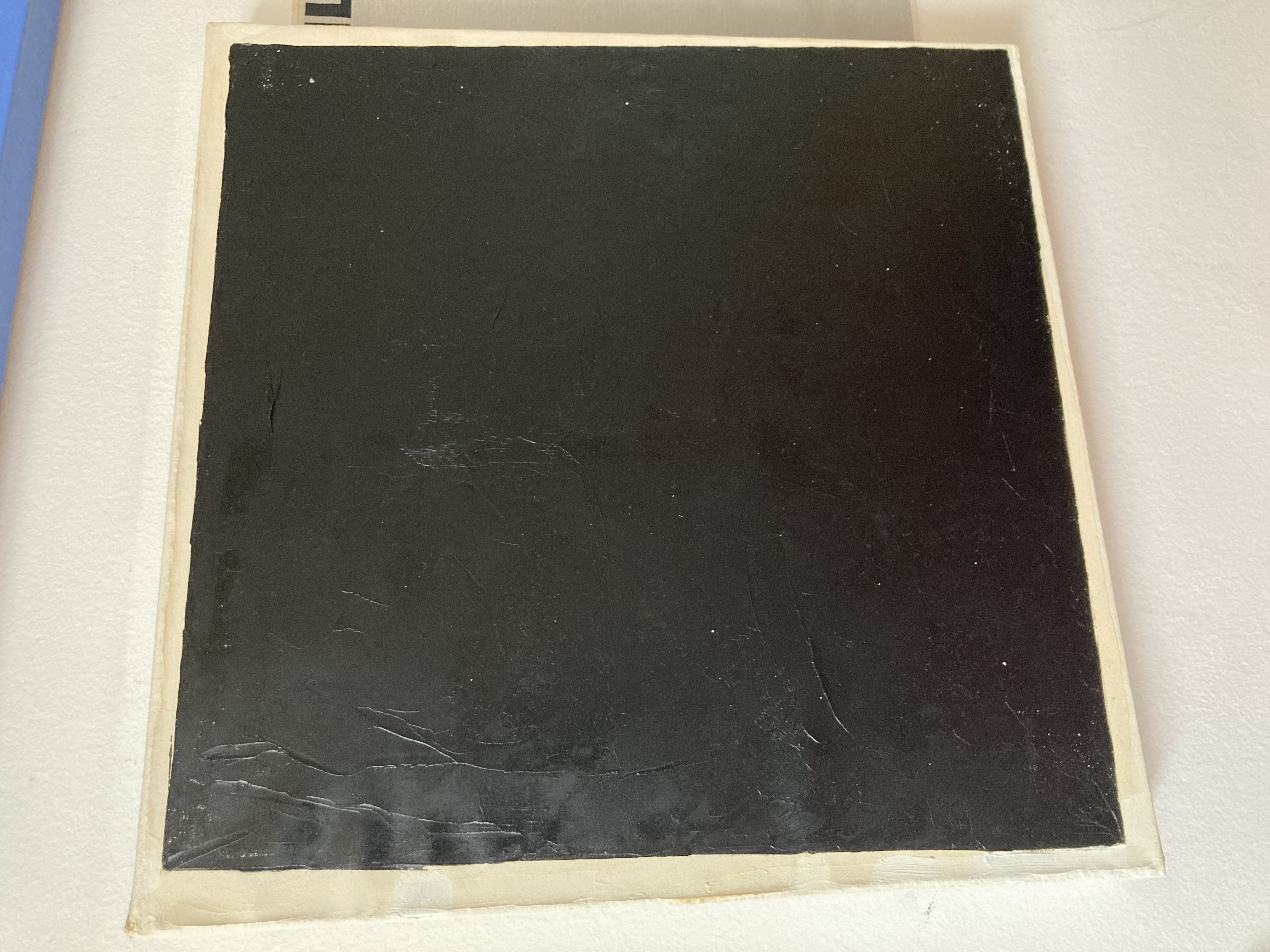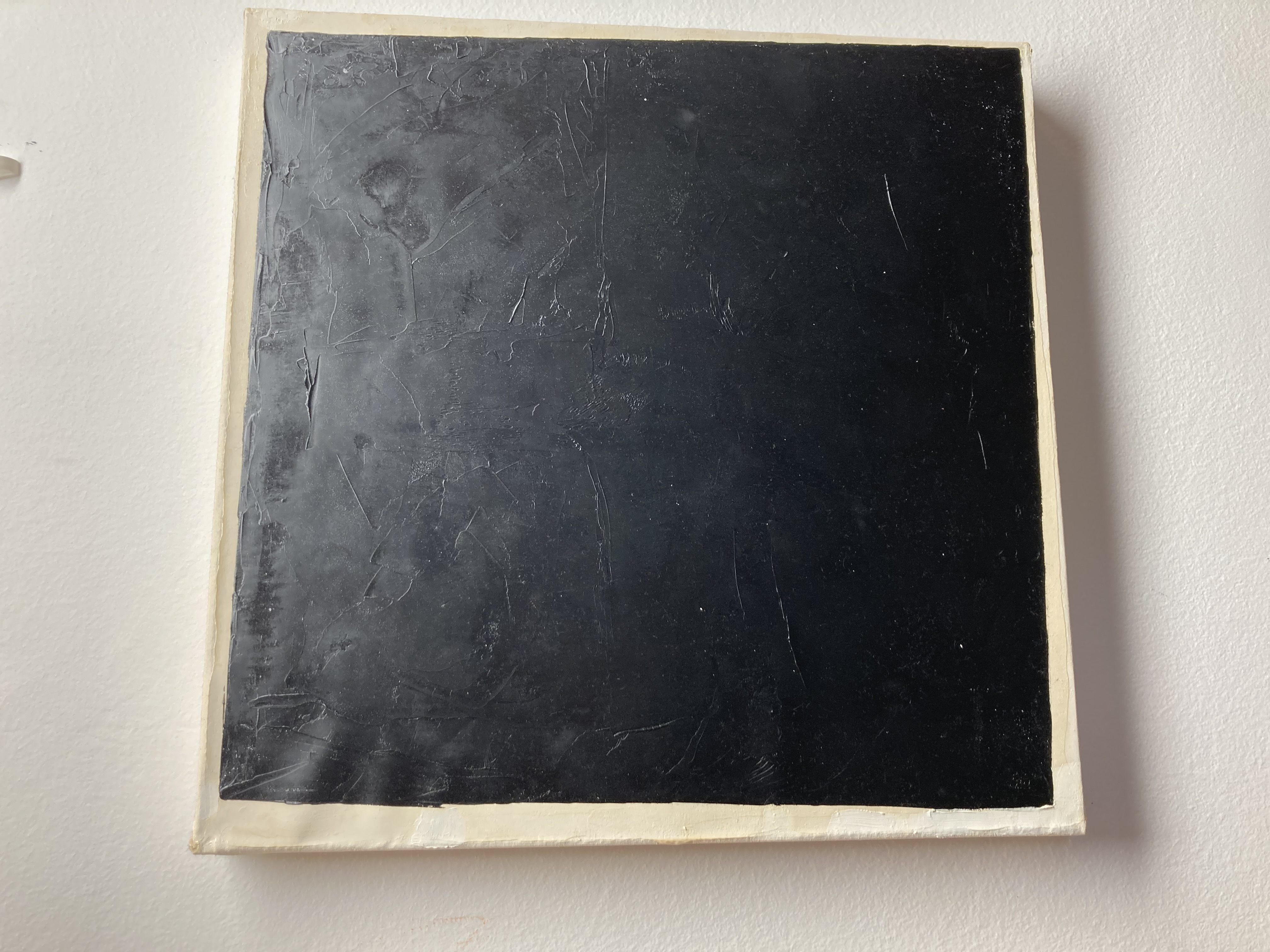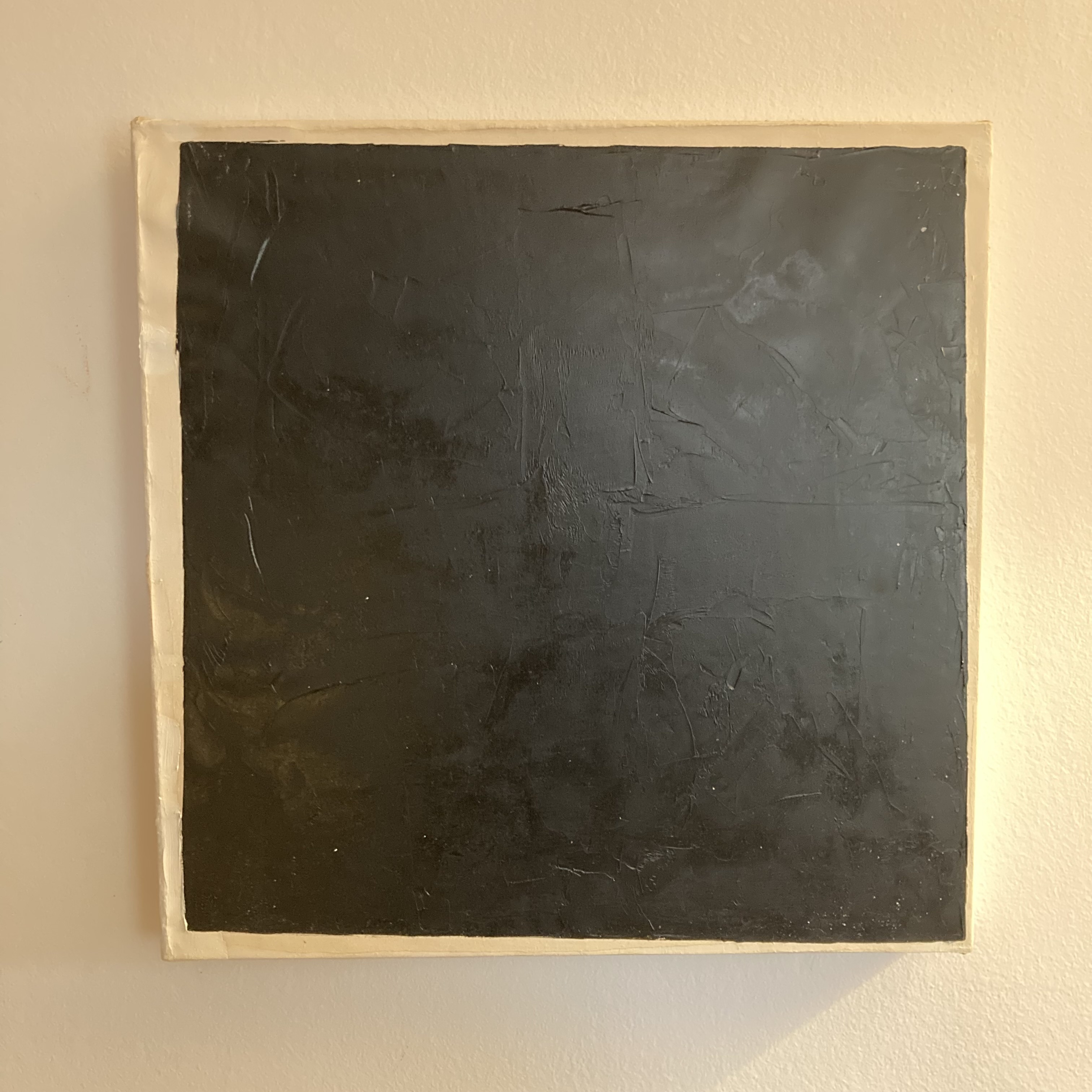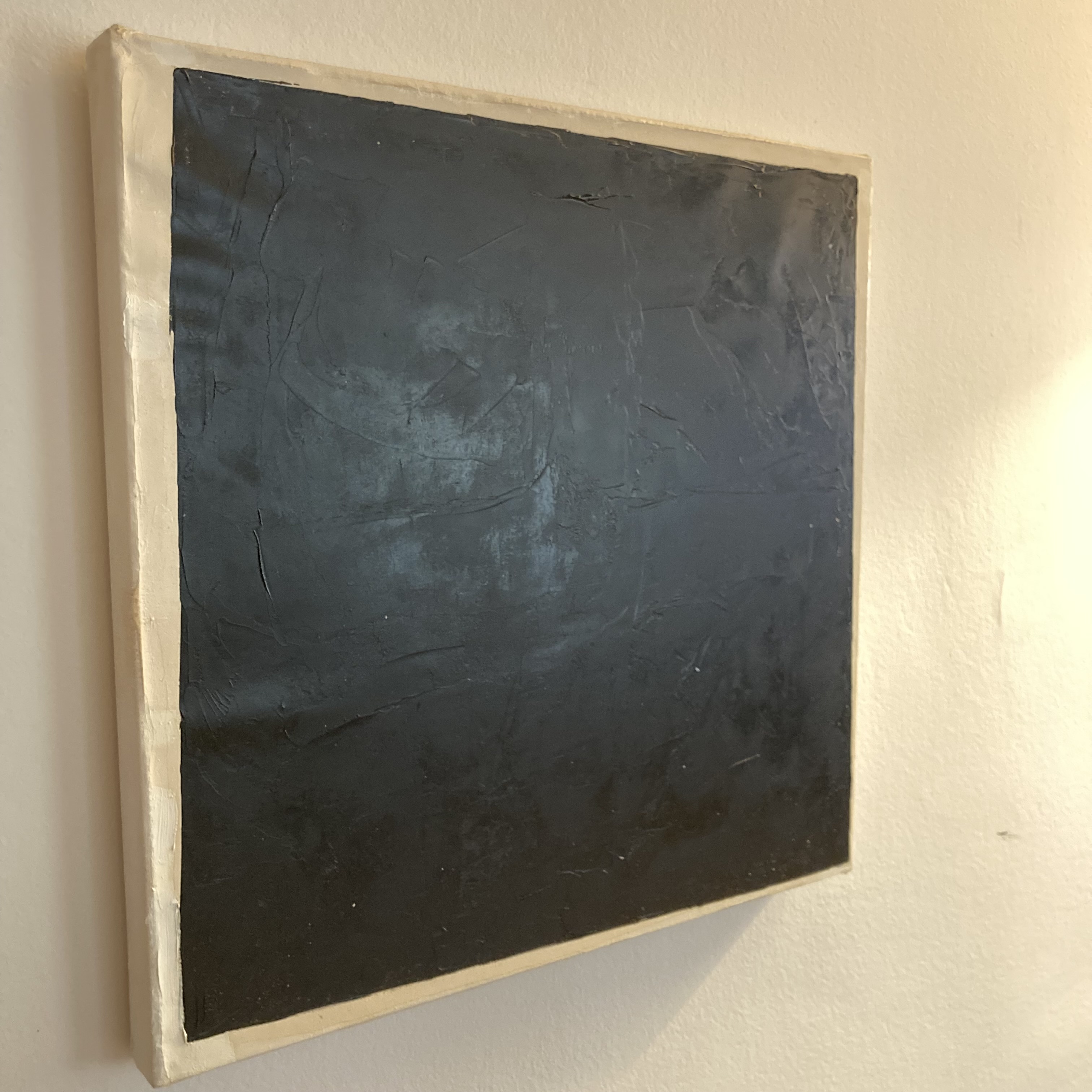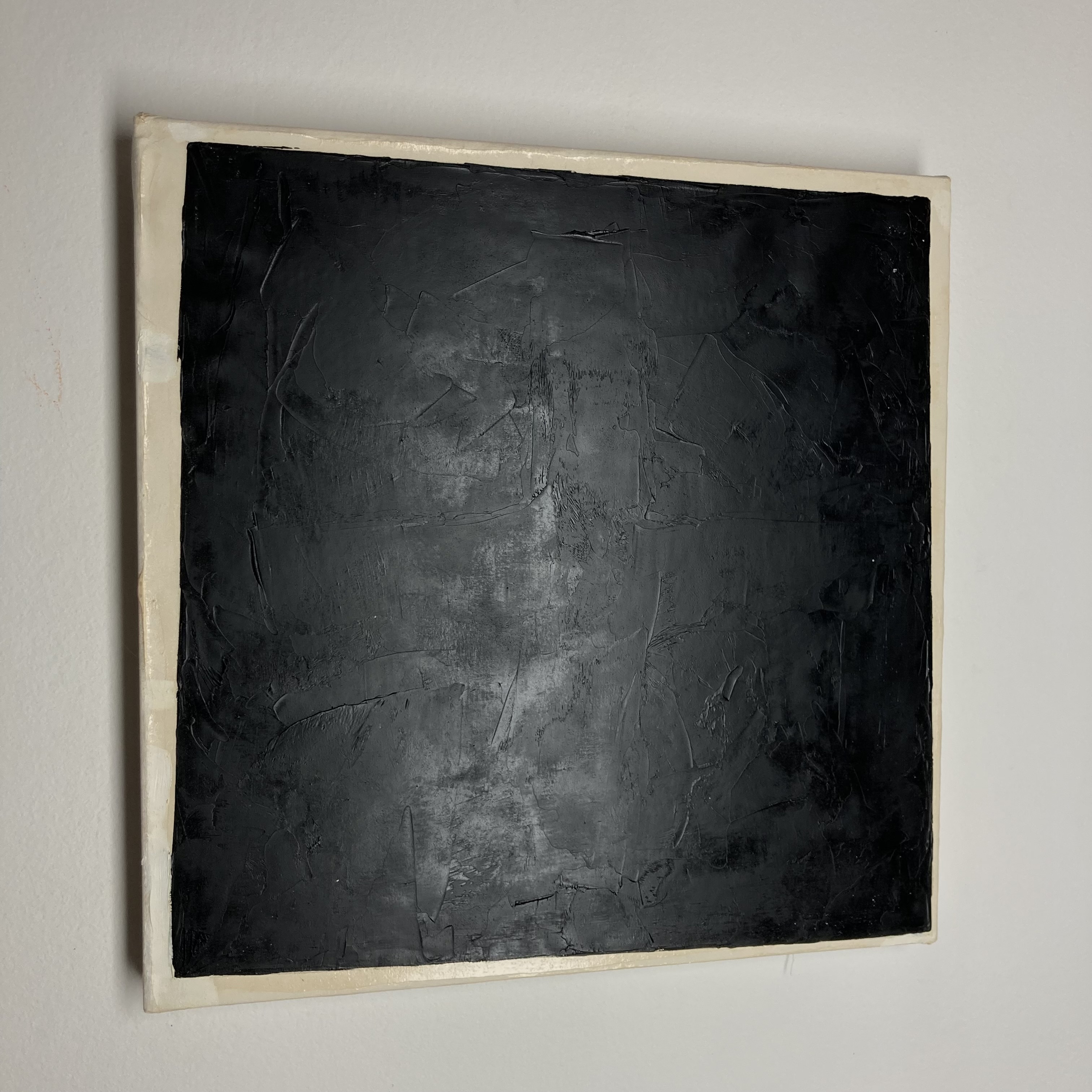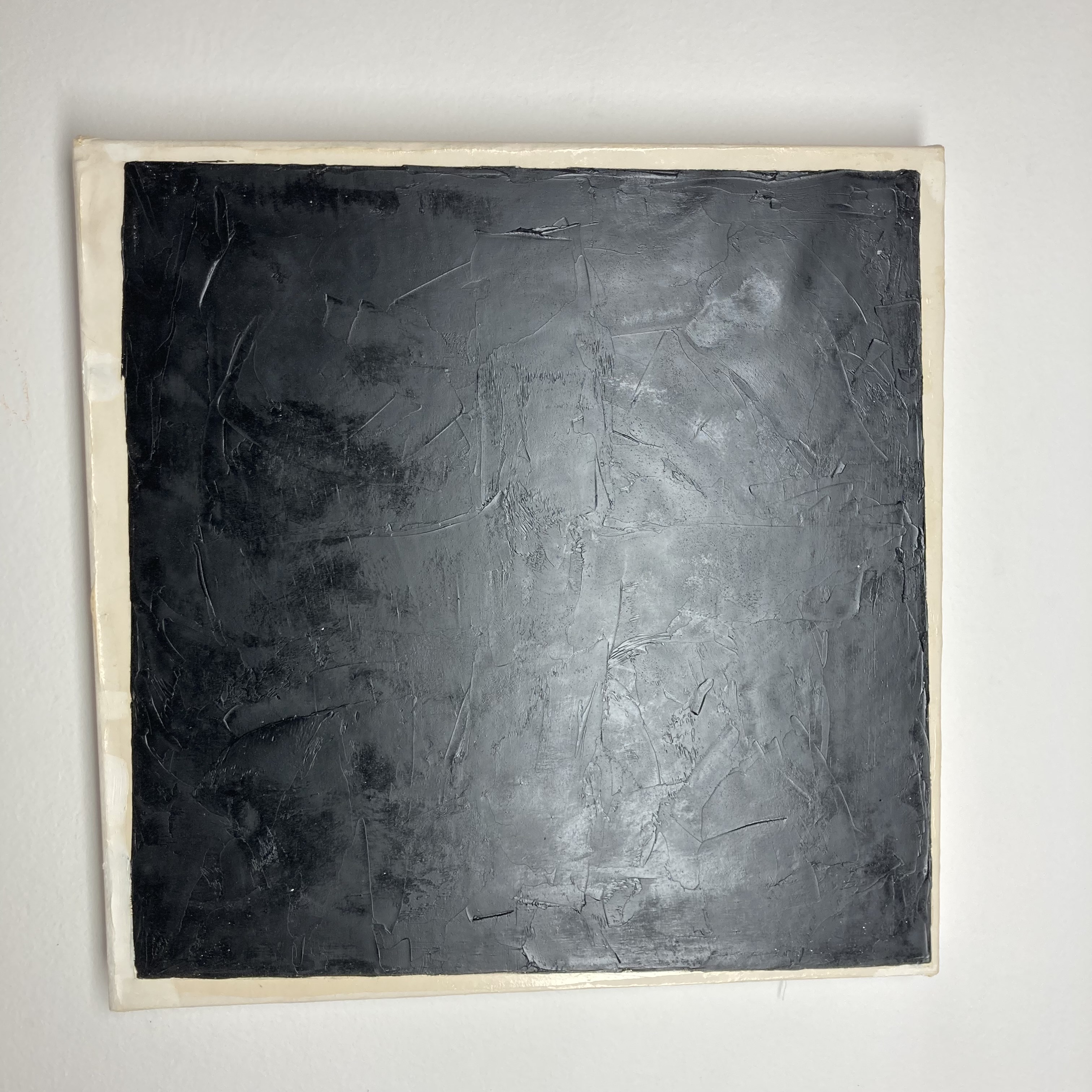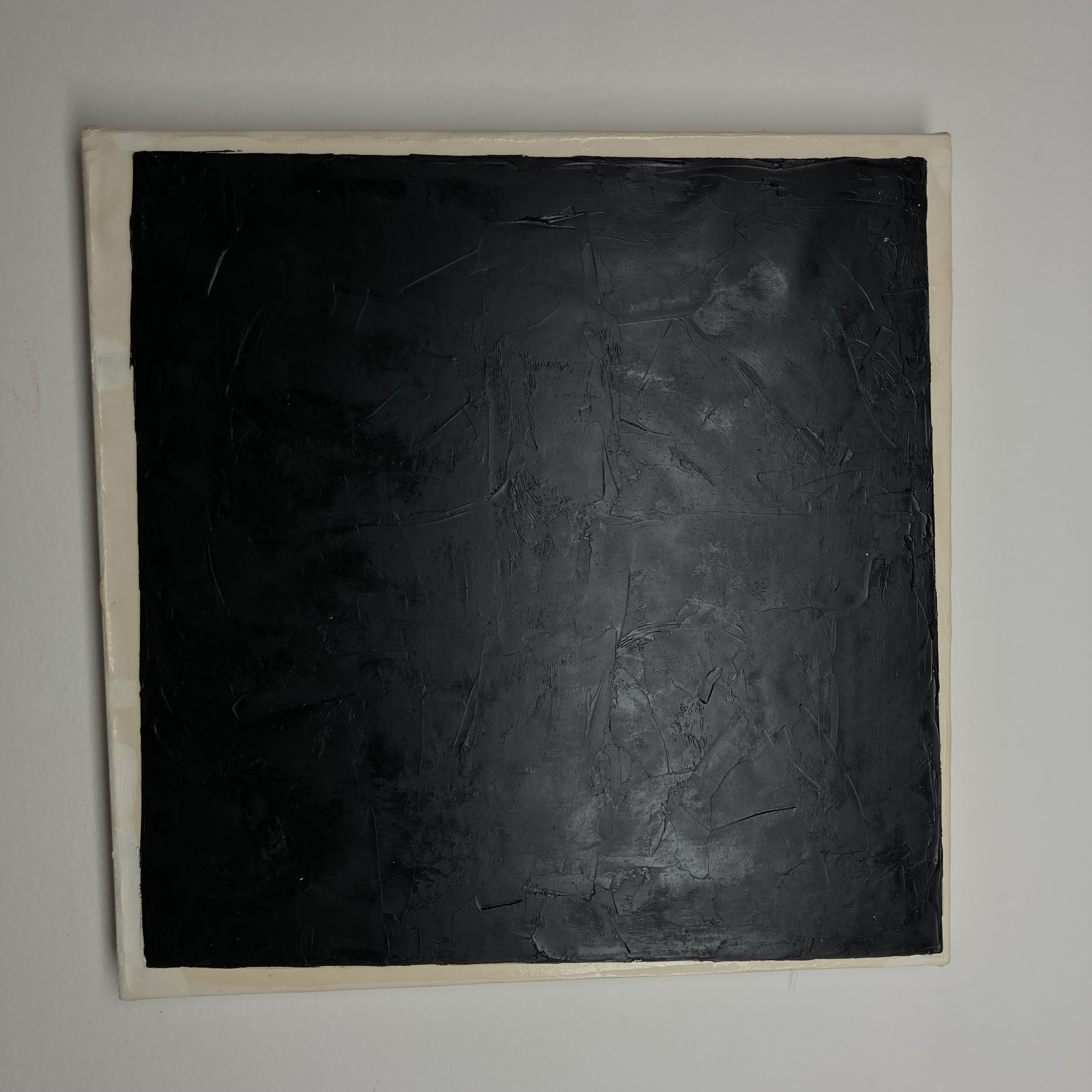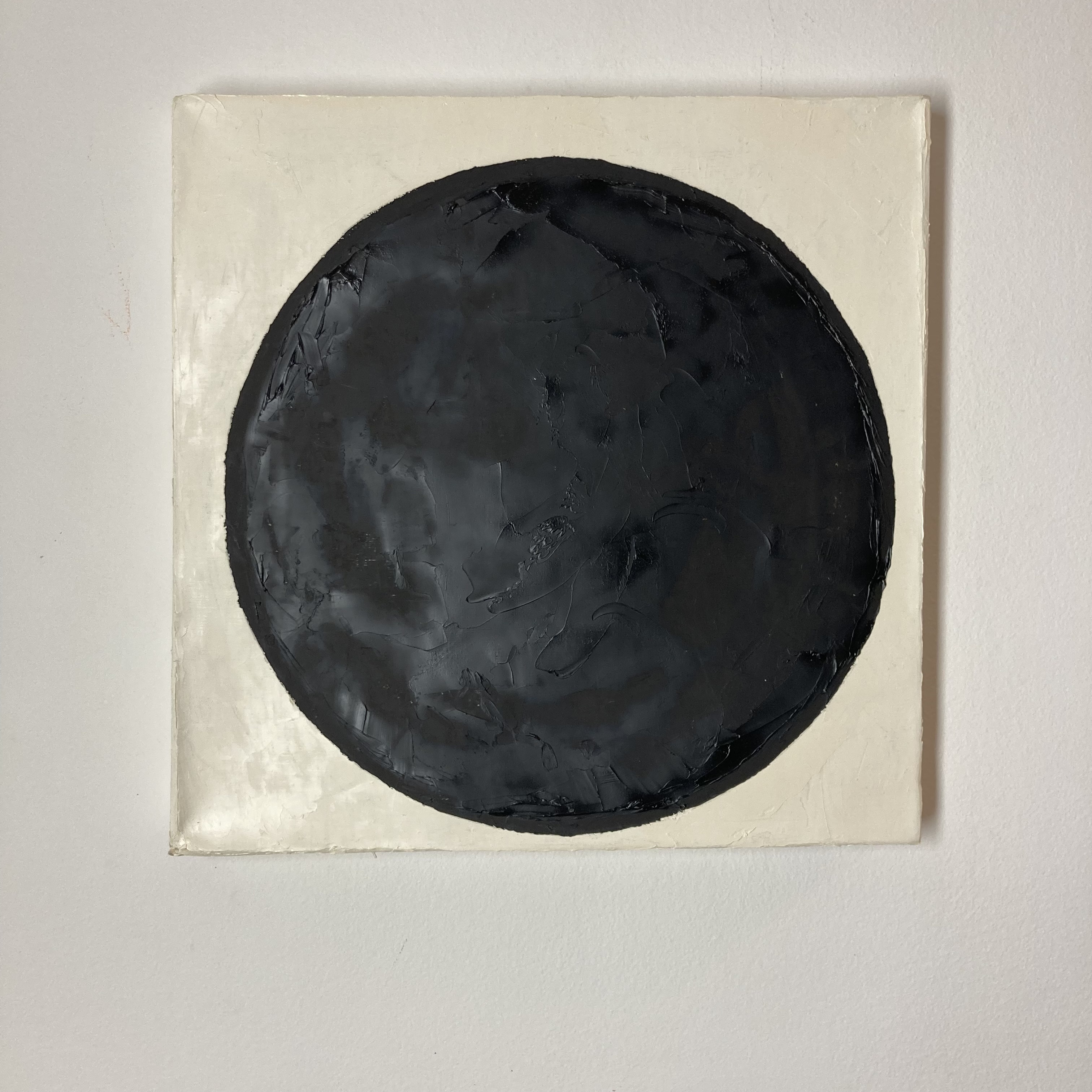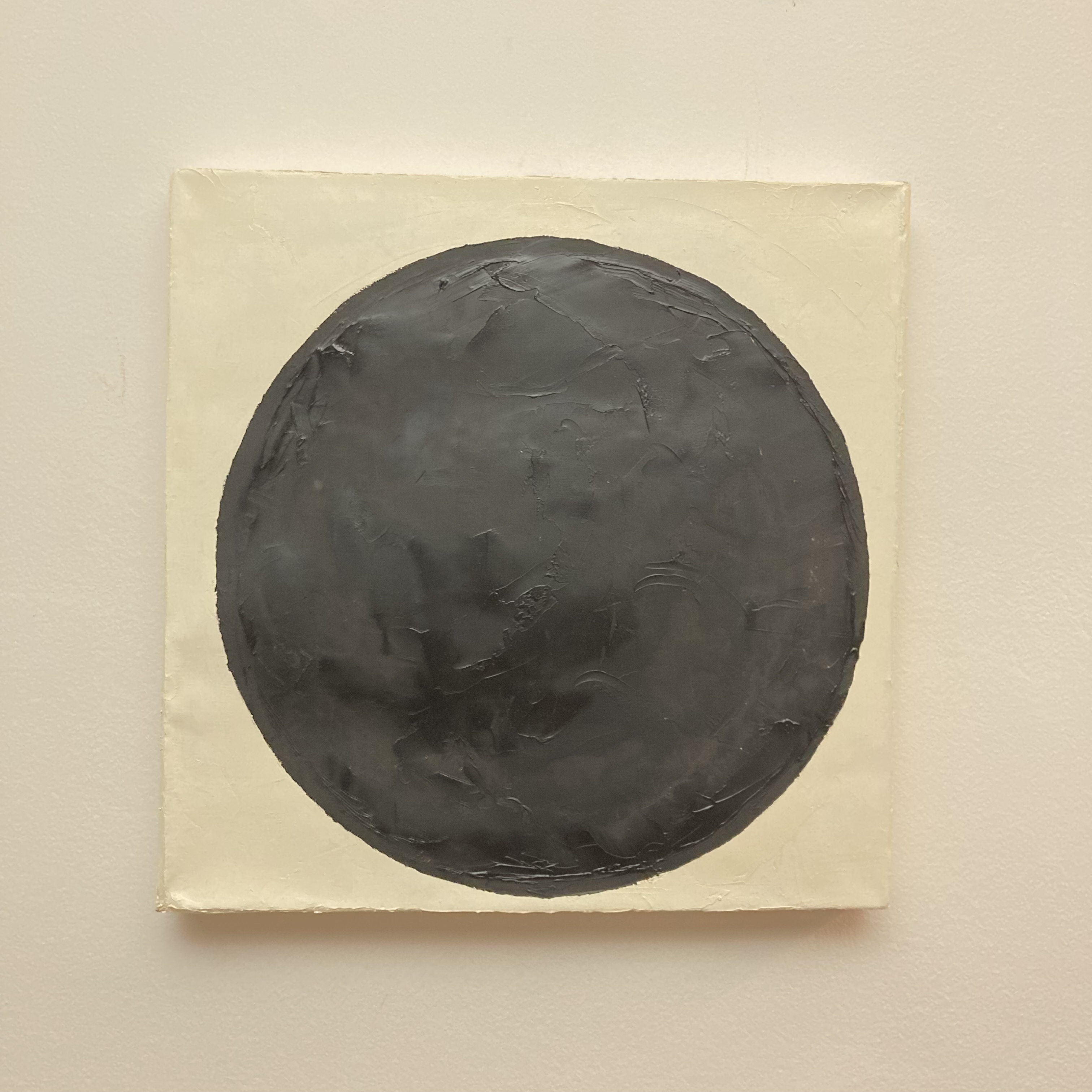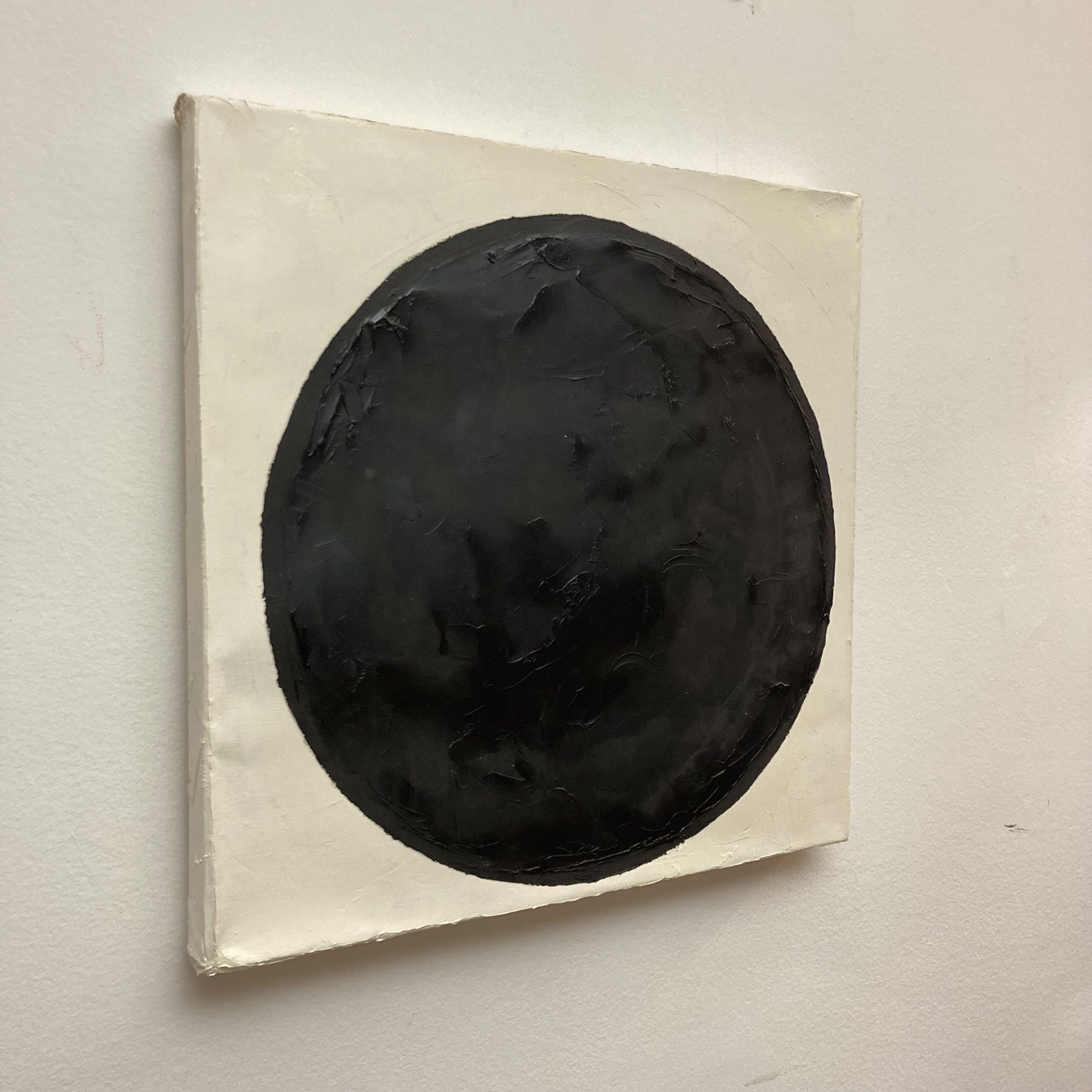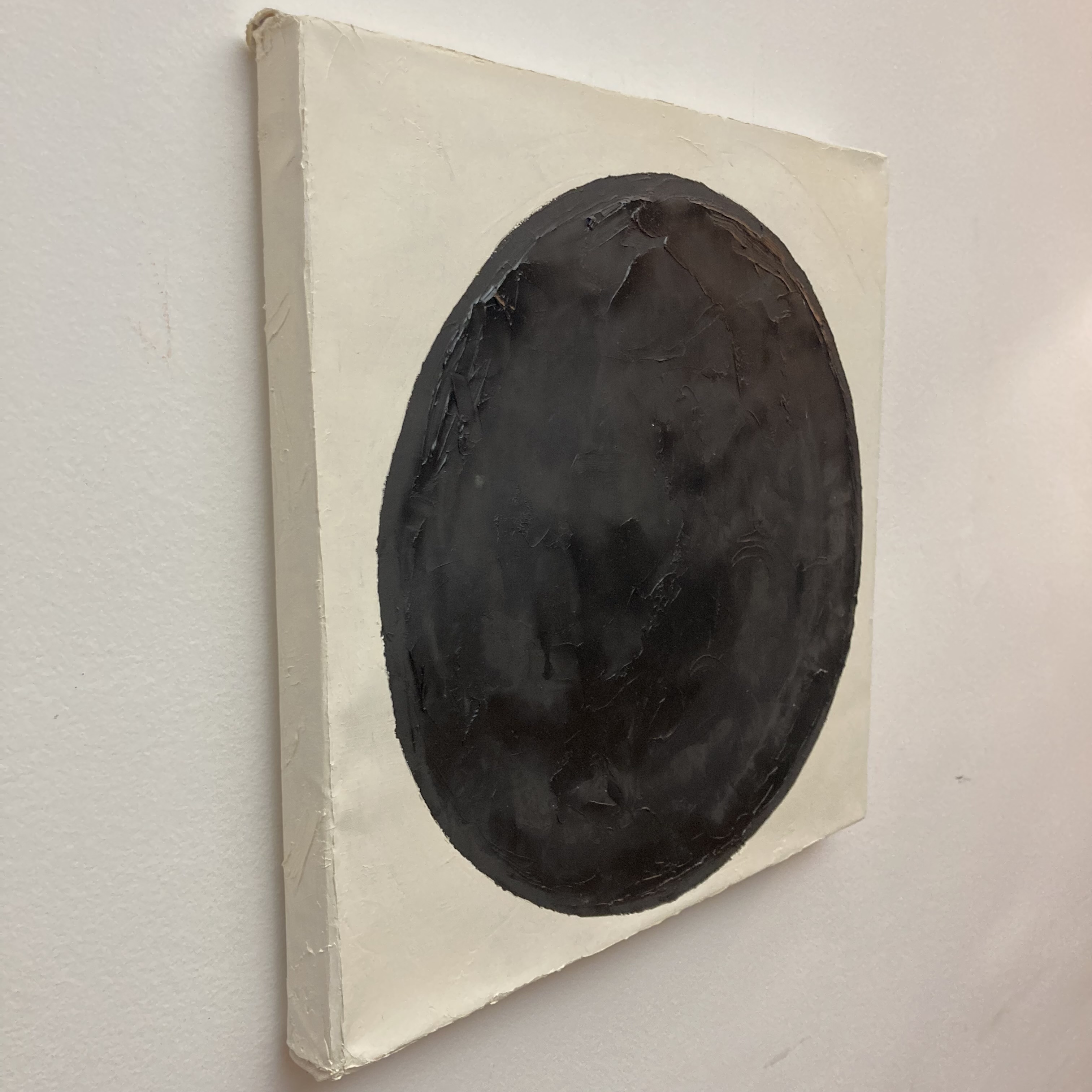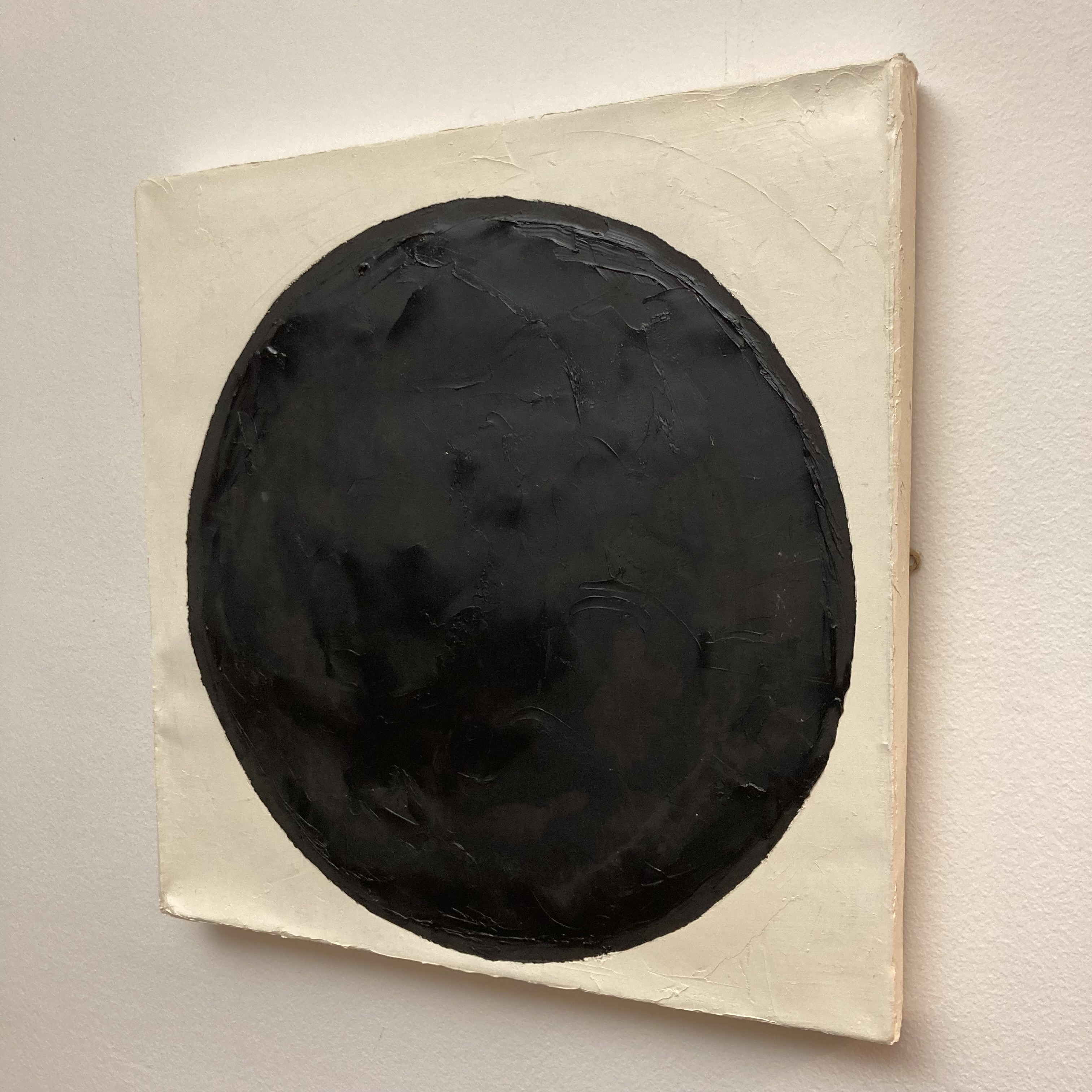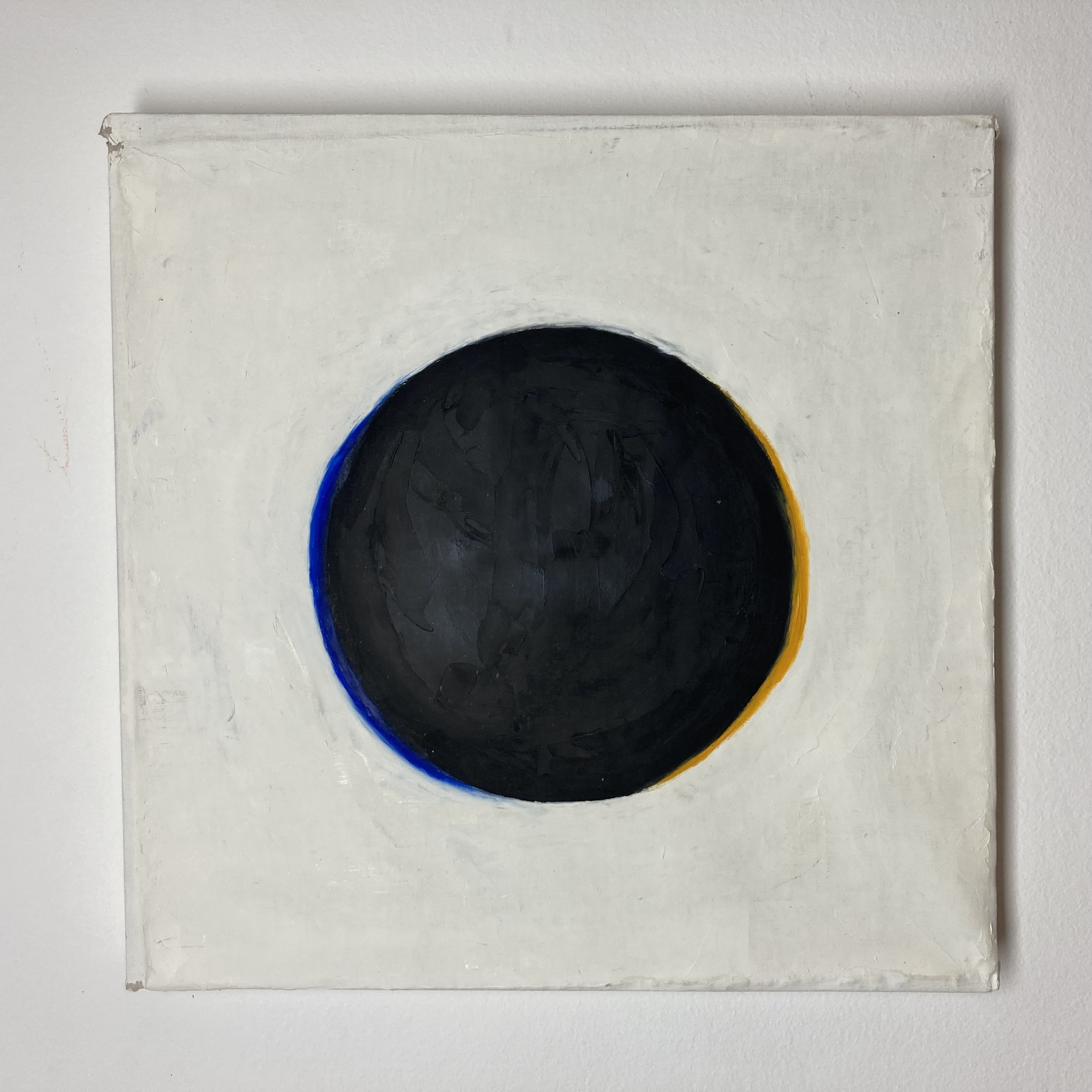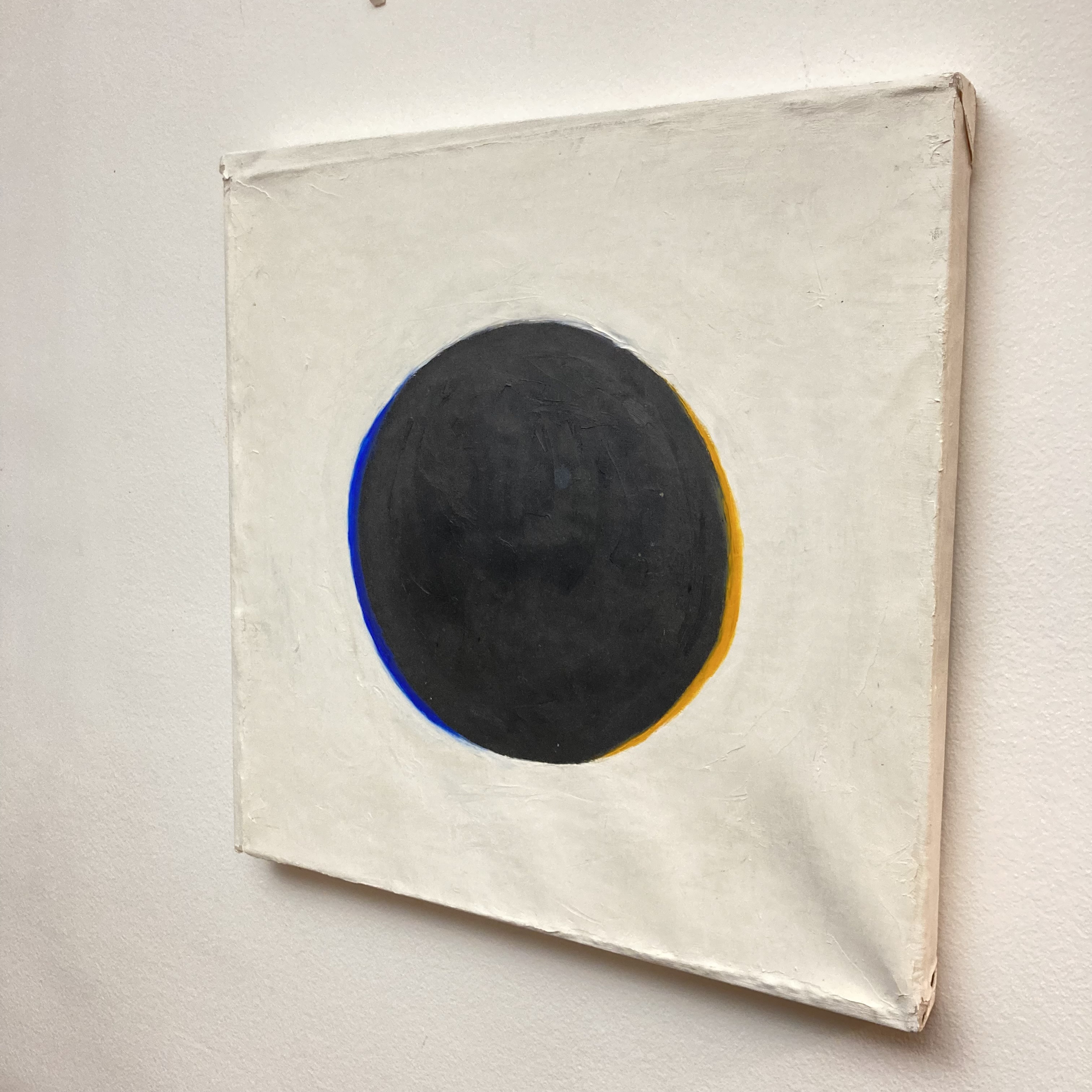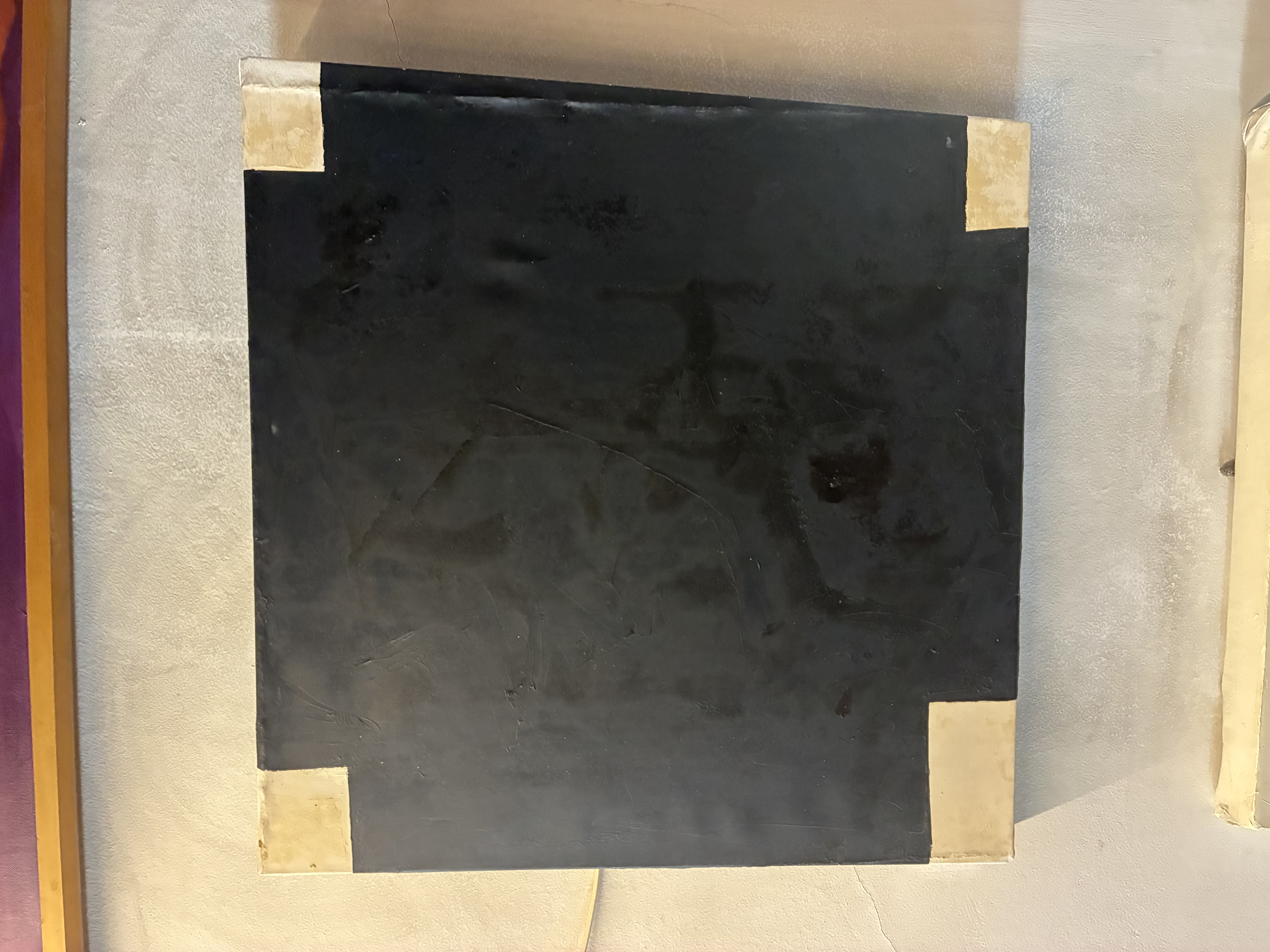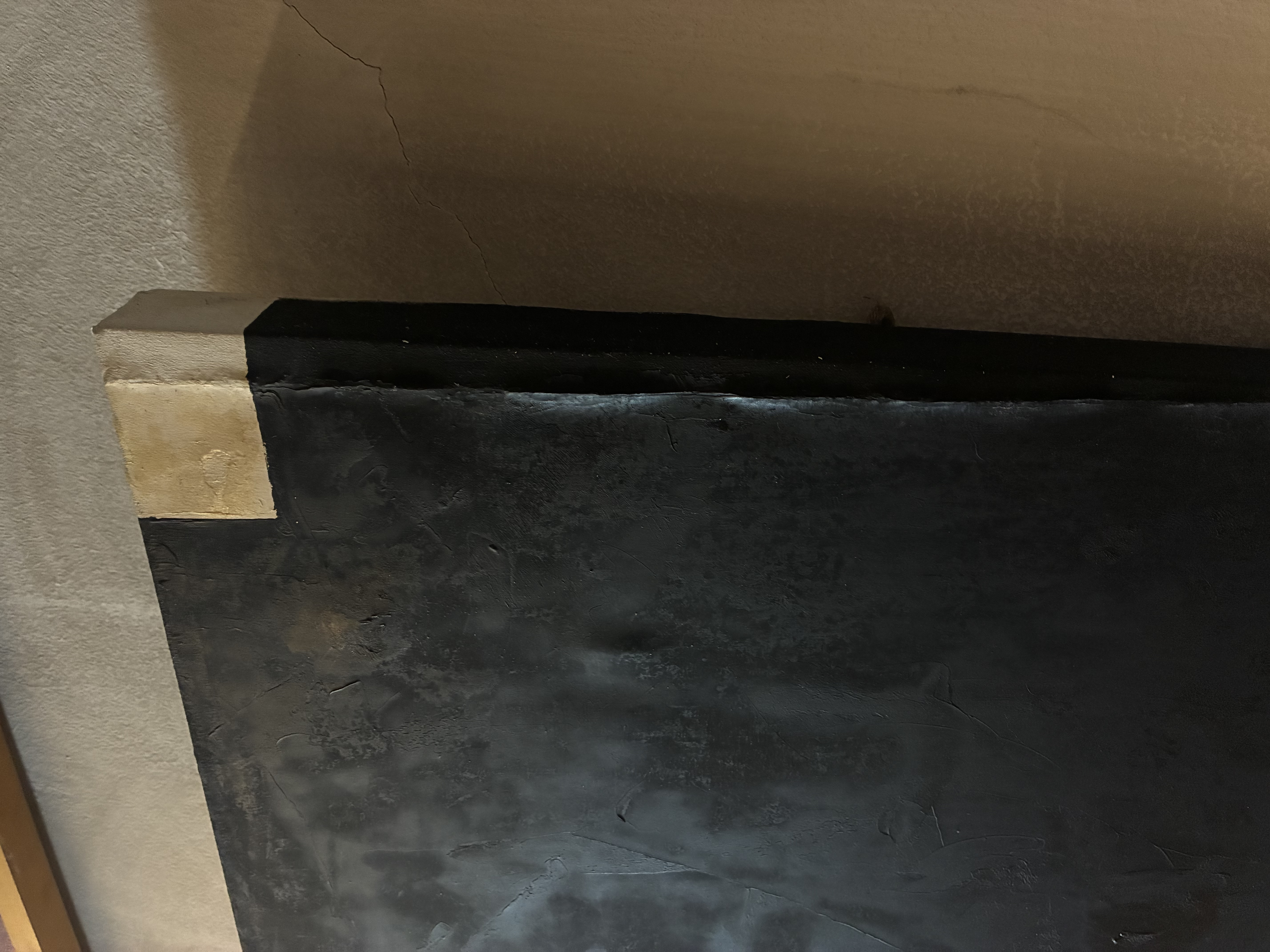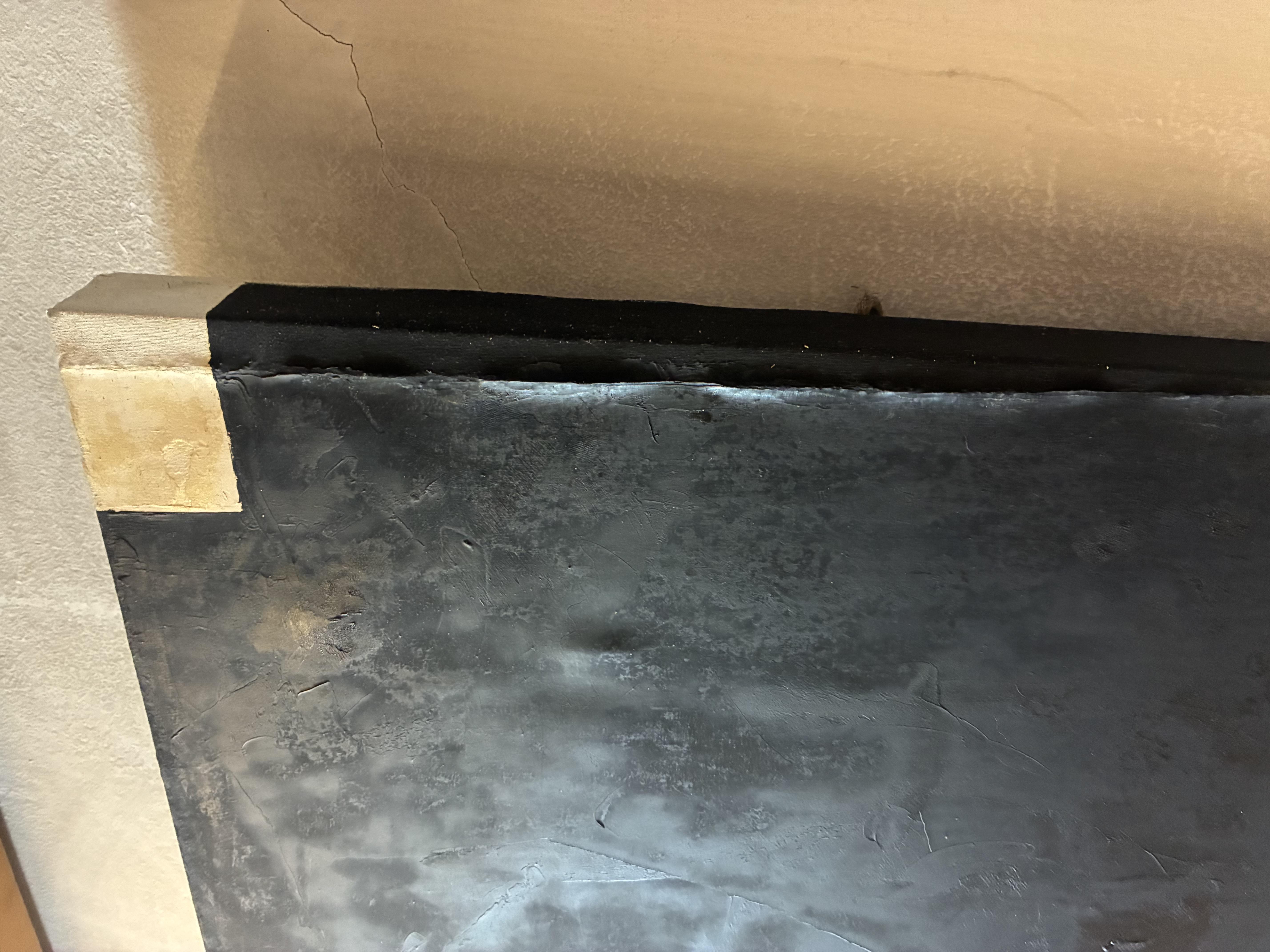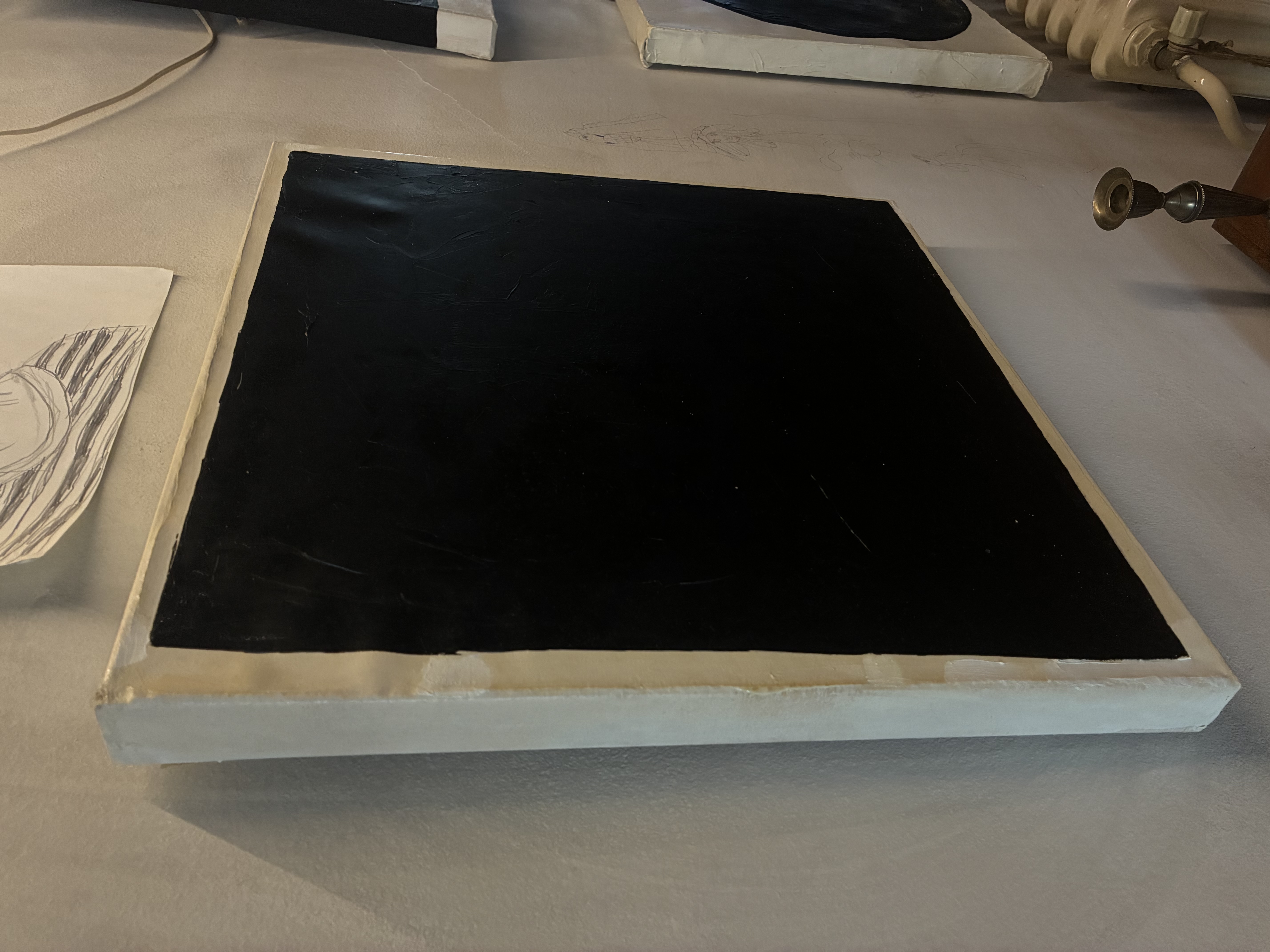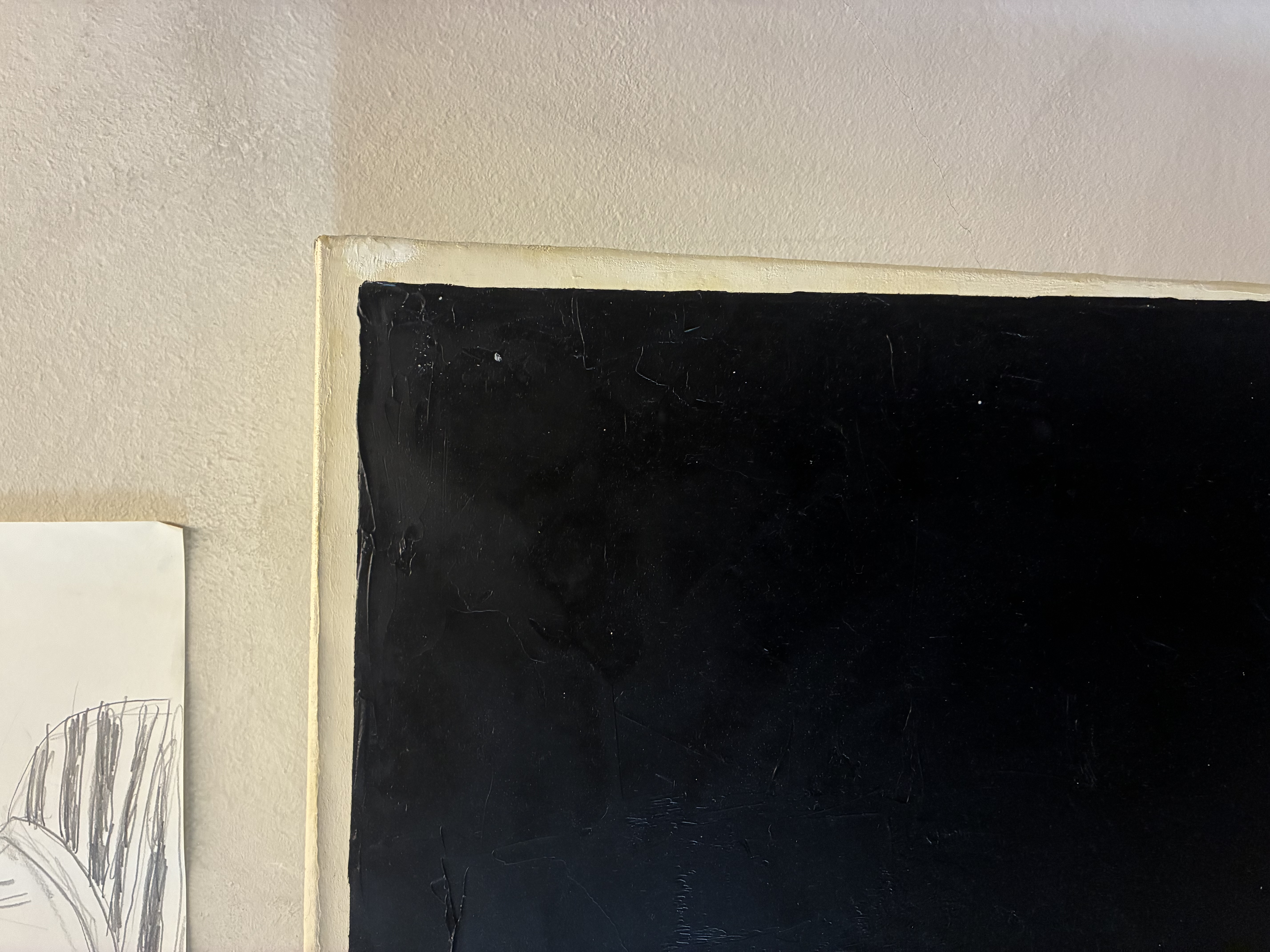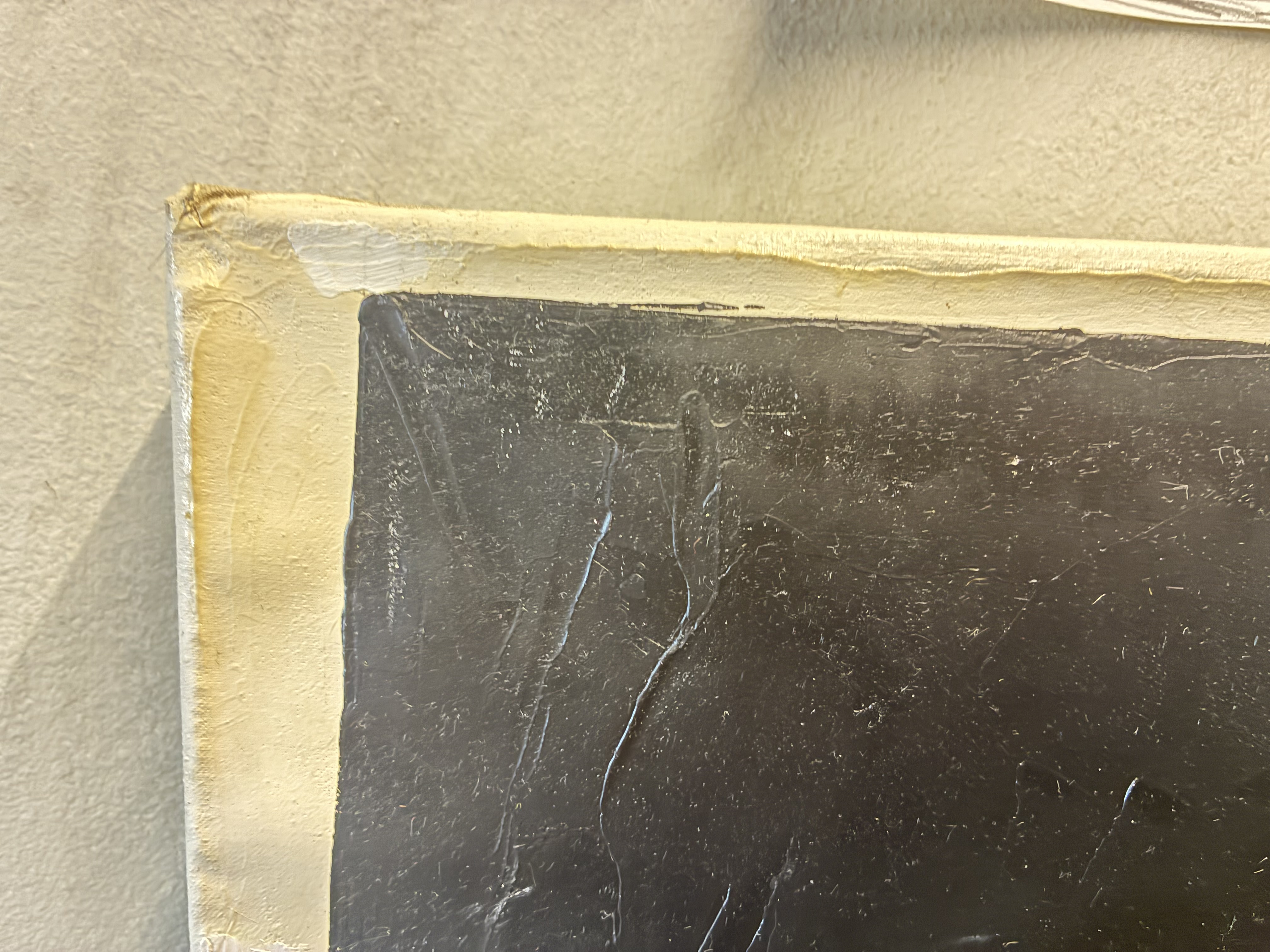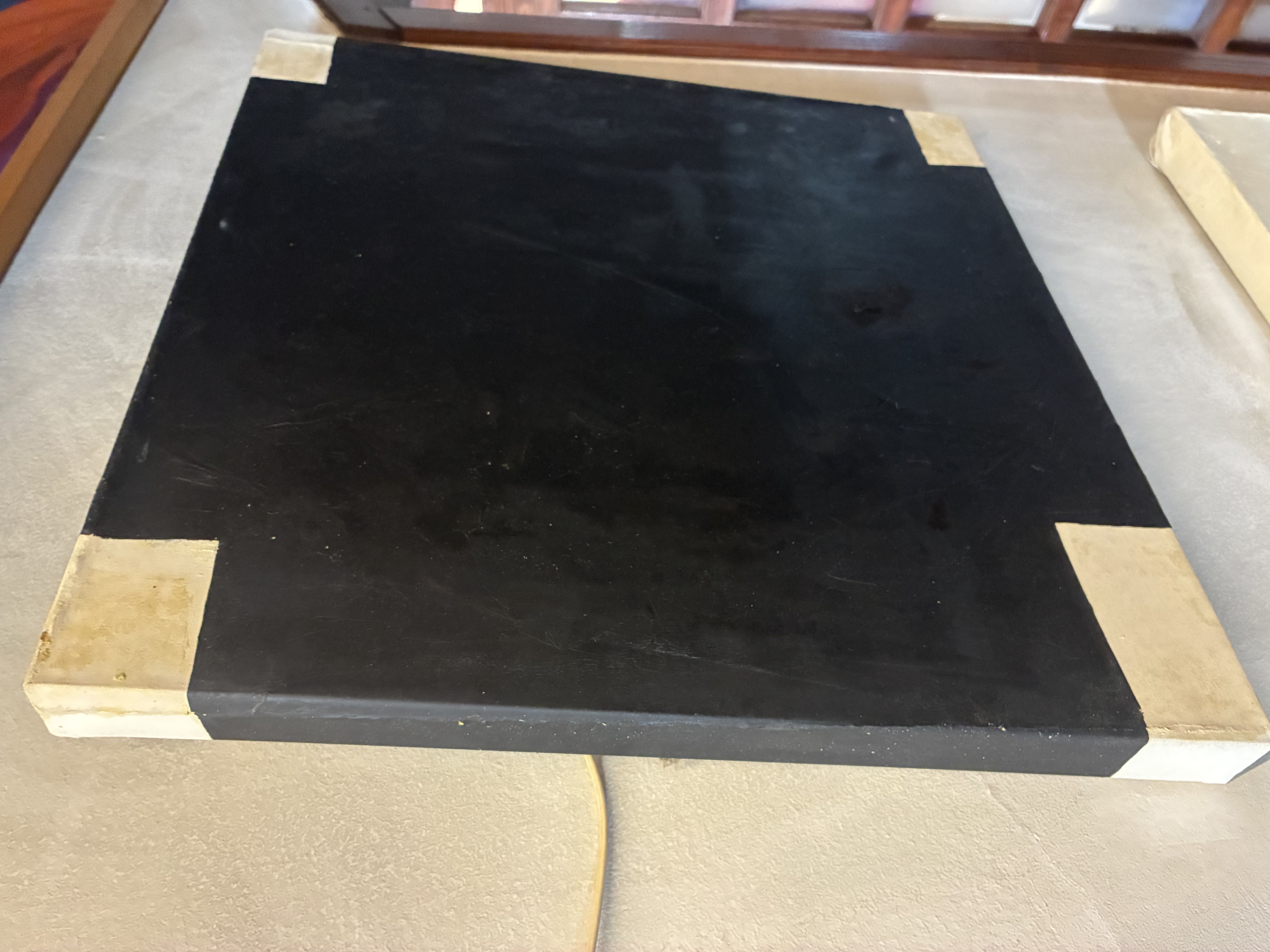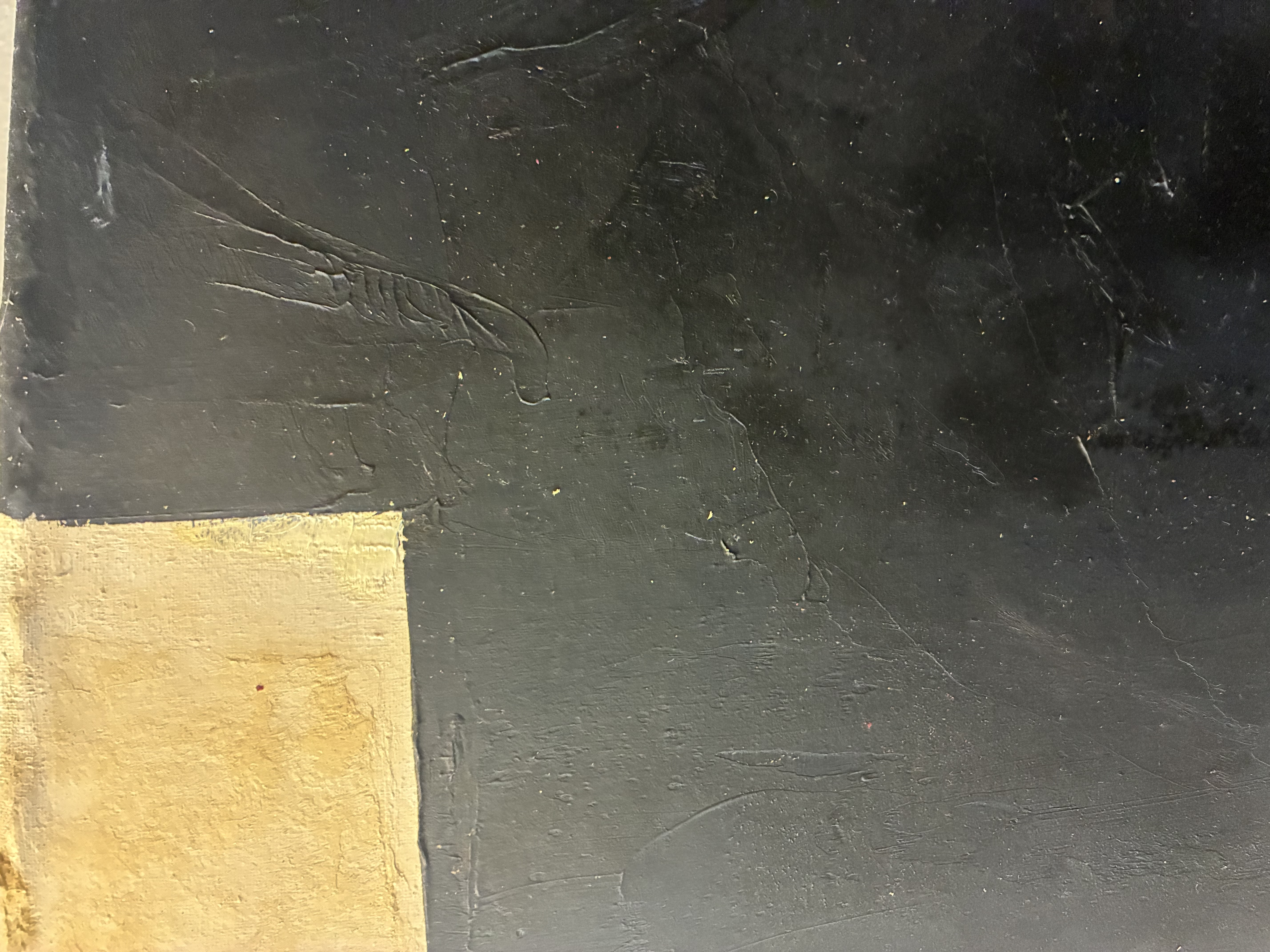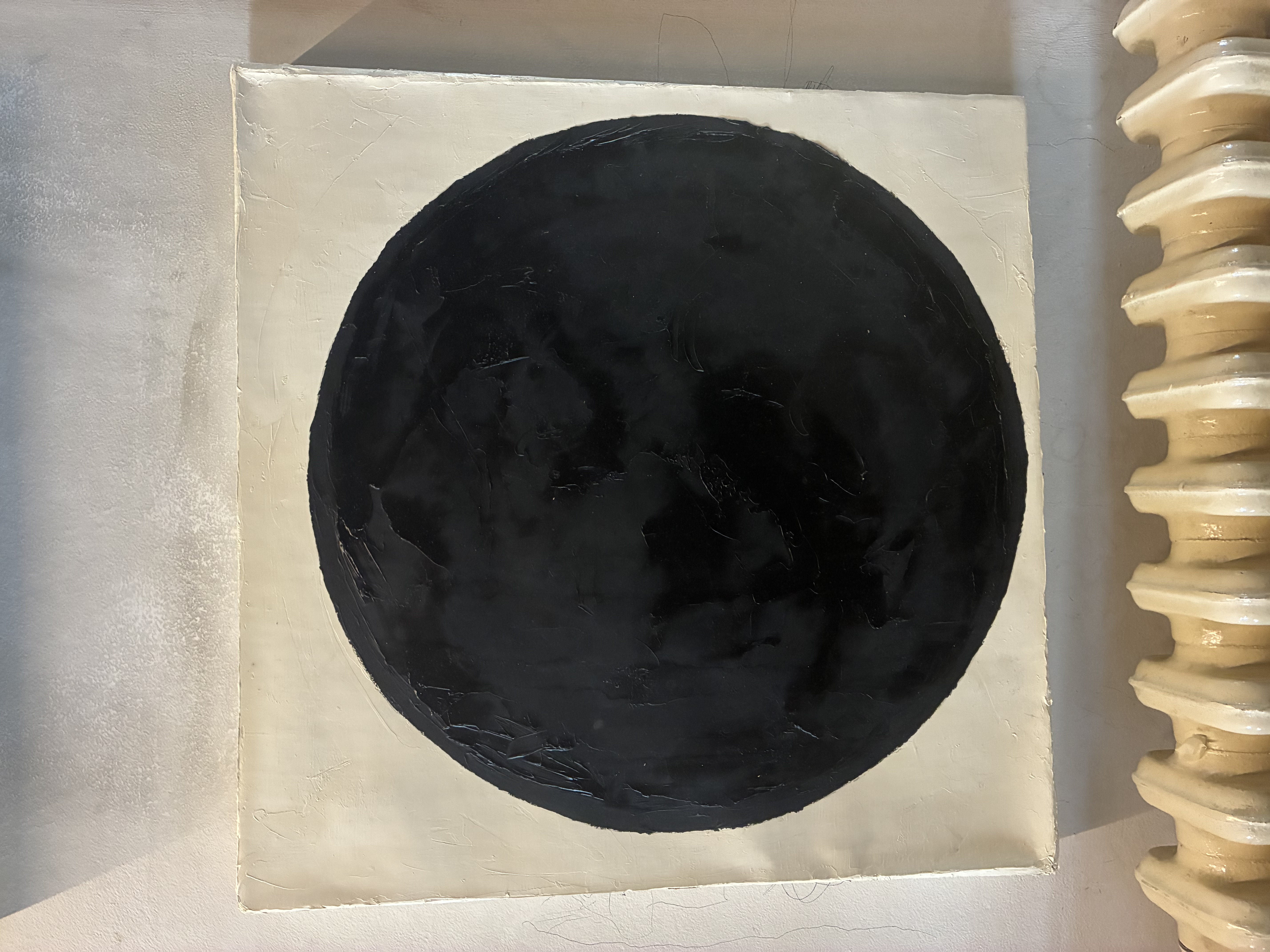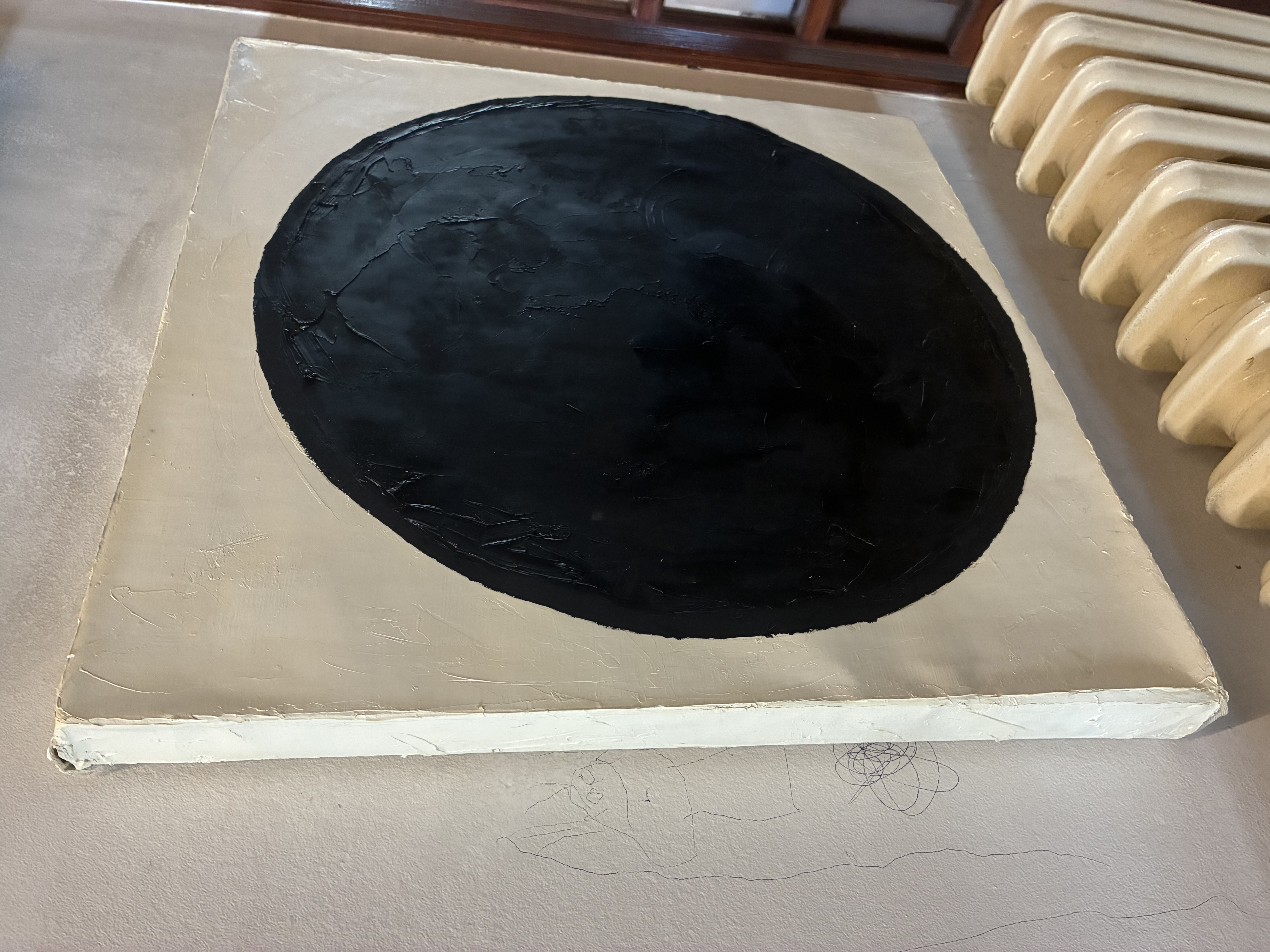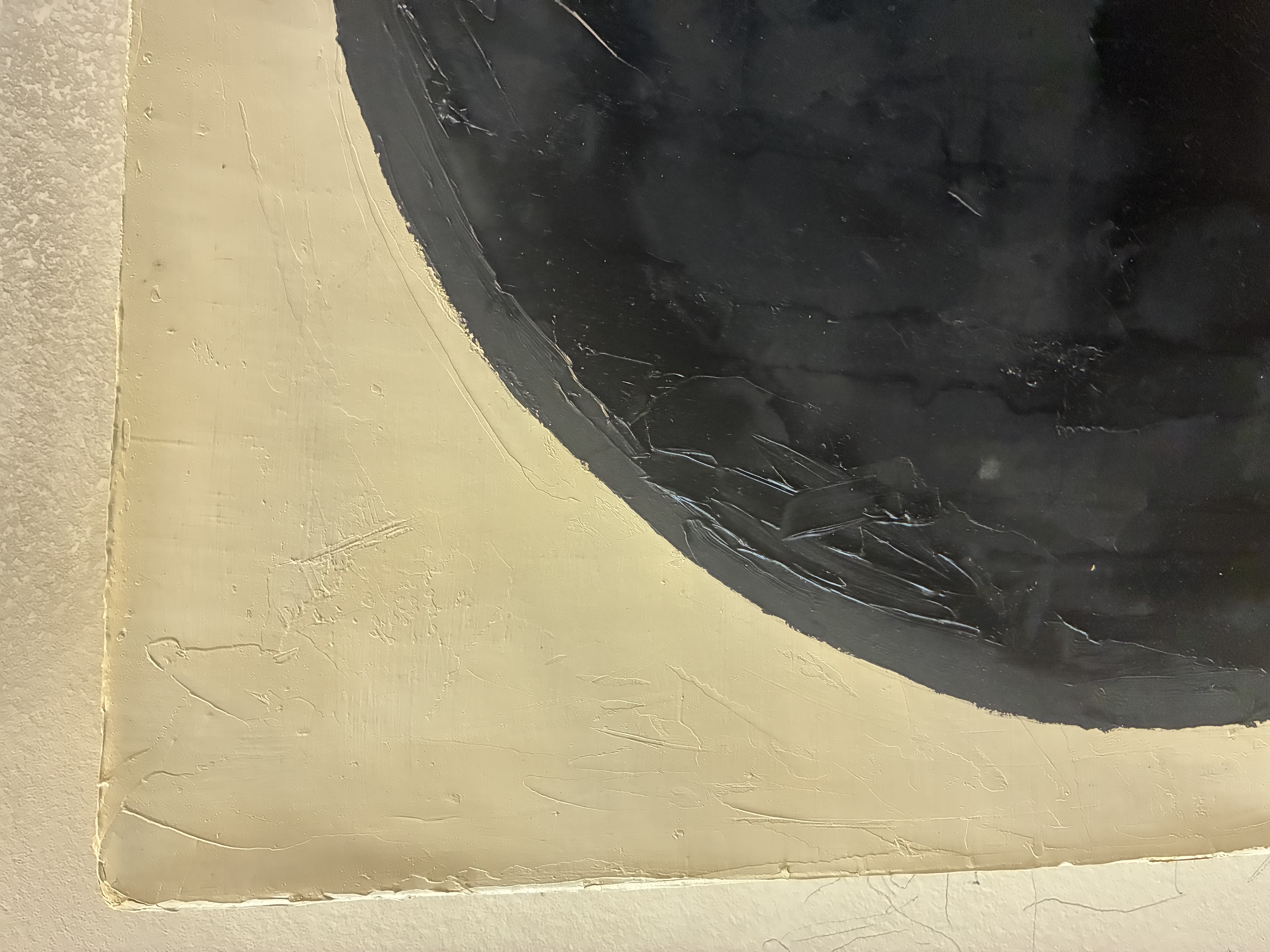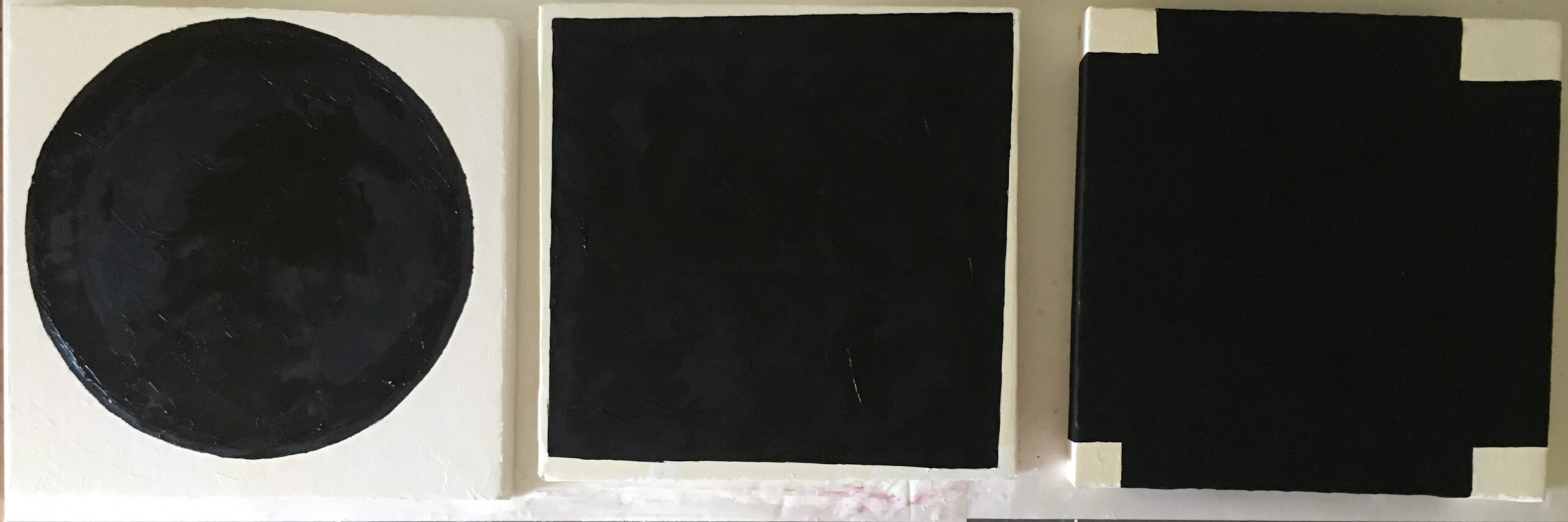
These four paintings do not represent a circle, a square, a surface, or the absence of an image. They deal with the moment when form, exhausted by its own geometry, ceases to be a sign and begins to imitate silence.
Black here is not a color, but an event that has withdrawn from the visible. White is not a background, but proof that something has nevertheless happened. The circle does not close because it is perfect, but because it has nowhere else to go. The square does not stand in space; it disciplines it to the very limit of politeness.
In relation to Malevich, these paintings do not attempt to continue Suprematism, because what has already reached an endpoint cannot be extended — except perhaps gently, awkwardly, and with respect. They are therefore less a manifesto than a late apology to form for still being present.
If the Black Square was the zero point of painting, these works ask whether a faint noise can still be heard from zero.